

Most gaming CEOs are wearing hair shirts and taking vows of poverty compared to bet365 CEO Denise Coates, the new poster girl of greed. She awarded herself $422 million in compensation (no, that’s not a typo).  In 2015-6 Coates scraped by one a mere $154 million, gave herself a raise to $284 million the next year—also a record amount—and collected $347 million in 2017-8. That’s quite a pay packet for somebody who bought her company off eBay for $25K, obviously an astute move. Seeing that online gambling was the wave of the future, Coates sold off her family’s OTBs for $50 million. Today bet365 (which streams soccer matches, among other things) turns a $1 billion profit, of which there won’t be much left after Coates wallows at the trough. Compared to Coates, the second-highest-paid CEO, Discovery‘s David Zaslov, must make ends meet on a paltry $129.5 million. bet365 recently extended its operations to Atlantic City, so I’m sure we’ll be hearing a lot more about Coates in the future.
* Halting legislation that would curb resort fees may not be your notion of a good thing but it’s one of the accomplishments American Gaming  Association President Bill Miller is hailing as we near 2019’s close. Other developments, more positive in nature, include reestablishing the Congressional Gaming Caucus, keeping nuclear waste away from Yucca Mountain, blunting attempts to regulate sports betting at the federal level and coming up with a new set of best practices to combat money laundering. Federal regulation of sports wagering was a particularly pointless idea because, as Miller once told me, we’d already had it in the form of the Bradley Act and it was a terrible failure.
Miller continues to press for the broader use of digital payments on the casino floor. While we don’t favor the use of debit cards, they can’t be overdrawn and thus are less worrisome than using credit cards. Next month, the AGA promises a new set of principles for promoting responsible gambling, to be rolled out at the National Council of Legislators from Gaming States conference. That must be a pretty large council by now—and getting bigger all the time.
* More of the same old same-old is in store for the Las Vegas restaurant scene next year. Sticking to the tried and true, casino execs are relying on brand names like Emeril Lagasse, Michael Mina and the inescapable Wolfgang Puck. Eater Vegas has culled a baker’s dozen of the major restaurant openings. I’m no foodie, so you’ll have to decide for yourself how appetizing the new offerings look. Well, they’re not entirely new, as an entry for the revamped Vesper Bar indicates. Ditto Delmonico Steakhouse. Incidentally, Encore continues the de-Wynnification of the property, replacing Andrea’s with Mexican-influenced Elio. Otherwise, the larger trend is drifting Asia-wards.
Jottings: Good news for Penn National—its $120 million satellite casino at York Galleria Mall in has been approved by Pennsylvania gaming regulators. Now we’ll see if there’s a market for these casino-ettes. Built at a low cost, they ought to produce pretty decent ROI … Possibly 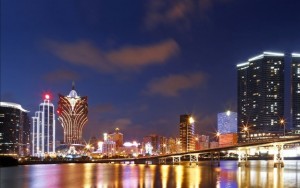 trying to claw back high-roller business from the Philippines and Vietnam, the People’s Bank of China is increasing the amount of cash that players can transfer from Macao into the PRC … In the latest casino-shooting outrage, three people are dead after gunfire erupted in Emerald City Casino in Great Falls, Montana. More details as we get them … Does the Boston Globe have an anti-casino agenda or not? Witness the glee with which it reports lean Massachusetts revenue numbers from November.
