

In what can be viewed either as a victory for democracy or simply passing the buck, Massachusetts regulators opened the door to public comments on whether to approve a casino for the southeastern corner of the Bay  State. The Massachusetts Gaming Commission—unlike its counterparts in Nevada and New Jersey—is empowered to weigh the economic impact of such a move, a question over which it has been agonizing for months. Now residents of Bristol, Plymouth, Nantucket, Dukes and Barnstable counties are being asked to weigh in. “We want to see how likely it is that there could be a good proposal or a good viable license in that region,” explained Commissioner Enrique Zuniga. This discussion could lead to Neil Bluhm‘s $677 million Brockton casino project being resurrected from the ashcan to which it was consigned four years ago.
Since then, the Mashpee Wampanoags have lost their land-into-trust application in Taunton and their casino financier, Genting Group. Their Project First Light ought to be called Project Life Support, as it’s currently hooked up to a ventilator in the form of the court system. The MGC seems to be counting the Mashpee Wamps out, hence the reconsideration. As Zuniga said, “This is effectively what we are trying to determine at this point through public responses is whether we should take another look at it.” We say: Go for it.
* Add Pennsylvania to the list of states coping with a runaway problem in the form of black-market slots. At least 15,000 machines are estimated to be operating in the Keystone State under the rubric “Pennsylvania Skill.”  Another operator, Pace-O-Matic, has its ‘skill machines’ in 12 states, including Virginia, Wyoming and Texas, all states with extremely little or no casino presence. “We understand that there are groups that don’t want to see competition and they’re mostly from out of state,” huffed Pace-O-Matic’s Mike Barley, who added, “We have gone to the legislature and asked to be taxed. They’re not too many industries that do that.” The Pennsylvania Gaming Control Board, however, is reversing its previous neutrality, siding with the American Gaming Association and Association of Gaming Equipment Manufacturers against ‘skill’ machines.
* Sports betting is speeding its way to the floor of the state Senate in Washington State, from whence it’s a quickstep to Gov. Jay Inslee‘s desk. 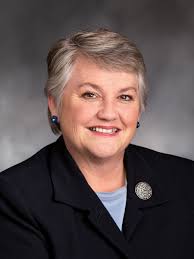 The speedy movement of the bill is prompting criticism, along with a contention that it will juice the state’s tribal casinos into a tax-free monopoly. (The state House added a special clause that will enable sports betting to bypass the customary popular referendum, which would require a 60% supermajority.) State Sen. Maureen Walsh (R) was among the detractors, saying “what’s good for the goose is good for the gander. If in fact you think there are social ills involved with gambling, why in the world would you let the tribes do it and not everybody else?”
Walsh’s arguments appear purely moralistic, unlike those of Maverick Gaming lobbyist Vicki Christopherson, who would like to see her company’s 19 card rooms (and 25 others) dealt into the action. “We … cannot fathom why there needs to be a monopoly provided on a system to bet on sports and that it constitutes an ‘emergency,’” she said, pertinently.  She added that the argument that only tribes could properly oversee sports wagering was “frankly insulting and not true,” and even offered to foreswear mobile wagering in perpetuity in order to keep it from spreading statewide. Both sides produced legal opinions supporting their interpretation of the validity of the emergency clause, with former Attorney General Rob McKenna opining on behalf of the tribes that the Lege was acting to protect the state from a rapid and all-out spread of black-market sports betting. We’re trying to get some face time with Maverick, so we’ll let you know more if and when that happens.
* While yesterday’s cash-flow numbers out of Caesars Entertainment were reassuring, today’s net-revenue ones from Eldorado Resorts are anything but. Except for flat net revenues in the Midwest ($72 million), every region was down. In Eldorado’s stronghold, the West, revenue fell 7% to $127.5 million. The Central region slipped $1.5 million from a year ago, to $117 million, the South got slammed (-12%), falling to $10.5 million. And there was a tiny slippage (1.5%) in the East, where net revenues were $129.5 million. Not a great 4Q19 to have when you’re making the case that you’re going to turn around Caesars, where CEO Anthony Rodio is doing just fine.
Jottings: In what has to be the least-reassuring pronouncement on coronavirus, Donald Trump said, “there’s a very good chance you’re not going to die.” No, but casinos in Massachusetts won’t take well to the 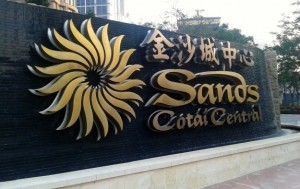 news that 609 people in the Bay State have been monitored for the disease, which epidemiologists are still trying to grasp. Fortunately, only one patient actually manifested the virus. Get well soon, sir … In some coronavirus-related good news, Sands Cotai Central reopens today, after a 22-day shutdown. Two of its hotels, including the St. Regis, remain dark. Grant Chum has been announced as the new Sands China COO … Anybody got $2 billion they’d care to sink into Vietnam? That’s the entry price for KN Paradise Cam Ranh megaresort, in return for which you get to operate the casino, which will have 2,000 slots and 200 tables … Criticizing company employees for being “all life and no work,” Expedia Chairman Barry Diller has slashed 3,000 jobs, according to Fox Business. Expedia looks to cut as much as $500 million from its budget.
