

Ignoring a court order, voluble Oklahoma Gov. Kevin Stitt (R) decided to negotiate through the media again. Instead of dickering with  the Sooner State’s tribes over revenue sharing (which he’s supposed to be doing), Stitt threatened to bring private casinos into the state. “Let me bring commercial casinos in, give out just four commercial licenses, and it would be $350 million to the state,” Stitt bragged. “I think there’s a win-win. There’s a win for the casino industry, there’s a win for the tribes, and there’s a win for the state of Oklahoma and education.” While the tribes aren’t averse to a fee increase, Stitt wants to hike it to at least 25% of gross gaming revenue (as high as Connecticut‘s, which exempts table games), while the tribes won’t submit to Stitt’s engraved position that their compacts expired last year.
Stitt would only tax commercial casinos at 18%—because that’s how much they told him they were willing to pay—and is apparently willing to
kiss off the $138 million Oklahoma currently gets from tribal revenue-sharing. Going from over 100 tribal casinos to four private-sector ones would concentrate the market dramatically and would be a sweetheart deal for somebody. Evidently Stitt, in return for commercial casinos, would back  off his stance that tribal gaming is now illegal (after all, under IGRA the tribes would be entitled to any form of gambling offered elsewhere in the state—and tribes would be released from revenue sharing. At least that’s the early interpretation. Stitt is unpredictable, so we’ll see what he really means. He tried to signal flexibility, saying, “I don’t begrudge [tribes] for fighting for a good deal for themselves. But guys, this is not a good deal. I would not be doing a good job as governor if I rubber stamped a contract that goes on forever.” Any would the tribes be doing a good job if they acceded to Stitt’s shakedown?
Besides, he either has to get the Lege to sign off on this my-way-or-the-highway gambit or get it on the ballot at the next election, either of which runs a cart and horses through the court-imposed stop sign for negotiations on March 31. The governor’s Indian-bashing has resulted in his Cherokee ancestry being called into question. “It’s one thing to be able to claim a heritage and it’s a whole other thing to respect what that heritage means,” said state Rep. Collin Walke (D), chairman of the Lege’s Native American caucus. Is Stitt going to have to undergo a DNA test?
* The more states that legalize sports betting, the more the pressure mounts on the dwindling holdouts. (Heck, even Canada is debating single-game wagering.) Case in point: Georgia. The state’s major-league teams have thrown their weight behind a Senate bill that 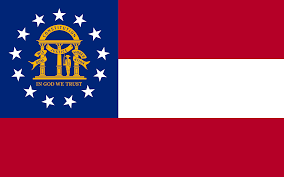 would enable wagering (including mobile) on practically everything except horse racing—and would ban the use of credit cards. Noting that illegal sports betting is a fact of life, state Sen. Burt Jones (R) testified, “It’s found money, in the scheme of things.” While Jones thinks the Georgia constitution needn’t be amended (which would require a popular vote), he’s introduced both such an amendment as well as a bill for direct legislative action.
The bill under debate would establish a Georgia Mobile Sports Wagering Integrity Commission. It would license operators and levy a 10% tax on gross revenues (estimated at $15 million/year—the tax haul, that is). A small amount would be set aside to treat gambling addiction, with 95% of the receipts going  towards the educational system. Claiming that sports bettors are 19X as likely to watch a game if they’ve got money riding on it, Atlanta Hawks CEO Steve Koonin said, What we hope to receive in return is generations of fans who love the games we present.” “Ten percent, at least, of our kids, are going to get hooked on this,” wailed former University of Illinois professor John Kindt while the Georgia Baptist Mission Board‘s Mike Griffin rent his garments, howling that “gambling is legalized fraud.” Betting opponents are always good for cheap entertainment value.
* “We had our ups and downs in the past, but nothing like this,” complains Italian hotelier Roberto Cassani. “American tourists in particular seem to be victims of a collective psychosis. I am really worried.” Maybe he should worry about those 900 confirmed cases of coronavirus in his country. A “collective psychosis”? Yes, that must be the real problem.
