

Sports betting could die in Connecticut, thanks to a stalemate between Gov. Ned Lamont (D, pictured) and the state’s gaming tribes. Speaking for the latter, Mashantucket Pequot Chairman Rodney Butler accused the  governor of a “take-it-or-leave-it” negotiating stance. Butler and his confreres won’t accept any solution that doesn’t define sports betting as a casino game and put it exclusively under their remand. Lamont wants to spread it amongst the tribes, the state lottery and the state’s OTBs. “This approach would benefit the tribes while also ensuring off reservation sports betting is publicly available and free of the legal challenges and delays that have prevented this from moving forward,” said Lamont spokesman, Max Reiss. Balderdash, replied Butler, threatening to withhold the tribes’ annual $250 million slice of slot-machine revenue. Reiss rejoined that the tribal proposal virtually invites litigation from spurned competitors. (The tribes also want exclusive rights to an online lottery.)
Matters came to a head a week ago when Lamont met with tribal representatives and laid out his position. “We are at a loss to explain the timing and tone of the statement issued by Governor Lamont on Tuesday,” said Butler, who was not present. “We were told time and again that, understandably, the  Governor’s first priority was passage of tolls and that gaming was secondary to that initiative. Then, less than 24 hours before yesterday’s Public Safety hearing, the Governor put a brand new take-it-or-leave-it proposal on the table, with the full understanding that it was unacceptable to the Tribes and puts at risk more than $250 million in annual slot revenue payments to the State, along with thousands of jobs.”
Concluded Butler, “That’s not negotiating.” As for litigation, he upped the ante by threatening to sue the Nutmeg State if the tribes don’t get what they seek. As Butler put it, “The fear of legal challenges also hasn’t held up sports betting in the 12 states that have legalized it for their in-state casinos only.”
* National Public Radio has discovered that—horrors!—casinos can donate to PACs in Louisiana. As a consequence, the Democratic 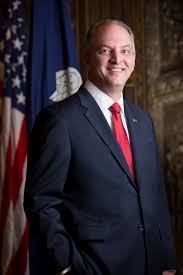 Governors Association was the recipient of much gaming largesse, presumably directed toward keeping casino-friendly Gov. John Bel Edwards (D) in office. Caesars Entertainment and MGM Resorts International were particularly george, kicking in $100,000 apiece. More surprisingly, Las Vegas Sands ponied up $50,000. IGT donated 100 grand, Wynn Resorts chipped in 25 dimes and Konami Gaming donated $10K. Casino companies may have been playing both sides of the fence, though, giving $200,000 to the Republican Governors Association, whose Louisiana surrogate was unsuccessful Eddie Rispone.
An NPR source says “the timing of casino donations was a coincidence due to a scheduled fundraiser in Las Vegas.” Caesars certainly got its money’s worth, receiving a 30-year license extension in New Orleans.
Caesars says its sends the DGA and RGA a letter “instructing them to  restrict casino donations in states like Louisiana.” Critics say the difference is semantic, as the casino bucks free up DGA/RGA money that might otherwise have been tied down in other states. For Paul Seamus Ryan of Common Cause it all ties in with the notorious Citizens United Supreme Court decision: “The courts are embracing this myth that this outside group money can’t corrupt because it’s independent and that the money will be fully disclosed—neither of these things are true in many instances. And you’re looking at one such instance here.”
* Mashpee Wampanoag Chairman Cedric Cromwell wants a face-to-face meeting with Donald Trump to “break bread” together and  hammer out an agreement for a tribal casino. That’s a forlorn hope, in light of Trump’s repeated statements of opposition to the Taunton project. Said Cromwell, “Gaming comes after you put land into trust. This capitalistic society makes everything about gaming. Yes, we want to do that, and we also want to reinvest and create prosperity for our elders and working people, to provide important services. That’s not socialist, it’s building our own product.” Incidentally, Genting Group, which was Out, appears to be back In again.
* Sports betting has gone live in Illinois, beginning at Rivers Casino Des Plaines. Web site PlayIllinois.com estimates the Land of Lincoln could generate annual handle of $10 billion, which boils down to $650 million in revenue—money Illinois casinos badly need. Predicted analyst Dustin Gouker, “Launching the industry is obviously a momentous first  step. But because of regulatory roadblocks to online sports betting, it will be years before Illinois can enjoy the same kind of boom that we’ve seen in New Jersey, Pennsylvania, and Indiana.” Five casinos and Fairmont Park Racetrack have been cleared for sports betting. In addition, state law permits three “stand alone” mobile operators, two of the licenses being expected to go to FanDuel and DraftKings. However, at $20 million a license, will anyone apply? “Illinois’ high licensing fees for online operators and its in-person registration requirements will undoubtedly stunt the growth of the industry,” dourly forecasts Gouker. That registration requirement will hurt: Rhode Island has the same thing and gets only 15% of its sports-wagering revenue from mobile sources.
* Speaking of Genting, its employees at Aqueduct Racetrack found themselves on the business end of pistols Saturday night, as robbers 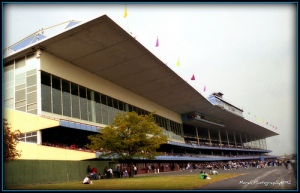 helped themselves to $250,000 in racing proceeds, bypassing adjacent Resorts World New York casino. Reported the New York Post, “The brazen bandits, who were being sought Sunday morning, pulled the heist at around 10 p.m. Saturday, some four hours after the tenth and last race of the day, swiping ‘a lot of money,’ according to an Aqueduct employee.” Maintaining both anonymity and coronavirus immunity, the robbers wore surgical masks.
* Sports betting, which once had great momentum in the Kentucky Lege, appears headed for ignominious expiry. Moralists are largely to blame.
* Wynn Resorts is planning its most-expensive ever casino resort in Punta Cana, Dominican Republic. The multi-phased project would have a staggering 9,000 hotel rooms when complete. But is the Caribbean casino market big enough to monetize such a project, costlier by far than anything Wynn has attempted anywhere?
* We always sympathize with the employees who have to clean public bathrooms. How many worse jobs can there be? Somatic, however, offers relief in the form of a restroom-cleaning robot. Its design is likened to a “minifridge with a robot arm attached to the front.” Says Somatic CEO Michael Levy, “The reason bathrooms are such a good application, because everything is bolted down to the floor. Things move in a predictable way. All commercial bathrooms built after 1994 are ADA compliant. What’s good for robotics is that lays a specific design.” The robot is trained through virtual reality in what is described as “the worst video game, ever.” It even knows how to operate elevators. But casinos that plan on buying them better order them in threes: The robot is capable of only one eight-hour shift per day. Sort of like people.

David, Where is your evidence on Wynn Punta Cana? Google revealed one Dominican website that a) didn’t get Wynn’s name correct b) claimed Wynn “dates from 1950”. Steve Wynn would’ve been like 8 years old in 1950. In addition there is absolutely no press release regarding this on any Wynn website… $6B and 9,000 rooms in the DR is crazy. Leave the ridiculous speculation and rumors to Vital Vegas, we trust you for vetted information.
I don’t get the Wynn project, you mention, in Punta Cana at all. who goes there to gamble???