


First, the bad news. Las Vegas emerged from a December that was just plain awful, as discretionary income continues to dry up. Las Vegas Strip win plummeted 51% to $292 million. Statewide, gambling revenue toppled 35.5% for $684 million, an even poorer showing than we expected. The closest thing to a bright spot was the play of Las Vegas locals, who left ‘only’ 17% less year/year in the slots and on the tables. Heck, it would have been worse had November not ended on a weekend, thereby carrying some late-month income into December when the slots were tallied. This occurred at the same time that various amen corners are saying the future’s so bright we’re going to need sunglasses. Perhaps so, but the December numbers give us an idea of how far we have to go to get back to ‘normal.’
Looser hold didn’t help Strip casinos, whose slot winnings fell 55% on 43% less coin-in. Table-game win ($141 million) fell 46% on 44% less wagering. It’s worse than it looks because the Strip had a relatively good month at baccarat, winning 16% less despite 50% lower play. Not even Circa could save Downtown, off 28% to $45.5 million, whilst North Las Vegas slipped 34% to $19 million. The Boulder Strip stumbled 24.5% to $62 million, Laughlin dipped 19.5% to $26.5 million and miscellaneous Clark County was down 6% to $100.5 million. Utahns came to the rescue of Mesquite, flat at $11 million. Upstate, things looked slightly better. Reno slid 16% to $44 million and volatile Lake Tahoe was relatively mild, down 14% to $15.5 million. Wendover was off 10% to $16 million. Maybe that last-minute Trump administration economic-diversification won’t be so bad for Wendover Will after all. And with that we draw the curtain on a year that Nevadans would heartily prefer to forget.
 What does 2021 hold? Caesars Entertainment CEO Tom Reeg reportedly says the Strip will come back bigger than ever. Sources as reliable as Frank Fantini and as perpetually over-optimistic as Tilman Fertitta have predicted a second Roaring Twenties. There are some flaws with this analogy but one’s biggest worry is that the original Roaring Twenties were the precursor to the Great Depression and our country couldn’t survive a second one of those. Of course, proverbial “pent-up demand” requires pent-up money, to which Fertitta says, “The consumer is coming back. I’m telling you, where we can do business, we are doing business.” (That’s not stopping him from seeking a third round of federal economic stimulus.) With two-thirds of the American economy reliant upon consumer spending, we fervently hope Fertitta is right. As Tilman puts it, “I live off the consumer. If Joe Biden wants to give all this stimulus, y’all go right ahead. We’ll take it.”
It’s too early to say whether New Year’s ‘skinny stimulus’ helped gaming but Rally’s/Checkers CEO Frances Allen doesn’t anticipate a big bump in the fast-food sector, saying, “It’s just for a week, maximum three.” (Seriously, how much extra gambling can $600 sustain once other needs have been met?) Sounding like anything but a free-market capitalist, Fertitta blames all of us for our current economic malaise, saying, “It’s a shame that it’s happening because I don’t think it had to happen. I think we should have done a better job as Americans to make sure that no business went out of business because of this pandemic. We didn’t do that as a country.”
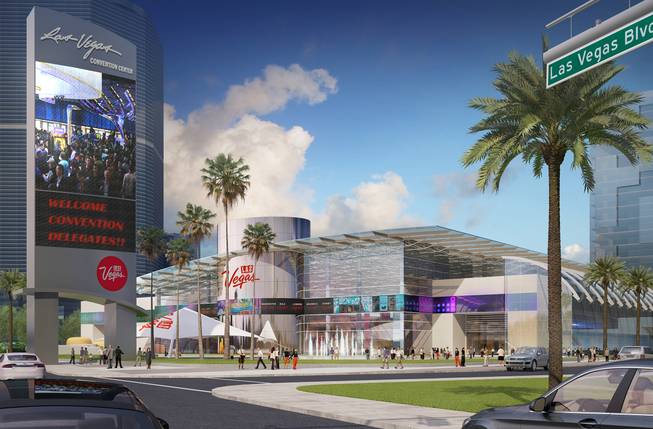
Blame games aside, there are hopes that Las Vegas convention business will return this spring, starting with World of Concrete in June. However, convention attendance is presently capped at 25% of venue capacity. Getting to the 60,000-person level of shows like World of Concrete in five months is going to be a heavy lift, dependent on moving parts like vaccination numbers and Covid-19 prevalence levels (and businessmen’s inclination to travel). The good news is that, according to a Las Vegas Convention & Visitors Authority-commissioned study, 91% of respondents miss in-person meetings, a majority are wearying of online meetings and 74% are are confident Las Vegas can host safe events.
On the flip side, a Kinsa Health study discovered that a spike in Coronavirus cases in the Southwest could be traced to visiting Sin City. “Travel to Las Vegas in recent months and a new coronavirus variant have likely contributed to the rapid, regional spread of cases across southern California, Arizona and Nevada. The data also shows strong correlations between the sickest counties and higher rates of travel to businesses along the Las Vegas Strip after New Year’s, as well as earlier in December, when the new variant took hold.” Yes, the feared B1.1.7 mutation has been found in the Silver State. “Residents of the affected counties … were up to twice as likely to have traveled to businesses on the Las Vegas Strip in December and January, according to an analysis of anonymized cellphone location data from SafeGraph.” Sobering.
More-hopeful metrics came from the state Department of Employment, Training & Rehabilitation. Unemployment is finally in single digits: 9% in December. Admittedly, fewer Nevadans are seeking work but non-agricultural jobs were up by 8,200. Nevada still lags the national jobless rate of 7%. Casino profitability for fiscal year 2020 was also up, although given cost cuts and Covid-prompted “synergies” this does not come as much of a shock as it might otherwise. At least big casinos were making out like bandits, recording $2.9 billion in profit compared to FY19’s $2 billion profit (on $6.2 greater revenue). The fact that it took a pandemic to juice profits does not not exactly generate a lot of warm fuzzies. If the federal government can get a handle on Covid-19 response and cases continue to wane, it’s a lead-pipe cinch that Las Vegas will see a better 2021. But if a third round of stimulus isn’t passed we’re less optimistic and it would complacent to say it’s clear sailing from here onward.

Today American Gaming Association President Bill Miller deemed Internet-gaming revenue “essential” to the industry’s financial health, adding that it is “here to stay,” thereby hammering nails into the coffin of Sheldon Adelson‘s political influence, which had too long tyrannized AGA policy. Meanwhile, Credit Suisse analyst Ben Chaiken said of Las Vegas Sands‘ first post-Adelson presser, “management appear to be continuing his legacy full steam ahead and using his energy to inspire them. We see multiple levers of growth in a post-pandemic world, which could potentially include investment in New York and/or Texas, continued expansion in Macau and Singapore, and entry in to Sports betting and iGaming.” Hold the phone, Ben. Entry into sports betting and Internet gambling is a dramatic about-face for LVS, and we wonder how acting CEO Rob Goldstein would have spun it were Sheldon still alive. That cracking sound you hear is Hell freezing over.
The best LVS news was from Singapore where revenues rose 23% in 4Q20 and occupancy was 69%, “highlighting the strength of the locals market given continued travel restrictions.” Macao visitation was a shadow of 2019 but Sands China generated $70 million return on investment, as well as increasing its mass-market share, driven by Four Seasons and Venetian Macao. “Our sense is that the situation is fluid but COVID is weighing on trends as China tightens down on travel, leaving the door open that demand could return as the vaccine is distributed,” wrote Chaiken, although he expects a pretty blah 1Q21. JP Morgan analyst Joseph Greff was less impressed, penning that “it’s hard to characterize these operating results as a victory and that consequential. But it is showing some level of improvement. He also noted that China’s restrictions on outbound travelers are “not a positive” for Marina Bay Sands.
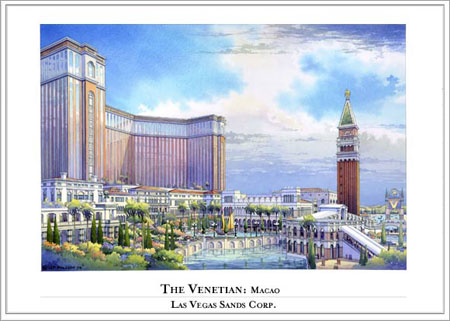
“Looking ahead, we think that until vaccination rates accelerate and infection rates moderate, LVS’s Macau and Singapore resorts are stuck at/near recent run-rate levels,” wrote Greff, who doesn’t see the Chinese market accelerating for another six months. While he kept his Singapore projections unchanged, Greff lowered Macao by 35% and Las Vegas by 59%. Perhaps Greff’s feeling burnt by the Strip having lagged fourth-quarter forecasts. Sands grossed $582 million in Macao, despite negligible VIP winnings, and retail “performed well.” Given Melco Resorts & Entertainment‘s and Wynn Resorts‘ higher premium-mass orientation, “we believe it is likely that their 4Q aggregate results in Macau outperformed LVS’s.” As for spending priorities, Marina Bay and The Londoner proceed largely as planned, with 370 Londoner Court luxury suites coming on line right about now. The new hotel and arena in Singapore have been postponed to 2025 but that’s due to Covid, not any Adelsonian second thoughts.
Not much was said about Venelazzo but Deutsche Bank analyst Carlo Santarelli let the numbers speak for themselves and, boy, did they ever. Occupancy ran at 44%, for an average daily rate of $185 (-26.5%) and an emaciated revenue per available room of $65 (-66%). Wagering ($289 million at the tables) plunged 46.5%. Slot wagering fell 32% to $569 million. Out of all that, the casino won $78 million, -55%. Even that number is misleading because one then must subtract $26 million in promotions, discounts, commissions and loyalty points. Sands is spending a lot to buy not very much revenue. We believe the technical term for such data is El Stinko. Small wonder that Sands brass wants to be shot of Venetian/Encore … and that they’re going to be having such a hard time selling it, at least until the tourist-and-convention market improves. (It’s a superior product but not performing like one.) Venelazzo posted $150 million in net revenue but negative $50 million in cash flow, which speaks for itself. Marina Bay Sands alone dwarfed that with $345 million in net revenue, which explains why it’s horizons east for Sands these days.
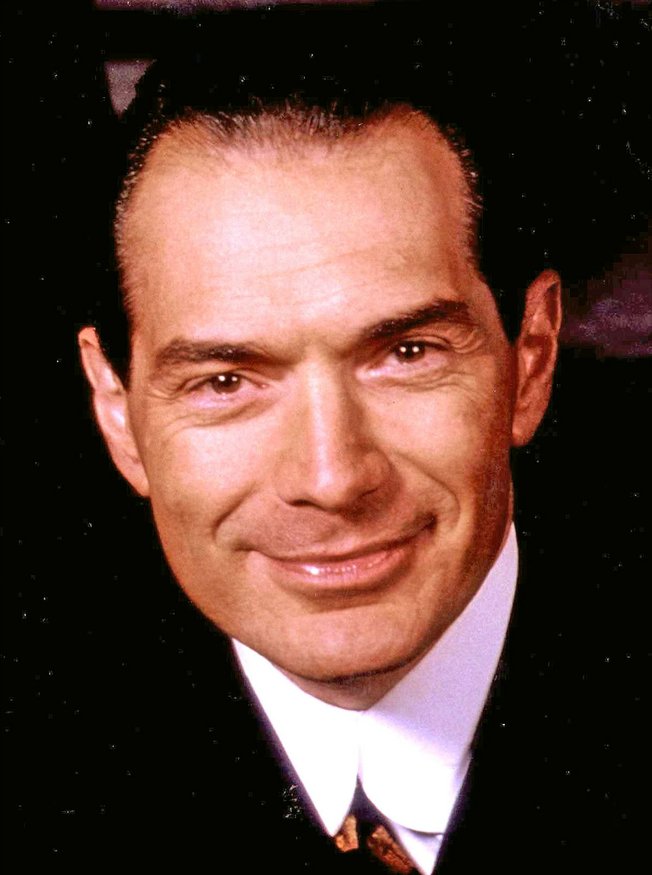 Lumbering into the tortoise race that is Japan casino bidding, the latest contender is a consortium of Mohegan Gaming & Entertainment and Oshidori International. They’re bidding on a megaresort license in Nagasaki. The president of Oshidori is an old friend, Alex Yemenidjian, late of the Tropicana Las Vegas. He said, “Through our joint bid, we aim to highlight the rich culture and diversity of the Nagasaki area, and look forward to the positive impact this project will have on the entire Kyushu region.” The company was formed for the express purpose of megaresort development in the Nagasaki area. Mohegan’s aim is more perplexing on the surface. It’s billions of dollars into the development of Inspire megaresort in South Korea, so it would at first glance appear to be eating its own lunch. However, South Koreans can’t gamble at Inspire so there’s method to MGE’s apparent madness. In the meantime, Japanese requests for proposals proceed slowly … slowly … slowly …

David- there are no links to page 2 on your RSS feeds (my preference) or on the mobile site. Not just this article–all of them. Anyone reading your content on their phone or on a feed reader is missing half of your work!
I tend to agree with Fertitta, hindsight is 20/20, but if we just shut down every restaurant, bar, and casino at the same time across the entire country, and bailed out each business and employee, we would be way better off, and our schools would be open. Other countries did this, and came out better. Our handicap was/is the 50 different states and 50 different sets of rules. No other country beat the virus 100%, but they are in way better economic condition and lost way less souls… I very rarely agree with any Fertitta bro, but this time I do, hospitality businesses needed special treatment, and denial of the realities by too many leaders led us to this quagmire… I love my country, but it has it’s flaws for sure…
My hope to all businesses to survive this pandemic.