


That’s how JP Morgan analyst Joseph Greff described an evidently persuasive virtual meeting with BetMGM covering the latter’s recent results and strategic objectives. “To us, this was a credible presentation (particularly with its customer acquisition and retention objectives and operating model as well as profitability ramp) and investors can’t argue with or dispute the [joint venture’s] recent operating momentum and share gains,” Greff declared. He was impressed with BetMGM’s nationwide market share of 23% and its potential to edge out either DraftKings or FanDuel for the second spot in the sports-betting universe, to say nothing of Internet gambling. “BetMGM now expects the total addressable market in the U.S. and Canada to be approximately $32b (long-term, timeline not specified but our guess it’s 2030 +/-),” Greff wrote, adding that net revenues for the company were growing exponentially and could reach $1 billion next year. BetMGM has gone live in 12 U.S. jurisdictions, expected to grow to 20 by April 2022. That’s 40% of the American populace. (California remains out of reach until after the 2022 elections at the earliest.)
Net revenues in the first quarter were led by i-gaming ($104 million), followed distantly by sports betting ($58 million). Michigan was the gold mine, generating $79.5 million combined, with New Jersey engendering $38 million. Live table games are a major Internet contributor, representing 15% of the Garden State tally. On the downside, “Management did not provide details on state by state basis but noted it doesn’t include NY state with a ‘flexible framework, that would allow MGM to be considered both a platform provider and an operator.'” Like casinos, Priority A is to retain high-value players. These tend to be punters who registered at a brick-and-mortar MGM casino and who wager 50% larger than the average bettor. Given its large, associated hotel portfolio and the scope of the Mlife database, BetMGM would appear to be in the catbird seat.

Not to be outdone, Las Vegas Sands reported 1Q21 numbers and its $244 million in cash flow beat Wall Street‘s consensus estimate of $233 million but was right in line with where Credit Suisse analyst Ben Chaiken expected it to be. He focused, like the company itself, on the future of Macao and what Sands might do with its Venelazzo sale proceeds (the company being soooo over Las Vegas). Chaiken thought it “tough to read” where Sands might spend its newfound $6.25 billion but thought Macao the likeliest choice, along with establishing a digital presence, throwing another spadeful of earth onto Sheldon Adelson‘s grave. New York State, so alluring so recently, is now “uncertain.” The same might be said of Texas, of which Chaiken made no mention. As for Macao, Chaiken thought Sands China the “best-positioned” operator in the region, especially with its mass-market focus, even if pent-up demand among customers might not fully manifest until 2023. Sands China generated $3.2 billion in cash flow in 2019 and only $200 million of that came from (currently scarce) VIP players. “Additionally, after 2 weeks of zero COVID cases, we think HK and Macau could open the boarder [sic] which should be a further tailwind to trends.”
Singapore faces hurdles of its own, mainly limitations on air traffic until vaccines are more widely disseminated. Chaiken continued to like Marina Bay Sands, even if its cash flow will be only a fraction of 2019 levels. Greff also projected a “gradual” Macao/Singapore recovery, shaving his price target down to $66/share (from $72). He was unsurprised that Macao was only modestly up from 4Q20 and that Singapore was flat. “However, we couldn’t help but note a more somber tone on the rate of recovery in both Macau and Singapore (given limited visibility on travel restrictions lifting/easing).” He deemed mergers or acquisitions “unlikely” and predicted that some of the Venelazzo money would be dispersed into dividends. As for Macao’s move toward digital currency, Sands leadership “believes it should not be a concern, but rather a potential source for additional player liquidity.” Regarding internal Chinese policy, “travel recovery is probably hinged on the rate of vaccinations in China and ASEAN regions, but we are sick of trying to game theory the government here,” Greff wrote with unaccustomed asperity. When it came to its Las Vegas Strip orphans, LVS didn’t even bother to report first-quarter numbers. Thanks for playing, Las Vegans, and don’t let the doorknob hit you on the way out.
Perhaps trying to change the subject after the Adam Toledo fiasco and other problems on the human-rights front, embattled Chicago Mayor Lori Lightfoot (D) issued a request for casino proposals today. Wannabe developers have to have their RFP paperwork in by Aug. 23, making verbal presentations one month later. (Chicago is letting no grass grow under its feet on this one.) From this comes the first cull of applicants, who will be invited to negotiate host-community agreements. The lucky winner will be chosen “early” next year. That’s lightning fast. “The selected applicant will propose its optimal site for the project, pending City approval, and will demonstrate excellence in casino design, development, sustainability, operations, financial stability, accommodation of multi-modal transportation needs and giving back to the community.” Having to demonstrate “excellence in casino design,” etc. will weed out a lot of the applicants to date, most of whom are newbies. In fact, the criteria essentially grease the track for the Vegas-based casino firms that Lightfoot says she wants to attract.
Despite the Second City’s thriving hospitality industry, the city says it expects “a hotel, restaurants, shops, and entertainment venues.” It’s looking for what it calls “a casin0-anchored resort complex,” which should be shooting fish in a barrel for the likes of Wynn Resorts and MGM Resorts International. It must enhance “the urban fabric of its surrounding neighborhood.” Enticements are the opportunity to run a temporary casino (not necessarily at the permanent site) for the period of construction, as well as slot routes in the city’s two airports. Beyond that, the RFP is short on specifics. Lightfoot is saying, in essence, wow us.
Elsewhere in Illinois, casino hustler “Slick Rick” Heidner is claiming “vindication” after the Illinois Gaming Board dropped a 2019 disciplinary complaint without any finding of wrongdoing. It wasn’t all-win for Slick Rick: He’ll have to pay the IGT 45 dimes in investigative fees and submit to a $30,000 fine “for disparaging text messages unrelated to the disciplinary complaint that Mr. Heidner sent in July 2019 to an adversary in litigation.” “After 18 months of denying false accusations from adversaries and fighting to protect my business, my family, and my reputation, I’m grateful that the IGB closely reviewed and considered the facts and evidence demonstrating that I did not offer an illegal inducement as the disciplinary complaint alleged,” trumpeted Heidner. The allegation in question involves a byzantine slot-machine intrigue, one in which Heidner’s Gold Rush Gaming was charged with rigging the bidding for a contract to operate 44 slot routes.
“Mr. Heidner, who was suspicious but unaware of the transaction details at the time, contends that he was merely attempting to elicit the financial details of the deal when he engaged in conversation later that same month with Dan Fischer, principal of [Illinois Café & Service Co.], which owns and operates the Dotty’s chain of video gaming cafes,” read a press release. Gold Rush may be in the clear but ICSC is not. It remains under a regulatory microscope for a transaction that has been described as anything from “highly suspect” to a “sham.” According to Gold Rush’s version of events, “In pending litigation relating to the November 2018 transaction, it was revealed that a Gold Rush competitor, Midwest SRO, had paid more than $44.5 million to the owners of the Laredo establishments before being awarded contracts with them to replace Gold Rush. At the same time, ICSC paid only $2 million, and possibly much less, to purportedly purchase Laredo and its more than 60 high-end cafes.” Illinois regulators were suspicious of the deal at the time but felt they lacked the authority to challenge it. We’ll see if they’ve found some spinal fortitude in the interim.
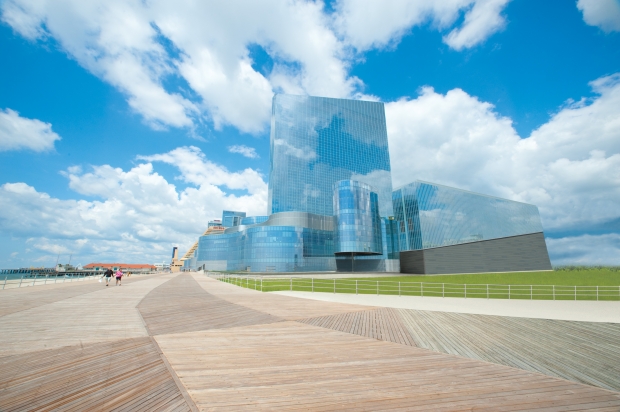
Jottings: No surprise, gross operating profits withered in Atlantic City during 2020. Ocean Casino Resort posted the best cash flow (it also led in room rate [$202/night] and occupancy [84%]), while only Resorts Atlantic City and Bally’s Atlantic City posted negative ROI. Operating profits for Internet casinos soared … Knee-jerk opposition by San Diego County to applications by Native American tribes to take land into trust (and not even for casinos) are getting on some people’s nerves. Said Rincon Tribe Chairman Bo Mazzetti, “It’s really almost a racist policy and I don’t use that term lightly” … There’s a new, more appealing face of DraftKings. The betting giant has named Gisele Bündchen, Mrs. GOAT herself, its special adviser for environmental, social and governance initiatives. Could they put her in the TV commercials, please? … With Las Vegas hotels recording 95% capacity (at least on weekends), “almost anybody who wants to work” can get one, especially dice dealers. One Cosmopolitan of Las Vegas dealer reports making $75K last year—that’s during the pandemic … Alabama could have as many as nine casinos if the state House of Representatives follows the state Senate’s lead. Details of the bill include preference for established operators such as Victoryland and the Poarch Band of Creek Indians … A constitutional amendment to permit sports betting throughout most of Louisiana failed to specify whether online wagering would be permissible. That could present a problem … A “right to return” bill supported by Culinary Union has run into a snag in the Nevada state Senate. Opponents fret that it might lead to—horrors!—lawsuits. But, by doing nothing, the Lege could open the door for casino companies to ease out older and supposedly less desirable workers in favor of fresh, low-seniority faces.
