

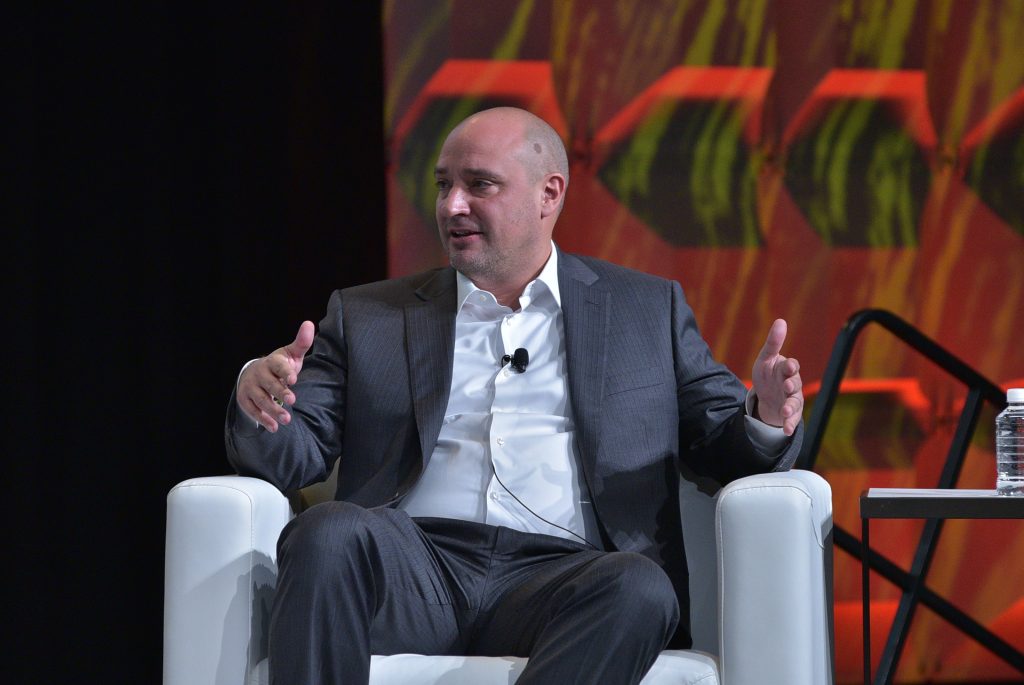
Wynn Resorts CEO Matt Maddox is leaving the building, effective Jan. 31. This shockeroo, which inspired a banner headline in the Las Vegas Review-Journal, was trundled out just minutes before the 3Q21 earnings call. Maddox will be succeeded by veteran CFO Craig Billings, who will have the experience and more than enough time for an orderly changeover. Given that former Encore Boston Harbor President Brian Gullbrants is now at the helm of Wynncore, one need not fear that the company will miss a step.
Maddox conceded that he got off to a “rough start” with some, inheriting his job under the cloud of the Steve Wynn sex scandal, “one of the messiest transitions in corporate history.” He didn’t impress us in the early going but proved a steady and proactive leader during the Covid-19 pandemic. Gaming analysts gave rave reviews to both Maddox and Billings, predicting a bright future for Wynn Resorts. As one penned, “barring conspiracy theories around the departure of Mr. Maddox, most notably the implications for the Macau process, of which we think there are virtually none, we expect a smooth transition.”
Had it not been for the Coronavirus crisis, Maddox hinted, he might have left sooner. It’s a good thing for his legacy that he didn’t, as he was defined ultimately by his performance under pressure. And, as Chairman Phil Satre added, “He ensured a swift refreshment and remaking of the board of directors and senior management, resulting in increased diversity and Wynn being recognized as having one of the most diverse boards of directors in the country.” Maddox leaves the company better than he found it when he was thrust into the top job, with Forbes Travel Guide ranking Wynn the top luxury-hotel brand in the world and the best place to work. As Maddox quantified it, “Hospitality is experiencing extreme labor shortages in North America right now, but not at Wynn. We had four open server positions in our restaurants last month, and we had 1,066 people apply. We had 22 open positions for casino cleaners last month and had 2,015 people apply. That’s a sign of a good business.” Ditto $780 average room rates last weekend—with 99% occupancy.

So wowed were analysts and reporters by the Maddox announcement that they almost overlooked the second big reveal: That Wynn Interactive would be entering a go-slow mode rather than try to compete in the costly marketing rat race that its competitors, overspending to chase market share. WynnBet won’t be relinquishing its foothold in Arizona, nor (it seems) its nascent berth in New York State. “The market is really not sustainable right now. Competitors are spending too much to get customers. The economics aren’t something we’re going to participate in during the short term,” Maddox said, adding, “we’re going to be focused on building a long-term business that’s sustainable and isn’t losing lots and lots of money.”
One analyst who thought this was the earning call’s big takeaway was Deutsche Bank‘s Carlo Santarelli. Calling the current market “irrational,” Santarelli opined that Wynn “is making a sound decision.” He projected $103 million in digital losses in the current quarter “and we expect losses to curb from that point forward, as WYNN pulls in on spending.” Internet gambling only brought $14 million to Wynn in 3Q21, not much bang for the buck. Like ourselves, Santarelli was foxed by the lack of concrete detail around the strategic pivot: “While we applaud the decision, we are a intrigued by what the process of re-engagement looks like. As we have previously said, we believe customer acquisition is one piece of the puzzle, but customer retention is an entirely different and ongoing matter, as is often the case in a commodity business.”
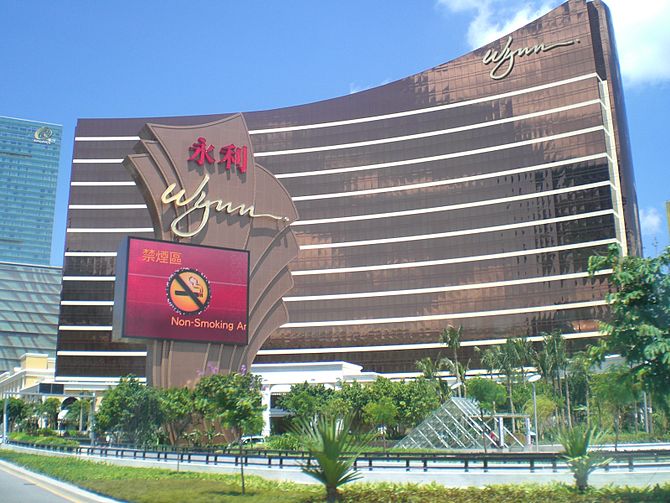
OSB and i-gaming contributed $59 million to a loss of $166 million, certainly better than 3Q20’s calamitous -$758 million. The main revenue driver, by far, was Wynncore, which garnered $476 million (with 83% average occupancy at $392/night), while Encore Boston Harbor chipped in $192 million. Both Wynn Macau ($131 million) and Wynn Palace ($181 million) did far better than a year ago, although ROI at the former was modestly negative. Accordingly, JP Morgan analyst Joseph Greff sharply ratcheted down his cash-flow projections from Macao, although he raised them for Wynncore and Encore Boston Harbor. He was optimistic about Sin City convention business although it is “something that has yet to recover meaningfully versus 2019 levels.”
Unlike Santarelli, he raised his price target on WYNN to $101/share (up from $89). As for the Maddox retirement, “While Matt is relatively young, we have to think his tenure at WYNN, especially over the last 2 years, was taxing and given corporate, Macau and Las Vegas survivals and successes is probably a good time to transition (also, we have to think the last 4 years probably felt like dog years given the downs and ups). So we get it.”
Looking ahead, Greff experienced minimal visibility regarding Macao, thanks to China‘s zero-tolerance policy on Covid-19. He doesn’t expect travel restrictions to be eased until after the Beijing Olympics. Uncertainty continues to cloud those all-important concession renewals, hindering any long-range planning. He wrote, “we don’t love the risk-reward here despite the sizable recent and YTD underperformance. We think investors are better off waiting for clarity on all of the above.” By contrast, Las Vegas and Boston were well above his projections. As for the former, “Management also noted some improvement in international travel, with direct flights from London resuming recently, though baccarat play still has plenty of room to recover before resembling pre-COVID levels.” And if the Massachusetts Lege ever gets around to legalizing sports betting, Wynn leadership is confident they can take significant market share. What was that about a “long-term” strategy? Disconnect much?

While we are in the sports betting sphere, it should be noted that there is probably more to New York State’s rejection of Barstool Sports as an OSB purveyor than its cultivation of a bad-boy image. Multiple women have accused company founder Dave Portnoy of sexual harassment—and event that caused Penn National Gaming shares to plummet 20% last April. The ladies alleged “frightening and humiliating” treatment by the unshaven Portnoy, who played the victim card, saying “I’ve never done anything weird with a girl, ever, never anything remotely nonconsensual.” Turning to a trope which would play well on Fox News, he added, “Cancel culture has been coming for me for a decade. This is just the next iteration.” Some of the accusations against Portnoy are so degrading to read we will not repeat them here but one sports publication notes that “Portnoy had previously been accused of making jokes about rape and using racist language.”
Given this situation, and in a state where Andrew Cuomo could soon find himself criminally indicted for sexual misconduct (hero to zero in less than a year), it’s no surprise that Empire State regulators would be leery of Portnoy and his renegade outfit. They also nixed the application of theScore, making Penn a loser twice over. You’re known by the company you keep and Penn, which has been hiding under the cone of silence, now has tangible reason to regret huddling up with Portnoy.

It’s all over the news wires already that the U.S. casino industry is headed for its best year ever. 2020 has already been exceeded (OK, no big feat) and now Big Gaming is on track to surpass 2019’s $43.6 billion. Sheldon Adelson must be rolling over in his Jerusalem grave to know that i-gaming is being credited with much of the success, to the tune of $938.5 million last quarter. Taken as whole, the gaming industry banked $14 billion in 3Q21. American Gaming Association President Bill Miller (above) was quick to note the cumulative success: “Our recovery is not a flash in the pan, but rather a sustained result of our leadership in responsible reopening, world-class entertainment offerings and widespread favorability.” (Well, except in Richmond.) Those numbers will be more boffo still when unquantified Native American casinos are taken into account.
Stockton University gaming boffin Jane Bokunewicz attributed the record-breaking numbers to cabin fever. “After a year of restrictions and quarantines, people were anxious to get out and enjoy in-person experiences again,” she told Fox News. “The casino industry responded quickly to implement clean and safe protocols providing a welcoming environment to people seeking safe social activities.” Bokunewicz added that an audience weaned on Internet gambling and OSB was probably keen to sample the live iteration.

Speaking of brick-and-mortar casinos, Missouri‘s were up 14.5% last month, winning $162 million. Ameristar St. Charles ($26.5 million) was tops, jumping 21%. Penn did better at River City, grossing $21 million on a 13% gain, than at Hollywood St. Louis, flat at $19 million. Lumiere Place climbed 8% to $13 million. In Kansas City, the rebranded Bally’s Kansas City rocketed 92.5% to $10.5 million—amazing what a good, new brand can do. By contrast, Ameristar Kansas City (pictured) was up only 2% to $17 million. Argosy Riverside booked $15 million, a 14% hop and Harrah’s North Kansas City inched up 1.5% to $15 million.
If the Osage Nation has its druthers, Missouri will have its first tribal casino. The Osage seek to build a $60 million Lake of the Ozarks gambling hall. Trouble is, they’re not federally recognized in Missouri. So they need reservation land that can be taken into trust for gaming. They also need a compact with Gov. Mike Parson (R) and he’s keeping his own counsel on the issue. The Osage have multiple supporters in the Lege but if Parson can’t be budged that’s a moot point. For the record, Missouri currently has 13 casinos who pay a 21% tax rate. The Osage aren’t floating any revenue-share numbers but they are saying 90% of the jobs created would go to non-tribal members. This moved former Rep. Rocky Miller (R) to say, “My family has been here 161 years. My great-grandfather worked on the Bagnell Dam project. The area has always been about growth and this is just another method of growth, in my opinion.”
Still, not only is Parson mum, the Osage do not seem to have been in touch with him, a serious misstep, if true. Still, this isn’t their first rodeo: They operate seven casinos in Oklahoma and if they can work with Gov. Kevin Stitt (R), surely they can palaver with Parson. The fine hand of Penn National Gaming can be detected behind this latest casino push, as chief lobbyist Steve Tilley is also on retainer with Gaming & Leisure Properties. He also represents renegade slot-route operator Torch Electronics (making a bid for respectability?). He’ll have to educate lawmakers like state Rep. Suzie Pollock (R), who naively said, “I think it should be a local vote of the people in Miller County and the surrounding area.” That’s not how it works, ma’am.
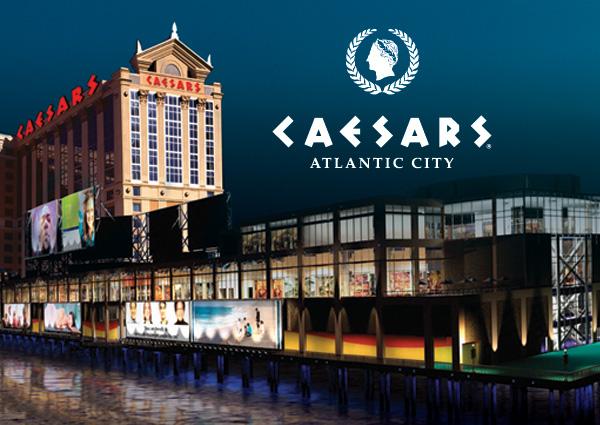
Before we leave Missouri we should note that Caesars Entertainment is holding another fare sale and Lumiere Place has risen to the top of the regional food chain at $159/night. (Tropicana Laughlin brings up the rear at $30.) In Atlantic City, our East Coast bureau reports, it’s $54/night for Harrah’s Resort and Tropicana Atlantic City but $74/night for Caesars Atlantic City. (Gotta defend that brand equity.) Our correspondent fell back on the Golden Nugget after finding Borgata and Hard Rock Atlantic City fully booked last weekend. Ocean Casino Resort, meanwhile, is hoping to lure guests with a Nov. 20 screening of the Ocean-filmed Bruised, starring and directed by Halle Berry. You can say that “bruised” is what Ocean has done to the competition’s revenues, especially the Caesars threesome.

I will go ahead and say it, Portnoy is a straight up creep who took the hate Colin Kaepernick baton from the ex-POTUS and ran with it… He made a bunch of idiotic statements about Kaepernick’s looks, compared him to a “terrorist”. Penn National either does no vetting at all, or just does not care about being associated with a guy spouting racist idiocy… And the women who accused him of being a violent creep were all just recently out of high school. Kaepernick has given hundreds of thousands to charities, and was protesting police brutality by kneeling during the National Anthem. A former Marine instructed him to kneel instead of sit…