

In a big “up yours” to the federal judiciary, the Seminole Tribe—after momentarily pausing—has resumed taking sports bets and is effectively daring the courts to do something about it. If that weren’t nervy enough, the Seminoles have asked Judge Dabney Friedrich for a stay of her own order shutting down the new compact with the state of Florida. Tribal government has some strange ideas about how to make friends and influence people. We don’t think Judge Friedrich is going to be amused by this one-finger salute from the Seminoles and it makes any plea for clemency that much more implausible. By showing themselves to be bad actors, how do the Seminoles argue before the court that they deserve a reprieve while the judge’s ruling is appealed, a process that is expected to take six months and is not expected to be successful? It all comes down to buying time for more sports betting, period, but Chairman Marcellus W. Osceola has a funny way of going about it.
“The tribe’s online sports betting authorized by the compact is now in operation, and is generating millions in revenue per week,’’ he bragged to Friedrich. “The tribe is using these funds to pay back the development costs for its online sports book, make revenue-sharing payments to the state and fund important tribal programs.” In a whopper of an assertion, the tribe’s lawyers argue that Seminole sovereignty would suffer “irreparable harm” without sports betting. Sorry, but there’s nothing in IGRA entitling tribes to the kind of all-consuming market reach that Gov. Ron DeSantis (R) gave the Seminoles. The guv was badly advised and the tribe took him to the cleaners, in that one regard. DeSantis has even admitted that the compact ventured into unknown legal territory, which further undermines the Seminoles’ case.
In the meantime, DeSantis is out $75 million in revenue-sharing payments that were predicated on sports betting. The tribe has spent $25 million more on setting up this bootless venture, damage it claims is “irreparable,” which is hilarious to anyone familiar with the money-spinning nature of the Hard Rock-branded casinos the tribe owns. DeSantis hopes to salvage the non-OSB provisions of the compact, which may be tricky to do after lawyers for the defense failed to sever OSB from the brick-and-mortar aspects of the grand, $2.5 billion bargain. (Somebody needs to sue for legal malpractice or file an appeal based on incompetence of counsel.) DeSantis couldn’t find the time to reach Friedrich’s 22-page ruling but his press secretary Christina Pushaw did. She claimed to find it “perplexing” but pregnant with “appealable issues.” Good luck with that, especially if you’re maintaining—as Pushaw did—that Florida is not a party to the case.
Gaming-law attorney Daniel Wallach had the perfect smackdown, replying, “The state filed an amicus brief, and the tribe filed a motion to intervene. While they may be perplexed by it, it’s even more perplexing why they signed this compact.” Amen to that.
We’re playing the world’s tiniest violin today for Las Vegas Strip casino operators who claim that they’re hampered by a lack of employees. Earlier this week some of these same gentlemen were in Miami bragging on their low levels of manpower (70% of pre-pandemic employment) and resolving to staff up to no more than 85% in the new year. So the next time you have trouble getting service on the Strip, blame the folks in the C-suite. Ironically, the lack of collective-bargaining agreements off the Strip is redounding to the benefit of prospective employees at the likes of Station Casinos and Boyd Gaming. Given the increase in wages in the private sector, would-be locals casino workers are able to demand as much as 25% more, management lamented.
However, they had to admit that it’s not all a bad thing: Deutsche Bank analyst Carlo Santarelli reported that “the impact of higher wages in other sectors has and is expected to continue to have a favorable impact on LV locals gaming revenue.” Getting back to those Strip operators, one is forced to conclude that the customer almost matters to them—but not nearly as much as delivering Wall Street big EBITDA margins.
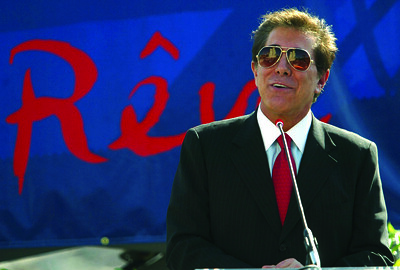
No tears either for aging lothario Steve Wynn, who will have to continue defending himself against a sexual-harassment lawsuit brought by nine manicurists and makeup artists at Wynn Resorts. The women are all filing as Judy Does for fear of retaliation either at work or from Wynn himself, who has gone into seclusion. The women “each suffered similar but individualized acts of sexual harassment and personal degradation by Steve Wynn … at different times, with different durations and under different (and unique) circumstances,” the filing reads. Wynn Resorts is a codefendant because it supposedly “knew of Steve Wynn’s propensity of misconduct towards female employees, failed to investigate and covered up any reported misconduct.”
Judge James Mahan tried to dismiss the lawsuit, in part because the women weren’t individually identified and their accusations were insufficiently graphic. (Prurient much?) The Ninth Circuit Court of Appeals reinstated portions of the lawsuit, ruling that the women “repeatedly expressed a willingness to provide more information, so long as their privacy could be assured. While the Judy Does had no automatic right to file an amended complaint, the District Court still should have granted leave to amend when dismissing claims that could be cured with additional facts.”
Jottings: We must inform you that CrossRoads CEO Dave Marlon has had to step down under accusations of gross sexual misconduct. It is incumbent upon us to mention that Marlon was an occasional contributor to S&G on mental health issues … Having joined WynnBet in October as COO, seasoned industry veteran Ian Williams suddenly finds himself president of Wynn Interactive, following the promotion of Craig Billings. Given the newly announced retrenchment of the interactive division, Williams will doubtless have plenty of time to push pencils …
Quote of the Day: “After the formal announcement was published concerning the change in leadership for the facility, a press conference was scheduled. In this session I mentioned my plan for an eight-week turnaround marketing effort for the property and the late Gary Thompson, then a reporter for the Las Vegas Sun, asked what was so special about eight weeks. I told him this was because the property only had about eight weeks of cash left. I added that if the property had nine weeks of cash left, I would have developed a nine-week turnaround plan.”—former Stratosphere president Richard Schuetz, on his early days at the then-troubled casino.

I generally support the one finger salute to local, state, and federal governments.
The Governor of Florida literally violated Florida law about expanding gambling, and gave away the farm on sports betting to one entity. I promise not to forget that this crazy scheme has buried within it a path for the Doral Resort to offer casino gambling. DeSantis has not proven to be an honest broker in gambling expansion, and there are rumors that millions in bribe money greased the skids for some medical marijuana licenses in Florida, which should shock nobody… By the way David, I enjoyed reading your article in CDC Gaming Reports, it was very well written…