

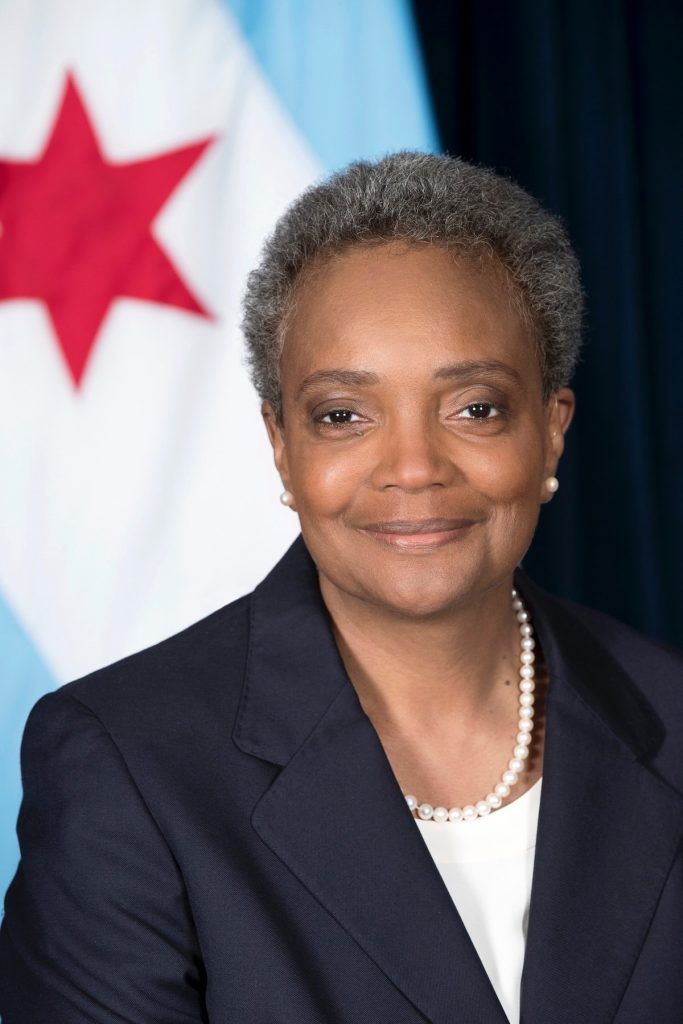
Chicago Mayor Lori Lightfoot (D) has really put her foot in it this time. Not only are Windy City aldermen balking at five stadium-area sports books in addition to a billion-dollar casino, fearing cannibalization, but Lightfoot threw gasoline on the fire with the oh-so-casual remark that taxpayers would be footing the bill for the infrastructure needed for aforesaid sports books to operate. Spending public money to make already-rich people even richer would be a hard sell to voters, we’re sure. Also, Lightfoot’s much-touted 2% extra impost on sports books was derided as “paltry” after her office said it would bring in $400K-$500K a year, peanuts compared to the tax dollars a casino would pay. Back in the day (2009), Lightfoot said freestanding sports books had “the potential to undermine the viability of any Chicago-based casino.” Lightfoot 2.0 now deems them essential and is allied with the Lege in trying to strong-arm aldermen into going along.
While Wrigleyville Alderman Tom Tunney felt there was some benefit to be derived from having a sports book at Wrigley Field on days when the stadium is otherwise dark, he also noted pertinently that the vast majority (93.5% in Illinois) of sports betting happens online. Since a pair of OTBs in Chicago would also be able to offer sports betting, in addition to the five major stadiums, we’re really talking about seven sports books, making the eventual, casino-based one effectively redundant. The mayor could still get her way but she’s finding it hard to close the sale.

Speaking of Prairie State sports betting, handle reached $840.5 million in October, thanks to five weekends of football, etc. “Regardless,” argued PlayUSA analyst Eric Ramsey, “a new high highlights the continued strength of Illinois’ market, and it should grow even stronger in the coming months.” The next-best month, March, saw $633.5 million in handle. The growth to which Ramsey alluded would be spurred by the passage of HB 3136, which would finally kibosh the state’s in-person-registration rule, potentially turning Illinois into another billion-dollar market, up there with New Jersey and Nevada. Early Chicago Bulls action helped, as did an abortive Chicago White Sox playoff run, while the sludgy performance of the Chicago Bears retarded NFL wagering somewhat. Tennis and soccer also made impressive showings.

Despite all that handle, it devolved into $48 million in revenue. DraftKings took the most bets—$315 million—but scared up just $12 million. Getting more bang for the buck was FanDuel, realizing $22 million off handle of $237 million. Caesars Sportsbook and Boyd Gaming ate dust, while somewhat more impressive performances were had by BetRivers ($136 million handle/$8 million revenue), Barstool Sports ($70 million/$3 million) and PointsBet ($62.5 million/$3 million).
Ohio could be giving other states a running for sports-betting dollars by 2023, a legislative compromise having passed both houses with veto-proof majorities. “It’s like negotiating an agreement with the Ohio State Buckeyes, the Michigan Wolverines, the Boston Red Sox and the New York Yankees,” observed state Sen. Kirk Schuring (R), one of the proponents. Under the terms of the bill, 25 five-year licenses would issued simultaneously, with the Buckeye State’s 11 casinos and racinos qualifying for two skins apiece—if an “incremental benefit” could be demonstrated by having a second skin (the first would cost $3 million, the second $10 million). Brick-and-mortar businesses could qualify for Type-B retail betting, and bars would be eligible for Type-C spread and over/under bets, $700 payout max.
Revenue would be taxed at 10%, with the bulk of the proceeds (98%) dedicated toward education and 2% going to problem gambling treatment. (It ought to be more.) Toward the end of negotiations, Democratic candidates for governor saw an opportunity to play political football, with at least one wanting to take oversight away from the Ohio Casino Control Commission and put it with the state lottery. There’s a problem with the optics of that: “Former House Speaker Larry Householder, R-Glenford, wanted sports betting regulated by the Ohio Lottery Commission instead, but he was expelled from the Legislature amid a federal bribery probe.” Still, Cincinnati Mayor John Cranley (D) postured, “I’ll appoint members of the Lottery Commission as governor to enact sports betting in a way that will help public schools, not screw public schools and help small towns and businesses throughout Ohio and not screw them.” Not to be left out, Dayton Mayor Nan Whaley (D) fretted that the Lege was being too opaque and “the state needs to have full oversight.”

Casinos—remember them?—in Ohio booked $179 million last month, an 11% improvement over 2019, even if it marked a slowing from October. MGM Northfield Park dipped 1% but still led the state with $21 million and change. It was matched by Jack Cleveland with $21 million even (+12%). Hollywood Columbus was close behind at $20.5 million, a 10% gain, Hard Rock Cincinnati hopped 14% to $20 million, while Hollywood Toledo grossed $17 million, up 7.5%. Jack Thistledown galloped 20% faster to $14 million and Scioto Downs climbed 13% to $17.5 million. Miami Valley Gaming was up 9% to $17 million, while Belterra Park (just spotlit on FBI Most Wanted) collected $7.5 million for a 9.5% boost. Hollywood Dayton vaulted 21% to $12 million and Hollywood Mahoning Valley leapt 16.5%, also to $12 million. Not a speck of bad news to be had.
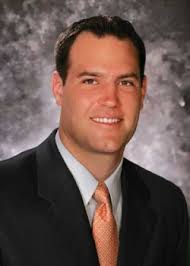
Back to sports betting. Penn National Gaming CEO Jay Snowden said something very strange in a recent conference call. “I don’t think a single operator will make money in New York” he harrumphed. Maybe he was just in a sulk because Barstool Sports and theScore had both been flushed down the Empire State toilet. However, if Snowden really thought that all along, why did he try to get into New York State twice over? And wasn’t he breaching his fiduciary duty by doing so? To compound the bad news, Nevada regulators are looking into Snowden’s BFF Dave Portnoy, centering on “various sexual harassment and misconduct allegations.” The Nevada Gaming Control Board put Penn CFO Felicia Hendrix in the hot seat during her licensing hearing, bringing up l’affaire Portnoy. As long as Snowden (below) has Penn’s wagon hitched to Portnoy’s backside, such questions are going to keep on coming.
In counterpoint to Snowden’s gloom, BonusFinder went completely gaga over the New York market in a report so euphoric it makes you want some of that coke BonusFinder must have been snorting. “New York will become the U.S. sports betting market’s most lucrative and consumer-friendly state,” raved the report, arguing that population size, heavy promotional activity and competition will spell P-R-O-F-I-T-S. “The Bonus Index is able to accurately plot and track how successful every North American state sports betting and casino market is month on month,” boasted Managing Director Fintan Costello. “New York is one of the U.S. sports betting market’s crown jewels: a large state with millions of passionate sports fans and bettors … The convenience for consumers and the number of licenses issued means operators will be competing hard for accounts. And that means [players] will be presented with some of the country’s most competitive bonuses.” Hmmm … doesn’t sound like a recipe for industry wealth to us, given OSB’s current profitability (elusive). Heck, BonusFinder predicts OSB providers will be giving away money—as much as $5,000 in free play—in order to secure business. It may well be like trying to catch the wind in a net.
Full House Resorts got both good and bad news yesterday. Illinois regulators picked its American Place casino concept for Waukegan (the other license handed out went to Wind Creek Hospitality for a casino in the southern Chicago suburbs). Full House almost swept the board in an independent consultant’s evaluation of rival Waukegan proposals and got the nod it should have received. As outlined to regulators, American Dream will be “a high-end gambling temple catering to high-rollers—complete with ‘ultra-luxurious’ villas and a helicopter landing pad.” Price tag: $400 million.
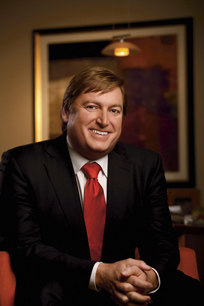
However, CEO Dan Lee‘s ex-wife, Rep. Susie Lee (D), came under some unwelcome Daily Beast scrutiny. Full House received Paycheck Protection Program loans to the tune of $5.5 million (although it laid off 95% of its workforce, according to Mr. Lee himself) during the worst of the pandemic. Now it is asking for forgiveness of the loans, a program which Rep. Lee advocated. She’s also a FLL shareholder, complete with stock options, as much as $5 million. First, if you’ve sat in on Full House’s recent earnings calls you know they can afford to repay the money. Second, you don’t have to march in lockstep with Rep. Alexandria Ocasio-Cortez (D) to believe that senators and congressmen owning stocks, especially when their actions could affect those stocks, is A Bad Thing. Then-senator David Perdue helped spark a panic in Caesars Entertainment shares when he liquidated his position following a confidential Covid-19 briefing.
Rep. Lee’s far from the only congresswoman (or -man) affiliated with business that took PPP loans. All the more reason for a Chinese Wall to be put in place preventing this kind of self-dealing. Irony alert: Rep. Lee’s GOP opponent, April Becker, took PPP money while simultaneously criticizing it as “socialist spending.” Granted, the built-in forgiveness clause of PPP was practically a license to default, but businesses should be discouraged from doing so whenever possible. Just because something is legal doesn’t always make it right.

Finally, New Jersey state Senate prexy Stephen Sweeney (D) is signaling some flexibility on outlawing smoking in Atlantic City‘s casinos. It wasn’t a sweeping commitment, per Politico: “the Senate president told reporters earlier this week it was ‘possible’ the measure advances in lame duck, though he’s concerned the ban could put Atlantic City casinos at a disadvantage to those in Pennsylvania.” However, with revenue figures out of both states continuing to belie Sweeney’s contention, his position becomes less morally tenable by the day.
Quote of the Day: “Science is organized knowledge. Wisdom is organized life.”—historian Will Durant.

No member of Congress should own or trade stocks, they get insider information as part of their job, and many end up taking advantage… Of course getting that to become law, or anything that limits lawmakers financial upside, would be an epic uphill slog. Civics classes in schools these days are essentially useless, because the pendulum has swung so hard off kilter that it’s not safe to assume lawmakers care about the country or constituents…