


Leave it to Wynn Resorts to squelch news of a bad 4Q21—losing $256.5 million—with an, oh by the way, announcement that it was selling Encore Boston Harbor for $1.7 billion (essentially breaking even on construction costs) and leasing it back. The move is out of character for Wynn, which likes to own its real estate. The company will be renting über-lucrative Encore for $100 million a year, which seems a fair price to pay for such a phat asset. The buyer is San Diego-based, generically named Realty Income Corp. CEO Matt Maddox and CFO Craig Billings insisted this was a one-off for Wynn, with Billings saying, “In Boston, we were able to achieve both an attractive cost of capital and that asset is based on the stability of revenues in the regional markets and the much lighter CapEx burden relative to say Las Vegas made it a logical financing source for us, which is really what it was.” The nearly $2 billion will be sunk mostly into the United Arab Emirates, where Wynn plans a casino-based destination resort.
“On the whole, the 4Q21 was uneventful from an operating perspective,” wrote Deutsche Bank analyst Carlo Santarelli. “Domestic results were strong, Macau remains soft, and the winding down of the Interactive segment losses is underway.” In short, “all resonate favorably.” Macao was impeded by a one-time debit of $24 million and still missed Wall Street expectations, even with a stronger-than-expected Chinese New Year. (Mass-market has never been a Macanese strong point for Wynn and it was even weaker this year than last.) The Las Vegas Strip, by contrast, outperformed anticipation even with low hold exerting a $10 million downward pull. Average room rates at Wynncore were $441/night (on 86% occupancy), yielding $380/night of revenue per available room. Table win was $121 million and win/slot/day was a healthy $548 (for $88 million).
Broken down by property, Wynncore brought in $494 million, Encore BH $2004 million, Wynn Macau $132 million and Wynn Palace $194 million. Not only was Boston “nicely ahead” of projections but Wynn Interactive losses were less than anticipated. Bad weather, Omicron and higher labor costs bode a bit less well for 2Q22, Santarelli predicts. Before leaving Massachusetts, we note that gambling revenues last month were down 11% on a same-store basis. Encore BH, not open in early 2019, snared $54 million, while Plainridge Park fell 20.5% to $10 million and MGM Springfield turned up $18.5 million, a 5.5% dip.
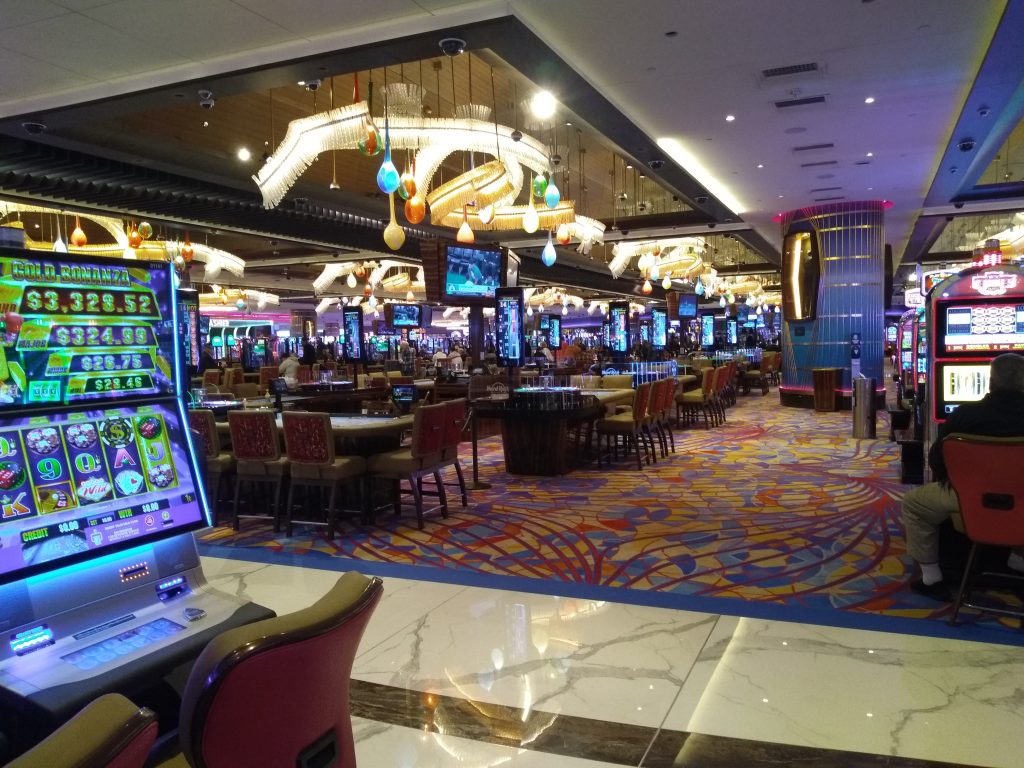
Atlantic City brought in $183.5 million in January, up 15% from last year. Slots dominated with $129 million despite 4% less coin-in. Tables generated $53 million on 12% less wagering. Borgata, of course, was out front with $48.5 million, despite a 4% decline from two years ago. Outperforming 2019 spectacularly were Hard Rock Atlantic City ($35 million, +123%) and Ocean Resort ($24 million, +95%). Everyone else was feeling the blahs. Bally’s Atlantic City took a -27.5% hit, making $9 million, Caesars Atlantic City dipped 6.5% to $16 million, Harrah’s Resort slipped 19% to $17.5 million and Tropicana Atlantic City fell 30.5% to $14.5 million. Less fortunate still were Resorts Atlantic City, down 27% to $9 million and Golden Nugget, off 28.5% to %10.5 million.
Despite a 41% increase in handle to a record $1.3 billion (take that, Empire State!), actual sports betting revenue fell 27% to $60 million. Most of that ($35.5 million) went to a FanDuel/PointsBet/SuperBook consortium, distantly followed by DraftKings/Fox Bet/Resorts with $10 million. Fattening the handle were an extra week of NFL games, more playoff games and the college football national championship (go Dawgs!). The one potential loser in the legalization of OSB next door is the FanDuel retail sports book at the Meadowlands, which took the huge lead this month in walk-up revenue with $3 million—but maybe not for much longer. Internet gambling was a tight race between Borgata (28.5% market share) and Golden Nugget Online (26.5%), followed closely by Resorts Digital (24%), then by Caesars Entertainment (14%), Hard Rock A.C. (5%), Ocean (1.5%) and Bally’s (1%).
So how was New York State OSB doing? Quite well, in fact, with $1.7 billion in January handle, leading the nation and by far, far the most ever in a startup month. Books did better in terms of revenue than in the Garden State, recording $124 million in revenue—$63 million of which went right into Gov. Kathy Hochul‘s state coffers. “You run out of superlatives to describe what happened in New York last month,” enthused PlayUSA analyst Eric Ramsey, adding, “There might be some moderation over the next few months as bettors get used to sports betting and the football season closes. But this market is still in its infancy, and the ceiling for New York looks to be even higher than initially thought.” Caesars Sportsbook held onto its early lead, grossing $59 million. FanDuel was way ahead of DraftKings in handle, $517.5 million to $378 million, but fell behind its arch rival when it came to revenue, $28 million to $29.5 million. Well, well back were late entrants BetMGM ($4 million in revenue), PointsBet ($2.5 million) and BetRivers ($1 million), while Wynn Interactive barely registered. But it’s Caesars’ ballgame and everyone else has a lot of catching up to do.
Staying with sports betting, it rang up $36.5 million in revenue in Michigan last month, although that was nothing compared to the $121 million booked by i-gaming. (Brick-and-mortar casinos, by contrast, generated $99 million in revenue, down 12% from 2019.) Of the $533 million in sports-bet handle, FanDuel’s 27% market share was first, hotly pursued by DraftKings’ 26.5%. BetMGM was in the thick of it with 22% while Barstool Sports and Caesars contented themselves with 10% and 7% respectively. When it came to revenue, BetMGM leapfrogged DraftKings for second place, $11 million to $6 million. MGM Grand Detroit dominated i-gaming with 36% market share ($44 million), then DraftKings and FanDuel (16.5% apiece), WynnBet and Barstool hovered around 4% each.
Fattened by $23 million in early Super Bowl wagers, Tennessee‘s OSB-only industry ginned up $386 million worth of handle. That translated into $36 million in revenue, or $29 million after promotions were subtracted. At least they’re not giving away the store.
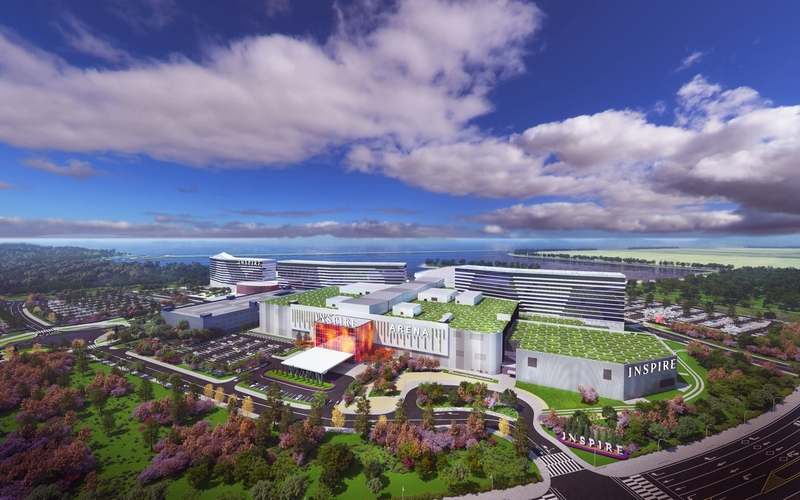
Jottings: After losing $9.5 million on the Super Bowl to Caesars Sportsbook, potential disordered gambler John “Mattress Mack” McIngvale vows to keep on betting. With a net worth of $300 million, Mattress Mack can’t afford many more flutters like Feb. 13 … James Packer is exiting the casino industry and not a day too soon. A Blackstone Group offer of $6.3 billion for troubled Crown Resorts was finally rich enough for his board. The offer represents a stepdown from Crown’s pre-pandemic stock price but the fourth time was the charm for Blackstone, rebuffed thrice before. The increasingly reclusive Packer could still block the deal but he’d have some explaining to do to fed-up shareholders … Work on the MSG Sphere at Venelazzo is proceeding apace, unaffected by supply chain problems. Buying the key ingredients pre-pandemic seems to have done the trick … It sounds like Las Vegas Sands is being more circumspect about pushing for Texas casinos after badly overplaying its hand in the 2021 Lege. CEO Rob Goldstein was paraphrased as saying that Sands “will be ready” if casino gambling is enabled and “is committed to discussing the possibility of Texas casino gaming with Texas stakeholders.” That sounds a lot different that parachuting 70-plus lobbyists into Austin … Spending on sports-betting advertising is spiraling out of control. It hit $725 million last year, more than what was spent pushing breakfast cereal. The American Gaming Association‘s Casey Clark, responding to ad overkill, said “They’re fair concerns, and certainly something that the industry is well aware of, paying close attention to” … Mohegan Gaming Entertainment has resumed construction on Inspire (above) in South Korea and its $1.5 billion share is fully funded. MGE hopes to open Inspire by June 2023 … Want to get away from the ubiquity of McDonald’s? Go to mid-Nevada (specifically latitude: 37.92901longitude: -116.3234) and you’ll be 135 miles away from your next Big Mac Attack.
