

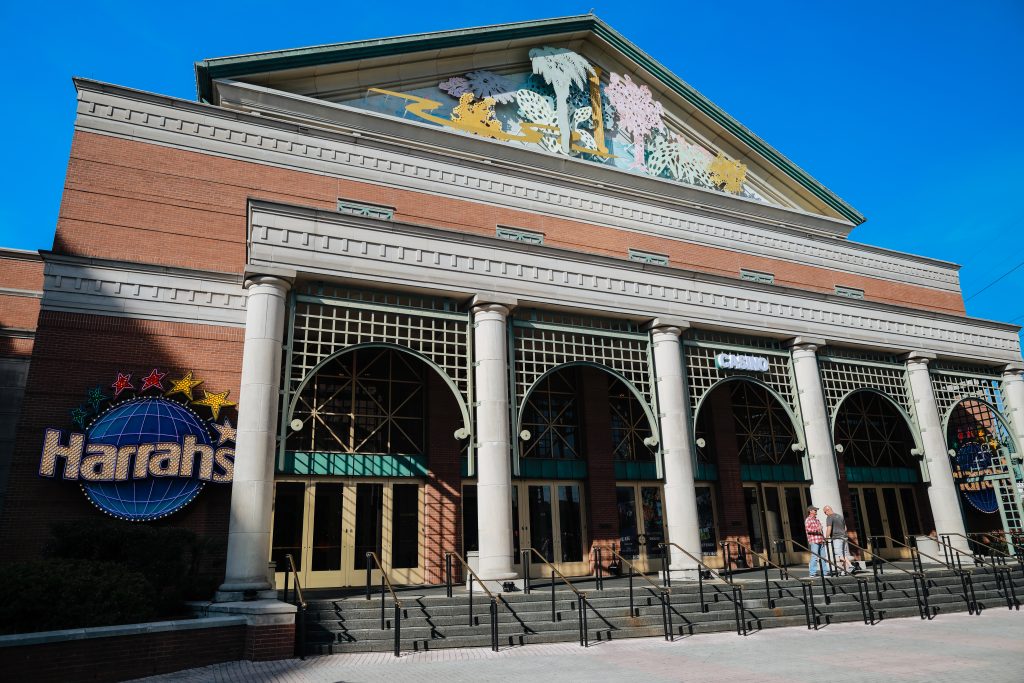
Gaming analysts have been cautioning us to expect “difficult comparisons” between 2022 and previous high-water years late 2019 and 2021. Indeed, Louisiana‘s January was flat with 2019, if up 8% from last year. Sports betting was weak: $49 million in handle, boiling down to $5 million in revenue. Harrah’s New Orleans wasn’t exactly a bastion of strength either, falling 22% to $18 million. Boomtown New Orleans picked up 23% to finish at $11.5 million while Treasure Chest ceded 1% for $8 million and Fair Grounds racino slipped 7% to $3.5 million. Out in Lake Charles, victory went to L’Auberge du Lac, leaping 24.5% to $30 million. Golden Nugget gained 18% to finish with $26 million and Delta Downs was off 14.5% to $12.5 million. In Baton Rouge, decrepit Belle of Baton Rouge eked out $1 million in a 58.5% plunge. Hollywood Baton Rouge slipped 5% to $4 million while L’Auberge Baton Rouge exercised its usual dominance with $17 million, a 61% moonshot.
In the crowded Shreveport/Bossier City market Margaritaville ($17 million, +36%) continued to outpace Horseshoe Bossier City ($13.5 million, +5.5%). Except for Bally’s Shreveport ($8 million, +2%), everyone else was fighting for scraps. Sam’s Town Shreveport is an ongoing calamity, plummeting 41% to $3 million, Boomtown Bossier slid 12.5% to $3.5 million and Louisiana Downs was down 5.5% to $3 million. Remember, Diamond Jacks only has a few days left to meet its Feb. 25 deadline to re-enter the marketplace.

DraftKings reported 4Q21 earnings [sic] results and they stink. Net revenue of $473 million cost $253 million to acquire. Then, after sales and marketing ($278.5 million), product and technology ($69.5 million), and “general and administrative”—read: salaries—of $241 million are subtracted, CEO Jason Robins is staring at a -$326 million hole. When compared to a year ago, DraftKings is making more money, but it’s costing more to do it, so the company is essentially running in place.
Credit Suisse analyst Ben Chaiken was more clement, calling the revenues “better than expected” although he had to cede that there was a (smaller than anticipated) negative ROI of $128 million. “Importantly, DKNG noted that 5 states are currently contribution profit positive, and noted that if no new states were launched they would be EBITDA positive by 4Q22.” He said this “seems like an important indicator that the model is working.” DraftKings raised its 2022 revenue forecast to $2 billion and cash flow projection to $925 million. If you’re waiting for a return on your DKNG investment, Robins’ team counsels patience, saying the company will be ROI-positive by the end of 2023.
Golden Entertainment also trotted out 4Q21 numbers and Deutsche Bank analyst Carlo Santarelli found them “solid.” The company has also further subdivided its revenue categories, reporting Las Vegas and Laughlin as “destination” markets, as opposed to locals ones. “Looking ahead, while comparisons stiffen, we believe pockets of growth exist at the destination resorts in the portfolio,” predicted Santarelli, who noted that net revenue of $282 million overall was a 37% gain from last year. Nevada drove the bus, revenue-wise ($144 million, plus slot routes), and Santarelli concluded that “the GDEN portfolio is well positioned, with considerable flexibility, given the real estate ownership and healthy operations. We have raised our price target to $66 from $61 on higher out year forecasts.”
Let us now praise Caesars Entertainment. Current management has finally done what several previous administrations could not or would not: It has kicked timeshare salesmen to the curb. One unnamed Caesars exec compares negotiating the timeshare gauntlet to “negotiating annoyance zones” and Vital Vegas author Scott Roeben reports that the company decided that pissed-off customers weren’t worth whatever lucre Wyndham sales reps brought in. Roeben also acknowledges the unspoken truth that present-day Caesars is a whale that was swallowed by a guppy, Eldorado Resorts (or “a flea raping an elephant” as a colleague of mine said of an attempted Caesars takeover by another small company). If you’re hoping for the eventual return of Laurel Lounges or non-Bacchanal buffets, forget it. Cost-cutting is the order of the day. At least Roeben offers a convincing defense of Caesars’ decision to reinstate paid parking, citing some freeloader horror stories.
It’s ironic that Caesars is being cheap when the Wall Street Journal reports that a big tourism splurge is on the way? Don’t take it from the WSJ: This is coming from everybody from Expedia to MGM Resorts International. “Premium customers, who after being cooped up for 2020 and the first part of 2021, are traveling and spending again with a vengeance,” said Wynn Resorts‘ Craig Billings, who’s in a position to know. Business at Disney theme parks is doubling and Marriott International is seeing new demand largely at the high end of its properties. Demand for Major League Baseball is also expected to be high—provided that MLB stops trying to stick to those upstart players for wanting fair return on their services.
“What we observed most notably is that the issues that evolved were really issues of inconvenience,” said Expedia CEO Peter Kern. “There were border shutdowns, there were planes out of service because pilots and crew were sick, things of that nature, but there was far less consumer fear over traveling, and really, it was an issue of the inconvenience of the health issues.” There is, alas, an inflationary downside, as luxury brands jack up their prices to take advantage of the spending spree. (If you were planning to attend Global Gaming Expo at Venelazzo this year, you may want to double your budget.) However, consumer resistance to these increases seems slight so far. “Luxury really is immune,” said Jefferies Group analyst Kathryn Parker, “They have the pricing power to offset any underlying cost inflation.” Vegas can vouch for that.
Hard Rock International CEO Jim Allen says the company has three potential sites lined up for a New York City casino but is being coy about what they are, perhaps fearing a NIMBY backlash from Manhattan. Strangely, at least to us, an NYC casino doesn’t preclude a megaresort at the Meadowlands in Allen’s mind. “I’m not saying we would drop a Meadowlands option … we have to look at all the different circumstances. There’s certainly the ability to have more than one product in a geographic area, as we’ve done many times in our industry.” (*cough*Chicago*cough*). He’s more concerned about the amount of business a Hard Rock in either the Big Apple or at the Meadowlands would pull away from Atlantic City, a good question indeed.
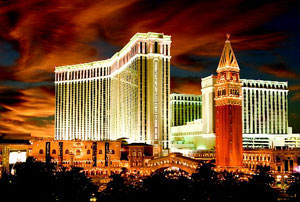
In supine fashion, the Nevada Gaming Commission voted 4-0 to hand the keys of Venelazzo to ethically challenged Apollo Management. At least Commissioner Rosa Solis-Rainey had the decency to abstain, given that her law firm had worked for Apollo, a display of probity not seen on the Nevada Gaming Control Board. NGC members were described as “concerned” about Apollo’s role in the Caesars Entertainment bankruptcy and regarding the involvement of disgraced Apollo founder Leon Black, a 12% shareholder. But they weren’t sufficiently concerned to vote against the deal, which has been pushed by Gov. Steve Sisolak (D), in a display of executive interference that warrants investigation. At least we got some long-delayed clarity into the new Venelazzo management structure. Rather than jobbing in its Great Canadian Gaming braintrust, Apollo will promote Venetian President George Markantonis to property CEO, atop a new operating subsidiary. Let there be no question, this was a done deal from the start.
Jottings: Gaming had very little momentum in the Hawaii Lege, especially in an election year. A spate of bills to do everything from “study” the issue to legalizing sports betting died ignominiously … Isle Casino Pompano will soon be Harrah’s Pompano. A major capex infusion accompanies the rebranding … Remember the Terrible’s casino in Jean? Probably not. A closure victim of Covid-19, it’s set to be leveled in favor of an industrial park. There’s not much demand for a casino, as Jean’s “only residents are the prisoners in Jean Conservation Camp, a state facility that houses 240 female inmates” … A dark horse has emerged in the Japan megaresort derby, Shinjo City. It’s a small town—35,000 souls—but Current Corp. is shopping around for someplace to land after being rejected by Nagasaki.
