

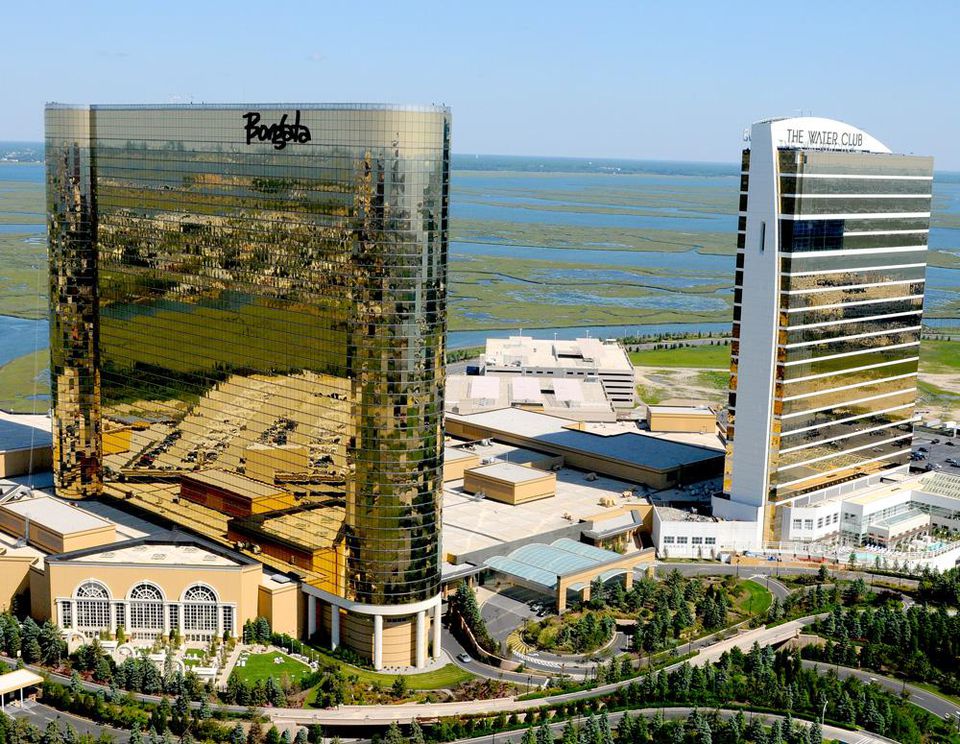
Liar, liar, pants on fire. That’s what we say to Atlantic City casino executives who predict the coming of the Apocalypse is smoking is banned in their premises. First-quarter gross operating profits were up even by pre-pandemic standards, which hardly makes it sound as though the sky is about to fall. GOPs were 63% over last year and 79% higher than 2019. The downside is that the prosperity was largely confined to four casinos, three usual suspects (Borgata, Hard Rock Atlantic City and Ocean Casino Resort) and one overachiever (Tropicana Atlantic City). Everybody else posted lower GOPs than in 1Q19. And Bally’s Atlantic City recorded a modest loss—$8.5 million—in 1Q22. Borgata pocketed $46 million, Hard Rock made $27 million, Ocean bagged $5.5 million while Tropicana took home $20 million. (Ocean had the highest hotel occupancy, 81.5%, while Golden Nugget brought up the rear at 41.5%. That’s a lot of empty rooms. If you want a cheap room, try Resorts Atlantic City‘s average $106/night, while Ocean’s $209/night is the priciest.)
Among the decliners, Harrah’s Resort still made $15.5 million, Caesars Atlantic City netted $10.5 million, Golden Nugget mined $5.5 million and Resorts eked out $536K. Stockton University economic boffin Jane Bokunewicz opined (and rightly, we add) that the increases were “meaningful” considering that they happened in some of the slowest months of the year. In fact, she noted, there hadn’t been such a profitable first quarter since 2017: “The high gross operating profits in the first quarter indicate that [casinos] have found an efficient balance between staffing levels and volume of business.” Of course, the gaming industry would prefer to be able to plead poverty, what with union contracts expiring May 31. Unite-Here local prexy Robert McDevitt must be reading The Associated Press and rubbing his hands with glee.
Although the Iowa casino industry is pretty robust these days, the Lege has strongly passed a two-year moratorium on new gambling halls, extending a status quo that dates back to 2014. Gov. Kim Reynolds (R) still might veto the bill, part of an omnibus gaming-regulation resolution, but supporters appear to have the votes to override. One unhappy camper was Cedar Rapids Mayor Tiffany O’Donnelly, who lamented, “It’s incredibly disappointing that this can happen seemingly in the dark of night without the city to even have the opportunity to respond. It’s disappointing knowing the voters wanted the casino, the amount of time money and effort from investors as well as from the governor’s appointed Racing & Gaming Commission, that something like this can happen so quickly without any of us knowing about it.”
The Cedar Rapids project is the baby of Peninsula Pacific Entertainment, which is getting used to political rejection. Ergo, President Jonathan Swain counseled patience, saying PPE was in it for the long haul. “Obviously, today’s events came as a surprise to us, and we still will keep that commitment to Linn County and remain focused on the future and the opportunity when it arises.” Still, he’s bucking the politically influential Iowa Gaming Association, which represents 19 rival properties and is averse to new competition. (The Hawkeye State also has four tribal casinos.) Rep. Steve Hansen (D) argued somewhat illogically that more casinos in Iowa = less cannibalization from Nebraska. He groused, “we’re going to end up wanting to increase licenses elsewhere in the state of Iowa to pick up that revenue that we’re going to lose.”
Just to the north, Minnesota lawmakers failed to legalize sports betting, as the Lege wound down quietly. The crux of the dispute was tribal exclusivity, which the House wanted to grant, whereas the state Senate preferred to cut two horse tracks in on the action. The tribes (and tracks) would have been given rights to statewide mobile wagering and would have been taxed at a reasonable 10%. For the tribes, it was exclusivity or nothing. The election year has been a very mixed one for sports betting legitimization, with “nays” from Minnesota, Missouri and Kentucky, “ayes” from Maine and Kansas, definite maybes in Massachusetts and North Carolina, and a probable “yes” in California … but we won’t know about the latter until November. As for the Land of 10,000 Lakes, solon Patrick Garofalo says there are “too many legislators focused on short-term political considerations instead of thinking about what is best for the whole state.” Amen.

Inflation and its potential effects on gaming are coming increasingly under discussion in earnings calls. Not only is the industry coming off its biggest year ever (2021’s $53 billion), it didn’t lose a step in 1Q22. “I don’t think it’s fair to characterize it as a bubble,” American Gaming Association Vice President of Research David Forman told Howard Stutz, somewhat defensively. “The growth has been pretty broad. There are new markets that have gone from zero to where they are now and there are existing markets that just keep growing. I think it’s a healthy expansion of the overall market.” But with gas at $4 a gallon (and no end in sight) and creeping upward prices in other segments of economy, when—or if—will it start to pinch Americans’ favorite recreational activity?
It depends partly on which CEO you’re listening to at the moment. Full House Resorts boss Dan Lee says he’s seeing no effect, Golden Nugget supremo Tilman Fertitta says it’s just at the low end (where you would expect it to manifest first) and Hard Rock International‘s Jim Allen warns that it’s here to stay a while. MGM Resorts International CEO Bill Hornbuckle and Caesars Entertainment CEO Tom Reeg, however, are among the naysayers. “We’ve been living with inflation or witnessed significant inflation for about a year now,” Reeg told Wall Street. “We’ve seen no real impact on gaming spend. We just reported a quarter where GDP was down and the business of casinos, in particular, held up quite well.” Allen would be skeptical of that, particularly where Caesars’ hub-and-spoke model is concerned: “There’s no doubt that in most regional gaming markets that customer is a day-tripper, utilizing gasoline to get to the facility.” And that means regional gambling is less of a value proposition.

Or not, according to Penn National Gaming CEO Jay Snowden. “We’ve been down this road before,” he yawned. “In our regional businesses, you’re talking about a 20-minute drive. This is not going to break the bank. You’re not going to be spending a lot of money on gas to go to a casino once a week or a couple of times a month, whatever your habits are.” Added Forman, “There was a lot of concern that expansion in one state could hurt neighboring states. That hasn’t played out. We’ve seen a big appetite for gaming among consumers.”
As for destination travel, “There has been good commentary from the companies about convention business returning during the year,” Nevada Gaming Control Board analyst Michael Lawton told Stutz, news that will warm the cockles of Hornbuckle’s heart. Crossing his fingers metaphorically, Lawton said, “I don’t want to jinx anything, but we’ve had a good outlook for the next six months.” Another optimist is industry consultant Brendan Bussmann, who remarked, “For the short term, there continues to be an upside for the industry as we continue to see growth both in Nevada and regionally.”
His confidence, however, does not extend into 2023. Fitch Ratings analyst Colin Mansfield offered that “We’re expecting a slight pullback overall for the year relative to 2021, particularly for regionals. Las Vegas should continue to benefit from the ongoing recovery in convention, which could offset any pullback in domestic leisure demand.” He thinks this year could be “challenging.” Let’s hope he’s wrong.

Jottings: What’s the first casino in Detroit to offer cashless slots? If you guessed Hollywood Greektown, go to the head of the class. Penn National Gaming has been assiduously moving forward on the cashless front, so the news comes as no surprise … Internet gambling in New York State? Fughedabouddit. A bill to legalize it has stalled in committee and is unlikely to advance this year … Legends Bay Casino in Sparks is far from finished, which may explain why the opening date is a vague “this summer.” But, when completed, it will offer the piquant novelty of a casino as the anchor tenant of a 60-outlet retail mall. Given the mainstreaming of casino gambling, is this a harbinger of the future? … Megaresort development is back “on” again in the Philippines. For $144 million, Bloomberry Resorts Corp. has obtained land in Cavite in hopes of building a casino, hotel, golf course, etc. … Poker is back at Kansas‘ oldest casino, tribal Golden Eagle. The casino also added its first-ever bar, the culmination of a 15-year crusade … DraftKings has scrapped DFS in Ontario in order to launch betting on real sports. A late entrant to the province, DraftKings will also be offering 130 games’ worth of ‘Net-casino gambling.

Take what these CEO’s say with a grain of salt, OK, take what they say with a desalination plant of salt… Follow what they do more closely than what they say, look at how they turned a plague that killed a million Americans so far into a cash grab, students in business classes will have assignments to do on this. Silly me, I thought they should lower prices when they opened the shuttered doors, these stalwarts are way smarter than I am, they saw dollar signs in their eyeballs and did the opposite. Maybe they are good men, Hornbuckle is a nice guy in person, but business is business. The pandemic made the rich more fabulously rich, it’s a documented fact. These facts are baked in to what a reporter on casino business like David hears and reports on. MGM, Caesars, and all the usual suspects inflated the prices before inflation hit, it worked. My opinion? They got real good isolating the slot machine player, their bread and butter, the oil that lubes their jig dancing trips to the bank. My 23 years younger than me sister is a slots player, thanks to me unfortunately, I took her on a Vegas trip and introduced her to video poker, she decided raking your brain over complicated draws is hard, and mindlessly hitting buttons is easy. She plays Caesars, they comp her at whatever property she wants to go to, now MGM is trying to lure her, game on. I have no crystal ball, but my hunch is that these pros know exactly what to do and say…