

 It will take Las Vegas seven years to return to its former prosperity. Or so concludes a new report from consulting firm PricewaterhouseCoopers, which sees casino revenue improving in late 2011 (in line with a Moody’s Investor Service report that placed recovery at least a year away) and regaining 2007 levels by 2014. That’s the quick-and-dirty version, from which it’s unclear whether PwC is using inflation-adjusted dollars or not. The full PwC report runs to 44 pages … considerably padded with pretty pictures of Aria and lots of “creative” white space.
When one takes the increase in high-end casino and room inventory on the Strip since 2007, it’s seriously questionable whether getting back to that magic number “2007” would even constitute treading water. Having so many failsinos (like the Plaza and the insolvent Elvis Presley-themed resort) bite the dust has been a blessing in disguise. How deep a hole would be in if all the mammoth resorts that were in train three years ago had actually reached completion? As industry observer Michael Pollock puts it, “We didn’t realize it at the time, but 2006 and 2007 in Atlantic City and Las Vegas was really too good to be true. People were spending more than they could afford.”
PwC attributes the abated comeback to gambling’s tendency to act as a trailing economic indicator, increasing a year or year and a half behind the rest of the economy. Analysts are more sanguine about Las Vegas than embattled Atlantic City, slated for a 36% drop in the next four years, since the former is relatively insulated from regional competition.
One can set the cautious optimism of PwC against the gung-ho projections Moody’s Analytics analyst Dan White. Either White is privy to information that the rest of us (including Wynn Resorts CFO Matt Maddox) are blind or we need a case of what he’s drinking. White’s timeline for full recovery is two years, with casino revenues rising 12%+ in 2012. The state’s Economic Forum is projecting a roughly 10% increase across the next three years. Local bidness pimps didn’t hesitate to hype White’s numbers, telling local media that the state’s low-tax climate would miraculously achieve what it so far failed to — attract new businesses. We’re past time to reshelve that scratchy old 78.
It’s a good thing the gaming industry isn’t chugging White’s Kool-Aid, considering that we’re still digging out from under the rubble left by years of its borrow-and-spend ( “borrow and default,” some might call them) business policies. Overreliance on Dubai-style stimuli and an ill-educated labor force did much to stand the Vegas economy on its head, as did being “the most consumption-dependent economy in the nation.” Since major construction projects and large numbers of new housing starts have gone away, not to return for several years, minimum — and the Asian casino economy is running rapidly up the U.S.’s back — the road to recovery is going to have to be paved with new business models.
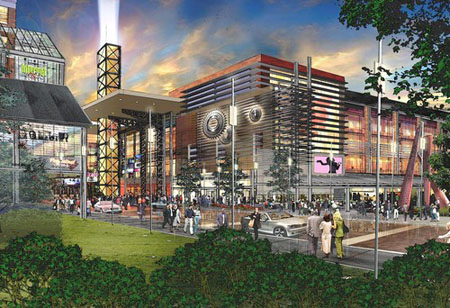 Success in Pennsylvania. It’ll be cause for celebration when the Pennsylvania Gaming Control Board gets out of its eccentric habit of breaking out slot and table revenues separately. However, even the opening of SugarHouse Casino wasn’t enough to dampen slot play in November, which increased more than 2% on a same-store basis and 8%+ when overall. While trailing estimates, Sands Bethlehem (above) still grew its slot take 13%, while Hollywood Casino was flat and Harrah’s Chester Downs — though good for second place statewide — took a hit from SugarHouse, falling 12%. (Think how much worse Chester will do if Caesars Entertainment CEO Gary Loveman builds a casino in Philadelphia proper.)
With a 25% slot-revenue boost, The Rivers $20 million take was exactly double that of SugarHouse and just $400,000 behind Sands … although if you’re in Pittsburgh, shouldn’t you be doing better than Bethlehem? Out in the Philly ‘burbs, Parx Casino, despite only a 2% increase, still comfortably outdistanced the competition, hauling in $29 million from the one-armed bandits.
Three casinos in Detroit did better last month than the entire Illinois casino industry put together. They grossed $111 million (a 5% bump). Of course MGM Grand Detroit led the pack with $48 million and an 11% increase. Rudderless Greektown Casino fell 7%, to a comparatively measly $26.5 million. Too bad the dumbass owners turfed out manager Fine Point Group, which had turned the place around convincingly. MotorCityCasino‘s 6% boost was good for a $37 million haul. Between its new facility and being sited in a relatively vibrant part of downtown Detroit, Greektown continues to squander its inherent advantages.

LV Sands probably wishes Sands Bethlehem looked like that! But I have to say, they certainly built something more attractive than the Sugar House!
I do not get Greek Town’s owners either….hmmmmm.
Detroit is amazing, especially MGM Grand Detroit. Vegas would love to have Detroit’s numbers.
David, you’re absolutely right about Greektown. It’s location is great, right at an exit from I-75 and Greektown now has a good parking structure for the first time. Parking was terrible for years, and Greektown needs to convince people to give it another try. Marketing is always the key.
Oh, no. I just committed a sin. I wrote “It’s” instead of “Its” in my Greektown comment.
GT is tribal, IMHO run about as bad as Foxwoods historically where its laughable. The wors “tribal” should explain everything.
Detroit, you’re in good company (and the link is, coincidentally, from a Michigan TV station): http://www.wzzm13.com/news/local/story.aspx?storyid=143403&catid=14