

 After a full year of Class III gambling, the Seminole Tribe has grossed $2 billion. Depending on how considerably that amount ramps up, the State of Florida will enjoy at least a $1 billion “rake” by the end of Gov. Rick Scott‘s (first?) term.
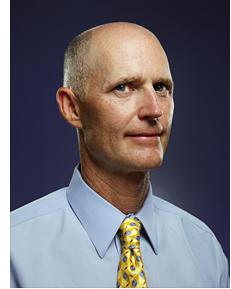
Rick Scott gives Sheldon Adelson that “come hither” look.
This also validates the advocacy of Sheldon Adelson, who has stoutly maintained that the Sunshine State will support at least $10 billion in new casino investment. And it catalyzes the dilemma Florida lawmakers will face. Knowing the size of the bird currently in their hand, do they risk it by throwing over the Seminole compact in favor of an indeterminate (though probably sizeable) amount of investment and tax revenue from Las Vegas-based operators?
Non-tribal gambling is mostly confined to some struggling parimutuels in South Florida. Steep tax rates and restrictions on the games offered have rendered these operators (who include Isle of Capri Casinos) non-competitive with the Seminoles. For private-sector casinos to flourish in Florida, the playing field is going to have to be regraded in Vegas’ favor, guaranteeing a renewal of tribal/state conflict. And since those Seminole casinos won’t be going away (regardless of what legislators may dream to the contrary), neither Las Vegas Sands nor any other developer is going to have that $2+ billion/year handed them on a plate. Let the (political) games begin!
Frozen River. Not only is the Twin River racino coveted by Caesars Entertainment, now the Narragansett Indians want it, too. For its part, Twin River doesn’t want to be bought by anyone. Rhode Island Gov. Lincoln Chafee (I) is down with — or at least receptive toward — the Narragansett proposal. However, the consequences of uncoupling 4,764-slot Twin River from the state’s revenue pipeline during the land-into-trust process (to say nothing of negotiating a compact) present a considerable downside for lawmakers.
 Speaking of Caesars, it eked out a slight improvement in its bond ratings. They’re still “Caa” grade but have basically gone from being extremely risky to merely very risky. Wall Street’s verbiage indicates that it still looks askance at CEO Gary Loveman‘s preference to keep buying new toys whilst kicking the debt-payback can further still down the road. As Adelson probably taught him, only suckers pay bills; smart fellas make the other guy eat it.
Incidentally, if you’ve not been to Vegas in a while, the Sugar Factory that Caesars has spatchcocked onto the front of Paris-Las Vegas is truly an architectural excrescence (made worse by sitting right across from the exquisite Bellagio). A fountain was demolished to make way for this eyesore — you can’t monetize a fountain, Loveman would surely lecture us — which all but obliterates the replica façade of the Palais Garnier. No other Strip operator of consequence, none whatsoever, takes so little pride in its properties as does Caesars.
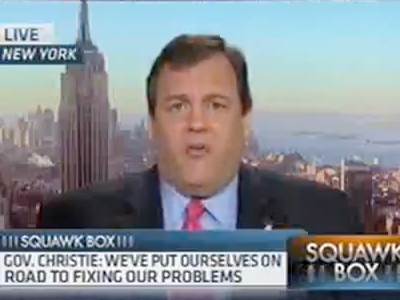 If Loveman’s blandishments prove too seductive for New Jersey Gov. Chris Christie (R) to resist, it won’t be the setback for online gambling in the U.S. that it might have been a year ago. Congress may have booted the ball during the lame-duck session but that error is turning into a big inning for individual states. At least three, perhaps six other states could go where New Jersey voters (67% opposed to intrastate online gambling) fear to tread.
I’d put the “under” even higher, given that politicos in states like Kentucky aren’t averse to ‘Net bets that stay within state lines. Christie doesn’t have to sign or veto the bill currently before him. He could kick it back to the Legislature for further emendation or demand that it be subjected to a statewide vote. But companies that choose to sit this one out, pining for a federal solution, might as well be giving revenue to their competitors.

I hate how MGM planted that Mexican place in front of Monte Carlo too. I thought that entrance used to look quite elegant on the strip. Now just a hodgepodge.
Can anyone tell me how in the world the Planning Commission or whatever the applicable governing agency is can approve the hideous design and complete bastardization of a great themed property?
Sadly, per Nevada libertarianism, the Plannish Commish don’t give a rat’s patootie about aesthetics (nor ever met a zoning variance it didn’t like). When somebody — I can’t remember who — wanted to put a Ferris wheel right next to the sidewalk on Las Vegas Boulevard, the Commission was only too happy to waive the setback requirements. Just imagine the missiles that would have rained down upon pedestrians from on high had that plan come to fruition.
I liked the fountain, but I have to say I didn’t hate the Sugar Factory facade. For what it is I thought it was a nice addition, even bringing a little Madison Avenue style to the fronting, and I think the upstairs balcony is secluded and sort of nice compared to Cabo Wabo or PBR.