

 It’s not as though there aren’t signs of hope for the Nevada economy. And even as empty storefronts continue to proliferate and housing prices tank in Las Vegas, there’s a “green shoot” or two, if you look for them. The billboard industry has been in a terrible slump, with prime space are going empty or being rented to small-time outfits. However, the row of blank billboards that used to line the route to McCarran International Airport is giving way to actual advertising, a positive augury that’s been long overdue.
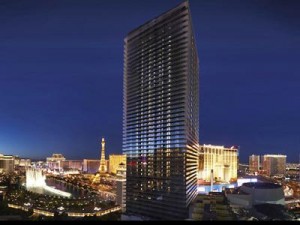
Then we look at January’s gaming revenues and … sigh! For four Januarys in a row, they’ve been down (not to mention three sequential months of slippage). Since the decrease was less than 1%, let’s be charitable and call it “flat.” In spite of that, the public purse made out pretty well, with tax collections up 15%. But the headline will surely be the Strip’s really “blah” month, down 2.5%, with one less weekend day but also with the brand-new Cosmopolitan. And yet … visitation was up 9%, lifting ADRs by 7.5% and occupancy to 82%. Convention attendance shot up 40% and even if fewer people were driving into Las Vegas, more were flying (+5%). The downside to this upside is that growth in tourism hasn’t translated into a loosening of the purse strings. Quite the contrary.
 Among the nonetheless disappointed was Wells Fargo analyst Carlo Santarelli, who writes that “expectations for January … certainly called for year-over-year growth.” He went on to note that without high hold percentages at tables and slots, the Strip’s decline would have approached 8%. Sports books (-10%) had a rough go, too. Non-poker table game revenue was down 13.5% but slots generated 9% moolah more than last January. That’s thanks to a record 8.7% hold rate, the actual amount played being down 2%. Coin still in the hoppers from New Year’s Eve may have also boosted the January tally — an accounting habit that always lends slushy imprecision to monthly slot reporting. Statewide, that could be as much as “about $58 million.” High-holding penny slots (way up in January) and heavy Megabucks play were definite contributors to the bounce at the one-armed bandits.
There was also less play at the tables and Vegas’ reliance on baccarat as its mainstay during the Great Recession really bit us in the butt. Drop (-29%) and revenue (-40%) for this high-volatility game were pretty dire. It may only represent 13% of the Strip’s overall take but, yet again, baccarat demonstrated its power to make and occasionally break a month along Las Vegas Boulevard South.
 Like Santarelli, I was pleasantly surprised by renewed strength in the locals sector. Downtown (+8%, despite lower handle), the Boulder Strip (+11%) and North Las Vegas (13%) all enjoyed good months and 5% higher slot win, making up for some anemia in outlying parts of the state, like Lake Tahoe (-8%). Locals slot holds were 0.3% higher than last year but still a comparatively generous 5.9%.
The most positive spin anybody has been able to put on this is analyst Jonathan Galaviz, who writes, “the story of continued stabilization for Nevada is now a firm one … We see casino operators statewide ramping up their marketing budgets and attempting to build off of this consolidated stabilization.” The Strip’s downturn, he adds, is no surprise, conforming to his forecast of “a slightly bumpy, but long-term upward growth curve in 2011.” He does warn of “significant” impact this month from higher oil prices.
 Conversely, read Dr. David G. Schwartz‘s analysis, in which he finds the data “actually quite troubling” and a harbinger of continued difficulty on the Strip. He’d have some strong words for that Abdul H. Shabazz guy (left, with conservative radio host Alan Stock) who says bankrolling Las Vegas with “the gaming model” remains the way to go. Schwartz would point to the 19% emaciation of Nevada gaming revenues, sapping hundreds of millions of dollars from the state budget annually and conclude — as he does — “Diversification is really the only way forward.”
Speaking of which, as casinos continue to diversify their offerings, gambling becomes a smaller and smaller share of visitors’ discretionary spending. This has been demonstrated time and again. If tourists are spending almost 8% more on rooms, how much less are they plunking into the slots? Pegging Nevada’s future to gaming, gaming and yet more gaming is, historically speaking, spitting into the wind. The Strip may have a cold but the state has come down with viral pneumonia.

As long as the casino’s continue their mode of tight slots, the tourists, myself included will play less. It use to be fun to throw some money at the casino because you actually had a chance to win once in awhile, not now.
I can say that on my trip last week, the strip felt as busy as I’ve seen it in three-four years, midweek. However, even though there are people everywhere it seems, I still find little wait time for restaurants or finding a seat at a bar or other things. I definitely could not tell you what they are doing once they are here.
It’s a shame that the gaming take continues to dwindle. Has there been any follow up with Michael Gaughan to see if when he loosened the slots at SP he actually was able to drive some business and other revenue? I’d be curious to see if it worked, although I don’t see it happening anytime soon on the strip, just no incentive for MGM and CET to do it, and they are still managing to a bottom line that’s shaky at best.
Congrats to CET though for outdoing themselves on the wearing down of the Paris balloon paint job. The Donnie and Marie ad takedown off of the Flamingo has left the whole front of the building with peeling paint, absolutely stunning view.
I don’t disagree much with that Shabazz fella if by diversification it means more nightclubs and celebrity-chef high end dining. To me, bottle service was when my mommy handed me a bottle, not paying $150 for a bottle of vodka. IMHO Vegas has become to faux high end. My family leaves the Strip for most dinners, and it’s not because we downgrade dining, I live to eat, but I don’t like paying a premium. Hugo’s Cellar is the only high end dining we do, they don’t price gouge and they don’t a la carte you dry. Just consider history for a moment. Twenty years ago the tables ruled casinos. Now we are in a slot machine era, and the casino designs reflect that. Maybe a sea change is in order, something we are all missing…