

Anonymous: What happened to the self-serve soda fountains?
 [They] actually became a Health Department issue. They’re very expensive to maintain and the public had basically worn them out. There were lots of problems with the syrup and things falling down below the cabinets. And then the other problem was we had a lot of people coming in here with bags of empty containers, just filling them up with soda. It got to the point where gamblers could get a soda, so we just put it back on the floor. It was free anyway but we took the self-service. That’s the truth behind the self-service rumor because there’s a lot of them. [laughs]
Jeff in OKC: Were you surprised at the negative reaction from so many commentators and media regarding the self-service soft drink stations, since that is common practice in many other parts of the country. In Oklahoma, for example, self-serve soft drink stations are the standard. No one has the waitress service only.
 I definitely knew we were going to get some backlash from taking them out. It was something that I really liked when we put it in. It just became, based on the Health Department in the state of Nevada … people may or may not know it’s probably the most strict health department in the country. That’s probably why you don’t see them here but you do see them in the other markets, and I am aware that other markets have them. We actually had them in an Indian casino that we managed in California, so we’re very familiar with how they work in other markets. I did expect some backlash but it was one of the things we just had to do.
Nelson: Do you think other Las Vegas casinos will be decoupling from larger parent companies and going to the individual-ownership model?
No, I don’t see that happening. We thought that might have happened when the economy started to crash and you would see a lot of the casinos maybe get broken apart, based on what happened back then but it doesn’t appear that it’s going to happen, in my mind.
Does it come down to needing to be connected to a multi–property player network or is it because of the lower costs of capital that larger operators have — or some combination of those?
 It’s a combination of the two. There’s definitely certain benefits from being rolled into a conglomerate of companies. There can be downsides to that, because maybe some of the standards across the corporation don’t work in individual markets. But I think corporations try to adjust to those. At the same time, the cost of capital and the balance-sheet strength of stability is usually far greater with a larger company. That’s not always the case in gaming. It’s very difficult today to procure one of these assets at any cost without having a big corporate balance sheet behind you. Very few individuals have the financial strength to make billion-dollar purchases.
Joey Boyle: Do you still own the property adjacent to M? If so, what are the plans for development?
I do have a minor interest in a piece of property next to the M and right now I don’t think there are any development plans for that property but any other property in the valley for quite a long time.
Augie G: How important is the locals market vs. visitors already connected to Penn National vs. all other tourists in the guest mix at M?
 Every customer’s important, no matter where they come from. Obviously, the local market is a big piece of the M Resort‘s market and it’s a very important piece but so is all of our business outside of Las Vegas and that’s actually a segment that we see growing, not only through the Penn database but through our own marketing efforts and other markets that we’ve been in for a long time.
Has the connection to Penn’s loyalty program produced measurable changes in traffic or demographics yet?
It’s producing good results. I wouldn’t say it’s monumental yet. It’s just in the beginning stages but it’s showed some very positive signs with their customer base and they like the property, like being here, like the value and service that the hotel offers, and so far it’s been successful?
How long will it take to have a good read on the effect of joining Penn?
 The effects were felt within 30 days of when they bought our debt, from the standpoint of working with them and their senior leadership, which was a very positive experience for me and for the team here. I don’t see anything but great things coming from them buying the debt and taking ownership of the property. To reach the full maturity of the business plan that we’ve put in place, obviously that’s going to take some time: at least a year to work through what we’re doing in our plans but I would say every day we’re progressing and it’s getting better.
Augie G: If you could add one thing to this already beautiful resort, what would it be?
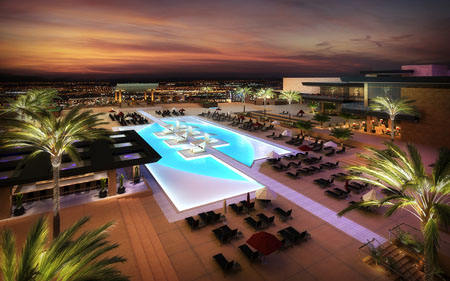
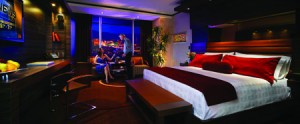 Gosh, I don’t know if there’s just one thing. I’d love to have more rooms here. The property needs it. I’m not sure the economy justifies it. We’re finding ourselves more [often] than not sold out or out of rooms. I’d like to add more amenities down the line. The property could use some other amenities, maybe some movie theaters and different things that would be more attractive to the local market, maybe some showrooms. There’s not one thing but there’s a lot of things over time. We’ll just have to see how it goes and how the economy develops over the next couple of years.
Jeff_in_OKC: As opening day neared, did he feel like making the M become profitable was impossible because of how the economy had soured in such a large and fast manner?
No, I didn’t but certainly the challenges of the economy came up on us from the day we broke ground. About two weeks later, the official credit crisis began and we were already underway. And at that point you can’t stop a project midstream the way our project was financed. We weren’t doing it like Boyd [Gaming] did Echelon, for example, where they could stop. Everybody at the time thought this was just a minor recession and it got worse and worse and worse, all the up to the opening night, which I believe — March of 2009 — was the low point on the Dow. Yeah, it was tough and on opening night it was apparent we were opening at the worst possible time to open a casino.
 The world was in a very, very bad place, so it was apparent the challenges were going to be in front of us and that there was a lot of work to be done to get the resort open properly, try to build a brand for the things we were trying to create, keep a good property running but also keep it financially healthy. From a profitability perspective, it became very challenging to service the debt but, from an operational perspective, the property has always made money. It just hasn’t made enough money to service its debt. There were a lot of rumors about closing and all that, and the property’s never been in that position. Now, two years later, [M] is performing reasonably well, given the state of the Las Vegas economy and, year over year, it’s getting better and better every month.
When a casino changes, the main concerns among players boil down to: What will happen to their points, to comps, and to slot and video-poker pay tables?
 There will be no changes whatsoever to how the points are earned or to the point balances. So there’s been no change there. We, as a casino, have made changes to comp policy since the day we opened. We’ve modified that and are constantly looking at that. That’s what we do. But there have been no changes to that due to a takeover. Even without the takeover, we’ve made no changes to that [comp] policy and don’t anticipate making any changes to how do that. We will change and alter our promotional schedule, like we always have, but none of that is a product of the acquisition. There’s been no changes to the pay tables. If anything, we’ve actually put some different programs on the poker side that are looser, we’ve put some progressives on the floor that are very lucrative. The changes are only for the better, from a consumer perspective.
Is the M/Penn loyalty program a two-way street? Could I use M player’s card at a Penn casino?
 There is not a one-card program yet for Penn. There is a one-card program that is in place and anticipated to be rolled out shortly and M will most likely become a part of the one-card program some time next year. Right now, what we do is we understand the player that is in that market, playing, and they can make a request that their hosts set them up here and then we reciprocate and take care of the consumer and make them an offer based on what they’ve played in other places.
When a casino has new ownership, usually there are changes in management, as we’ve just seen at the Palms. One of the things that made the M/Penn transaction exceptional was that Penn kept the existing management in place. What was the rationale? What did they like about what you were doing? Obviously they didn’t hold the cash flow against you.
 No, they thought the property definitely had room for improvement in its performance. We’re all aligned on how to accomplish that. But, in larger part, I think they were happy with the management, how the property was being run, the culture, the service standards, the cleanliness, the marketing initiatives that were in place. They didn’t see the debt-service problem as a function of a bad business plan or management. They saw it as a function of a bad economy. I know they were not disenfranchised at all with how the property was being run. They actually liked the way the property was being run from many perspectives and thought that what they could bring to the table would help improve it. We were quickly aligned on staying here and running the day-to-day operations for this particular facility. So it was a positive alignment on all fronts.
Ever since the location was announced, I thought that was as strategic a location as anyone could have. Why didn’t it work?
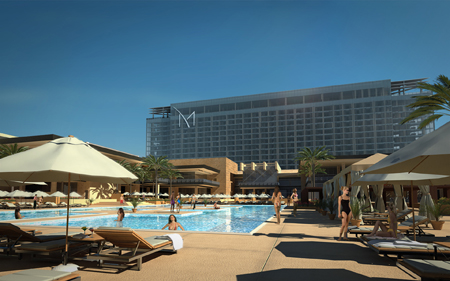 It worked from a bad economy. If you go back and look at the way we made the decision on the investment, the return, the cash flow, and you look at, very simply, the Boulder Strip gaming revenues from the 2004-06 time frame, which is when we made the decision to build the building, and you look at the growth rate that it was going through, “This just grows two, three, four percent as we get into our opening of ’09.” We were obviously expecting to get a certain market share. We do have that market share now. We know that. The building would have been able to service its debt and have excess cash flow. That’s why the economy is a big, big piece. Those assumptions were not right; they were wrong because of the meltdown that we did not see coming.
 But if you go back and look at the rates that we were getting at that time in town, we have a very good room product and we get paid a very fair … I would call it the higher end of the rate scale because of the product. If you were to apply those rates to this hotel from the ’05-06 time frame and you can kind of do the math backwards, the hotel would actually be more profitable than we anticipated, based on the market share that we’ve got. So I’m not going to blame it all on the economy. Hindsight’s 20/20 and we should have seen some of this stuff coming but I don’t think anybody expected it to be at the level that it was.
Penn has a lot of irons in a lot of fires in a lot of states. If you decide to go shopping for slot machines at G2E, for instance, is the capex going to be there, given all the things Penn has going?
Absolutely and I can tell you [for] a fact it’s already there. We have already spent, since they purchased the debt, millions of dollars on slot machines, keeping our slot floor — which I think is one of the best in town — the newest and freshest floor. But yes, I can tell you without any hesitation the capital is there to keep this building at the same level it has always been kept.
What do you think is the timeline for the locals market to come back vs. the Strip?
 I’m done trying to predict that one. My crystal ball hasn’t worked. [laughs] It’s gonna take some serious time for the local economy to recover. A big piece of the economy for a long time here was construction jobs, both in the casino and in the residential side. I don’t see those jobs returning for a very, very long time. We have plenty of everything and we’re still trying to absorb the inventory that we have. I do see some really good signs of life, from the Strip perspective and our perspective, with the out-of-town customers. It seems they are returning and you can it in the revenue, the visitation numbers, so that’s a real positive sign. I don’t think that’s going to create the jobs that we lost. It will create some new employment but, in large part, the bulk of the employment that we’ve lost is going to be hard to find and recover from until we see the town go back into a development stage again, which I think is quite a ways away.

My compliments to Mr. Marnell for sharing his time with your readers and to you, David, for taking the time to set up the interview, expand on the questions, and provide us this picture of M. I hope that you can provide more interviews like this one!
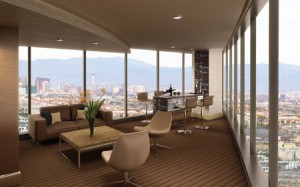
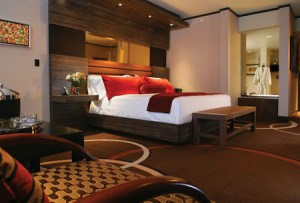
It kind of surprised me that Mr. Marnell said he wanted more rooms at M Resort. 390 rooms is not that many but considering M Resort is 10 miles south of Mandalay Bay it seems to me at that location he would have a hard time filling more than 390 rooms a night. By the way, from the pictures I have seen the rooms look very nice.