

It’s time to wind up the S&G electoral machinery and look at casino-related ballot questions that you might be asked to weigh come November. In Arkansas, we’ve already had the piquant spectacle of a gambling ballot initiative that was struck down in court but still walks, zombie-like, toward the polling booth, since it’s too late to remove it from the physical ballot. If a dead casino initiative wins, does it count as a ‘moral victory’ or just another opinion poll?
Stick a fork yet again in casino-expansion efforts in Oregon. These fail on a seemingly biennial basis and 2012’s was no different. Oregonians will still get to  vote on interlocking Measures 82 and 83, which would approve a $300 million casino-hotel and water park, called “The Grange,” near Portland. (A third, municipal-level ballot question would also have to prevail at the polls.) However, this looks to be a $6.5 million writeoff for PDX Entertainment, which is folding its campaign in the face of heavyweight, bipartisan opposition to (and feeble public support for) privatizing casino business in the state. The current mix of state lottery and tribal casinos ensures that players’ losses are reinvested within Oregon. Canadian private equity firm and casino investor Clairvest Group was the driving force behind this failing effort (although the deeper pockets belonged to prospective operator Great Canadian Gaming Corp.) and the fact that profits would have been privatized clear across the border into Canada cannot have endeared Clairvest to the electorate. (The $400 million/year revenue projection looks suspect to me, but that’s a peripheral issue.)
Fatally for Clairvest — which is also in the business of shoveling garbage, appropriately — its consortium was found to be lowballing Oregonians. Co-CEO, Doug Parr, and Great Canadian supremo Rod Baker thought they were being real “george” by offering to pay a 25% tax rate. What their somewhat clumsy push failed to anticipate was The Oregonian doing homework on their Great White North backsides. They also played fast and loose with the size of the casino … but what’s a 1,300-slot discrepancy among friends?
Clairvest’s Rivers Casino in Des Plaines, Illinois, pays 50% to the state, while Great Canadian’s River Rock Casino Resort in beautiful British Columbia tithes 75% to the provincial government. In that context, 25% to Oregon looks like a  chicken feed. Parr and Baker tried to pull a fast one on voters, and got caught. There are some nuances to Great Canadian’s B.C. arrangement whereby capital costs are rebated to the casino, but there’s no such fine distinction to the whopping fees Clairvest is willing to pony up in Illinois. Parr and Baker deserve to lose this plebiscite, if no other reason than trying to play the electorate for fools. Now the state’s casino-owning tribes can get back to fighting amongst themselves, undistracted.
Nevada. Although the now-preeminent Sheldon Adelson has been carpet-bombing the airwaves with $70 million in PAC money, there’s a stealthy counterattack taking place. Adelson’s sworn enemy, the Culinary Union, is fanning out in a door-to-door campaign, its foot soldiers carrying the message, “El dinero de los Super Pacs solo puede comprar una eleccion si no votas.” To drive the point home, Adelson’s charming mug is prominently displayed. Our neighborhood has been spared from campaign leafletting altogether, so we’re counting our blessings.
This ‘ground game’ heavily targets Hispanic voters, a ‘stealth’ voting bloc because few pollsters deign to conduct Spanish-language surveys … hence the surprising margin of Sen. Harry Reid‘s 2010 re-election victory. (Surprising to everyone but Old Sixty Votes, that is.) Reid’s 2010 point man, Sig “The Fixer” Rogich, a proxy for local business interest, carries Las Vegas Sands‘ water to The Guardian. Which means there’s something in it for Sig … we just don’t know what, just yet.
Michigan. Despite having been deemed constitutional by the state’s highest court, a ballot question to allow eight new casinos, sprinkled across Michigan, was negated by GOP opposition to the fine print (or lack thereof) in the initiative. The state Supreme Court may rule but it is the Board of Canvassers with whom final authority reposed. It’s a win for Detroit‘s three casinos, which get at least two years’ reprieve from the threat of a fourth Motown casino, as well as one on their Pontiac flank.
Rhode Island. In anticipation of Massachusetts casinos, Rhode Island solons are asking voters to approve table games at two racinos. The tax rate is surprisingly 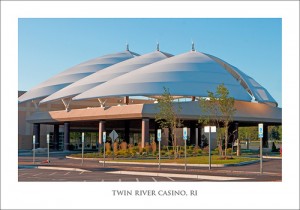 generous: only 18%. That’s so “george” that the Twin River track has put millions of dollars toward the pro-expansion election campaign, which also has the backing of Weed … state Senate President Teresa Paiva Weed, that is. According to Deutsche Bank analyst Carlo Santarelli, Twin River-related Question 1 “has legs,” as does Newport Grand-specific Question 2, and is polling at 59% in favor. And, with a 10.5% unemployment rate in Rhode Island, no wonder. However, the only manufacturer expected to benefit is SHFL Entertainment (née Shufflemaster) and Santarelli foresees just “modest longer term potential positives,” not a bonanza.
Coming … a look at Maryland‘s controversial casino-mega-expansion initiative, which is currently in too-close-to-call status, according to the Washington Times.
