
You can’t use bitcoin to gamble in Vegas … yet. But Derek Stevens is bitcoin-enabling both the Golden Gate and The D to accept the cyber-currency in selected parts of his properties, starting Jan. 22. Stevens is 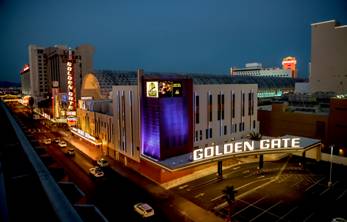 crediting customer input for impelling him to make the change. For instance, you can use it to pay for your hotel room or for on-property meals at American Coney Island and Joe Vicari’s Andiamo Steak House, not to mention stuff from the schlock shop. But no gambling. “We would have to have an extremely high level of comfort with virtual currency of this kind in order for that to ever occur,” said Nevada Gaming Control Board Chairman A.G. Burnett. Indeed, Nevada regulators have balked at putting ATMs and other direct-debit technologies into slot machines, so I can see them approaching this with a similar abundance of caution. But the limited manner in which Stevens has integrated bitcoin is likely to spawn a rapid amount of imitators.
Could Chinese tourists forego Macao for Las Vegas? Everyone around here surely hopes so and rising living standards on the mainland could make it happen.
When not building casinos, Cordish Cos. is working with the City of Las Vegas to try and develop an arena for Downtown. Some question the numbers underlying the deal as blue-sky projections. It is worth noting that the nearby Smith Center for the Performing Arts has had to cut back on the number of events held during its second season — nothing catastrophic but enough to make one view Cordish’s plans with a touch of skepticism. Also, and in view of Cordish’s casino success elsewhere, Downtown casinos are unlikely to welcome the parent of Maryland Live, especially when the cost of the arena is coming partly out of their pockets.
Between the Great Recession and new competition from Ohio, the State of Indiana is seeing considerably less in casino-tax contributions. “People don’t have as much disposable income, they don’t have as much money they can spend. They used to choose between going to a high school basketball game or the casino. Now, it’s between going to the casino or paying their mortgage,” says Indiana Gaming Insight Editor Ed Feigenbaum.
Sticking its nose into Saratoga Springs‘ business, the New York Times offers a predictable blast of high, Victorian dudgeon of the idea of a racino in the resort town. The NYT fails to note the irony of its opposition to Saratoga Springs’ future being determined by outsiders.
