
It’s up to Pennsylvania Gov. Tom Wolf (D) now. [Update: Wolf got off the fence with uncharacteristic alacrity and signed the bill.) The state House has passed the most sweeping expansion of gambling S&G has ever seen. It includes Internet gaming, regulated DFS, 10 satellite casinos, and slot routes in truck stops and  airport lounges. From this bonanza for operators and manufacturers, legislators hope to realize $230 million in near-term revenue and $100 million a year thereafter. As state Rep. Steve McCarter (D) said, “We will become a gambling state without parallel.” Rep. Margo Davidson was less kind, calling the bill “corporate welfare for casinos and special carve-outs for special people,” presumably alluding to the provision that awards Presque Isle Downs a satellite casino hors concours. Reported Global Gaming Business, “One perk favors Delaware County area development projects that would benefit from taxes on Harrah’s Philadelphia, and another would give extra money to counties with lower-performing casinos.” Satellites would receive slot licenses for $7.5 million, paying another $2.5 million for tables.
To level the playing field for the deficit-ridden Pennsylvania Lottery, it too will be allowed to go online. Wolf, meanwhile, is playing Hamlet, saying he will take the “next few days” to posture about whether or not he will sign the legislation. Does he think that $2.2 billion budget gap is going to cure itself? Perhaps he is against anything that excludes the severance tax on natural-gas drilling, something of a Wolf fixation. To pass the gaming bill, GOP leaders stood aside from their previous insistence upon slot routes in bars, a real deal-breaker.
According to the Central Penn Business Journal, “Lawmakers also approved other measures … including one to borrow $1.5 billion against the state’s tobacco settlement fund. Other measures would raise money by transferring funds between  state accounts, imposing a tax on fireworks and applying the state sales tax to goods sold online.” Satellite casinos are defined as 300-750 slots and 30 table games. As for truck-stop slot routes, they’re capped at five devices apiece, provided the choke-and-puke in question meets a slew of requirements, including having sold 50,000 gallons of diesel fuel this year. House Gaming Oversight Committee Chairman Scott Petri wasn’t satisfied with the criteria, however. He called them “so broad, anything you think of as a convenience store is a truck stop. You literally could drive a truck through the definition and its ability to be misused.”
Taxation of Internet gambling revenue would mirror that of terrestrial casinos: 14% for poker and table games, 52% for slots. It would cost $4 million per license in any of those categories or a discounted $10 million for all three. DFS 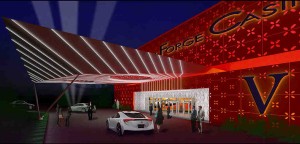 providers would pay $50,000 to be licensed and would be taxed at 15%. If state’s “resort casinos” pony up $2.5 million for slots and/or another $1 million for table games, they would be exempted from game limitations and of the requirement that non-guests pay $25 to enter the casino. A largely unremarked provision would also lift the one-and-own-third ownership limitation, which would have been in contravention of the requirement that the satellite casinos be owned by existing casino operators.
Threats of lawsuits are already being brandished on high. Although Sands Bethlehem and Parx Casino are keeping mum on the ‘Net betting, Penn National Gaming is far less reticent about the satellite casinos. Calling the legislation an “ill- conceived plan that has been rushed through,” Penn spokesman Eric Schippers elaborated on the “uniquely punitive effect” of satellites: “We’re out in central Pennsylvania alone, so again, we could be surrounded by licenses that would have a profoundly negative impact on our casino and could result in job losses and cannibalization of our business.” Of course, Penn could do the obvious thing and bid for satellite licenses (similar to what it did with Ohio racinos) but it hasn’t come to that fork in the road yet. As for all and sundry casinos, they’re wont to litigate the proposed imposition of a $10 million-a-year host-community fee, a fight which Mount Airy Casino has been leading, arguing that the impost falls more heavily on the small casinos. Based on what we’ve seen, we’d agree. Let the games begin!
