

If Gary Green set out to stir debate with his Casino Journal polemic on Atlantic City, he could hardly have succeeded better. For Green, the glass is
 considerably more than half-full and the Boardwalk is “healthy, viable and sound.” In a poke at Glenn Straub, he writes, “we don’t need to turn casino towers into a student dorms.” As Green points out, Atlantic City is a $2.9 billion a year market, no longer a $5.2 billion. However, that trend is extremely unlikely to reverse and Green puts too little stock, I think, into that long slump. Green allows that “Despite grandiose dreams of attracting new market segments or cannibalizing adjacent casino jurisdictions, any Atlantic City investment must be viewed in this context.” He sees the last several years as “the decline phase of a normal business lifecycle, where there is often both economic peril and promise.”
He argues, ” This is a great time to invest in Atlantic City. Casinos can be grabbed at fire-sale prices. Atlantic City casinos are earning more than most other markets in the country. If you can get in for the same investment as you could get into another market, Atlantic City is healthy, viable, sound… and smart.”
He also cherry-picks the $270 win/slot/day statistic and compares it favorably to
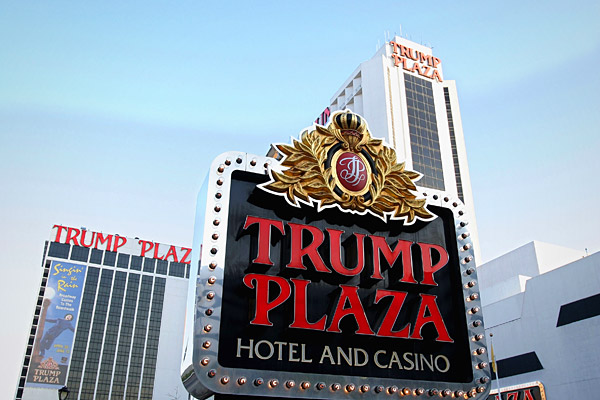 Nevada‘s $122 or Maryland‘s $227. Yet neither of those jurisdictions is experiencing anything resembling the Boardwalk’s level of difficulty. Green has to reconcile the seemingly strong slot play of the Atlantic Club ($169), Showboat ($188), Revel ($152) and Trump Plaza (an unimpressive $99) with their demise.* In so doing, he unearths some interesting causes of death. For instance, Revel’s capital structure would have taken the resort 41 years to reach break-even point.
(* It should be noted that the market gets no small lift from Borgata and its out-of-this-world $472/slot/day.)
Wall Street‘s dilettante stint in casino operation gets roundly panned. So — by implication — do Trump Entertainment Resorts and Colony Capital. It’s
 not hard to guess whose financials Green was evaluating when he witnessed “atrocious maintenance, infrastructure neglect and dilapidation the managers/operations had visited upon the properties,” driving potential buyers away.
Also, while some — not Green — like to tout a shift in the mix of spending in Atlantic City away from gambling and into retail, F&B, etc., that not’s good news until less gaming’s slice of the overall pie is growing along with everyone else’s. That’s not happening yet … not yet, anyway.
In sum, Green sees the recent crisis in Atlantic City as a giant market correction, “finally recognizing a disruptive adjustment for an absurd overvaluation” and no small opportunity for the entrepreneur. He makes a strong — if controversial case — for his contention that Atlantic City’s obituary is being prematurely written. If one quibbles with this or that contention amidst the whole, Green’s article is still one of the most important pieces of journalism written about the casino in the past year, at least.
