
Wall Street analysts expected Las Vegas Sands to post cash flow of $718 million last quarter but it blew through the ‘stop’ sign and checked  in with $731 million. Even though recovering from three cracked ribs, CEO Sheldon Adelson had to like those numbers. He’s even been approached to sell Sands Macao, but waved that off. “Our strategy to build integrated results towards scale and diversity is clearly paying dividends … I’m very optimistic and I’m very, very confident about the growth of Macao,” he told investors.
Adelson’s remake of Sands Cotai Central as the Londoner will have the expected Sheldon emulations: a mini Big Ben, the Houses of Parliament, Tower Bridge, double-decker buses and ATMs masquerading as bright red call boxes. It’s a measure of Adelson’s commitment to this (and his confidence in renewal of his gaming concession) that he’s putting $1.1 billion into it. After all, Fernando Chui‘s government asked for a greater emphasis on amenities, didn’t it?
As for the renewal of player interest in Venetian Macao and Four Seasons, Sands’ ability to attract premium-mass-market customers 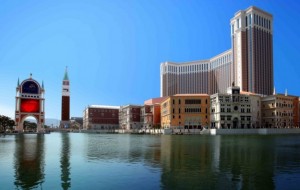 was credited. That makes up for a slower-than-expected start at Parisian, which isn’t quite pulling them in. Back on the home front, Sands displayed strength in the face of fading fourth-quarter business, showing a profit of $0.88/share where the Street had expected $0.77/share.
The good news did not extend to MGM Resorts International, which got a mild smackdown from the Macanese government. It had been widely assumed that MGM Cotai would be allocated 150 table games, as were Wynn Palace and Parisian. Not so. The tight-fisted Chui administration would only part with 125 tables. This will only  increase the pressure on MGM to cannibalize the already-limited table inventory it already has. Worse still, opening — carefully timed to capitalize on all-important Chinese New Year — has been postponed to “sometime in February.” Wall Street won’t like that either.
Insufficient funding has been the temporary downfall of THE 13 Hotel in Macao, which was never going to make the Chinese New Year deadline anyway, not remotely. The lack of liquidity doesn’t bode well for this casino’s prospects. In other Macanese news, “Wolf-Hunting,” a robbery/terrorism simulation held at Galaxy Macau, is being pronounced a success by the government. Of course it couldn’t have hurt that the casino is right across from an army barracks. Wynn Macau didn’t fare so well with real criminals, losing $6 million in chips to a smash-and-grab raid.
* Although it was not the highest grosser in the St. Louis area (that would be Ameristar St. Charles), Tropicana Entertainment‘s Lumiere Place was 2017’s winner, growing business 9.5% while most of the competition was relatively stagnant. Players seem to be deserting Casino Queen in East St. Louis, down 6.5%.
* Stadium Casino — yes, they’re really going to call it that — doesn’t exist yet but it’s already paid $40 million for a satellite-casino license in the greater Pittsburgh area. The commonwealth is making out like a bandit, now that Penn National Gaming, Cordish Cos. and Greenwood Racing have all grossly overpaid for licenses valued at $7.5 million.
* Although the Massachusetts Legislature provisionally legalized daily fantasy sports, some Bay State lawmakers — led by state Sen. Eileen Donoghue — want to permanently legitimize DFS and (you saw this coming) tax it. Compared to most East Coast casino taxes, the levy 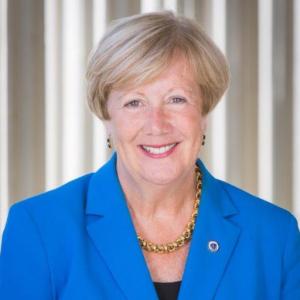 would be lenient: 15%. Said Donoghue, “The brick-and-mortar casinos are paying 25% under the gaming statute, but we did hear from the industry that they operate on smaller margins.” The entry fee would also be relatively modest: $100,000.
DFS would be placed under the remit of the Massachusetts Gaming Commission, which would give it something to do while it waits for Wynn Boston Harbor and MGM Springfield to open. The MGC would have to set up a series of operating rules for DFS, which would include mandatory geofencing, a mechanism for dealing with problem gambling, and strict enforcement of age limits. Donoghue consciously left Internet gambling out of her bill, without closing the door on it, having chosen to focus on DFS because it is currently operational in the Bay State. She also wanted to get ahead of the expected overturning of the Bradley Act, which could bring legalized sports betting from sea to shining sea.
Boston-based DraftKings came out cautiously in favor of the Donoghue bill, stating, “DraftKings is committed to working collaboratively with the legislature to adopt common sense fantasy sports legislation which protects consumers and allows our industry to continue to grow and create jobs here in Massachusetts.”

“Stadium Casino”…so uninspiring