

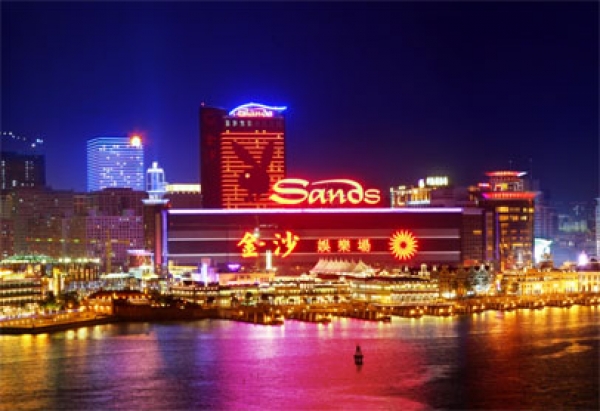
VIPs may be avoiding Macao but mass-market players are not. Joe Average players accounted for 75% of all business in 4Q20. That’s about where the good news ends. 2020 was a year to forget, with gaming revenue falling 79% to $8.8 billion, including a 66% December decline to $979 million. Recovery is not on the immediate horizon, in part because of a visa-application process that is described as “difficult and time-consuming.” (Peking‘s ambivalent attitude toward Macao manifests itself once again.) According to Bloomberg, due to Coronavirus II, “residents from Greater China who have been to any country within the past three weeks will be prohibited from entering the city.” Macao is riding a six-month Covid-free streak and authorities would like to keep it that way. The best-case projection for 2021 appears to be that of Sanford C. Bernstein analysts, who predict business to reach 80% of pre-pandemic levels.
Casinos in Hawaii? Not so fast. Gov. David Ige has put his oar in about a proposed casino on reservation land on Oahu and he’s against it. His argument: social costs > economic benefits. He went further, saying bluntly, “It does not provide economic value to our community.” Since Ige gets to set the Lege’s agenda, that would appear to be the end of it but we’ll stay tuned.
It’s been over a year since Michigan Gov. Gretchen Whitmer (D) signed off on i-gaming in the state but we’re still waiting. Fortunately, games are expected to go live mid-month, with 15 licenses having been issued and Firekeepers Casino on the cusp. The tax rate for Detroit casinos will be a clement 8.5%, with most of that going to the immediate area. Experts think Michigan can generate $90 million in online revenue in Year One.
Four casinos will be in Virginia. Why not five? That’ll be the contention as companies jockey for the Richmond market. The city is taking proposals, although local voters will have the final say. Among various criteria for a casino license, such as new taxes and minority ownership, the foremost is good-paying jobs. Fair enough. The industry has an exemplary track record on that front.
The future of the Navajo Nation‘s four casinos hangs in the balance as the company has furloughed 1,100 employees “temporarily.” That leaves the tribal enterprise with a grand total of 165 workers. The brunt of the layoffs falls upon tribal members, 775 of them. If casinos are not allowed to reopen at month’s end, the nation will make a decision on whether or not to shutter them permanently, the direst scenario we’ve heard come out of Indian Country. The Navajo were able to hold out as long as they did by dint of federal aid, which has run out. That would be a $220 million deprivation of income, one which will hopefully be averted.
Jottings: Casinos in Pennsylvania reopened yesterday, Gov. Tom Wolf (D) deeming recent Covid-19-related restrictions to have been sufficient … Penn National Gaming has pink-slipped CFO David Williams after less than a year on the job. He will be replaced by Barclays Managing Director Felicia Hendrix. We wish her luck … Lucrative Prairie Meadows racino in Iowa has temporarily banned smoking as an anti-Covid measure … A pair of robbers are behind bars in Deadwood. They broke into two casinos but only succeeded in coming away with $1,000. Not much of a score … Is MGM Resorts International being questioned for its takeover bid for Entain? The casino giant said yesterday that, yes, it has a “strategic rationale” for pursuing the Ladbroke’s parent. If a bidding war emerges, the deal could become too rich for MGM’s blood … What were the 25 most important restaurants that didn’t open in Las Vegas last year? Todd English and Thomas Keller are among the celebrity chefs caught in a holding pattern … As of today, Steve King is no longer a member of Congress. King was the progenitor of the odiously proposed, 30% national sales tax, aimed at punishing gaming companies in particular, for whom taxes would have been nonrefundable (a special carve-out aimed at the heart of gaming). Good riddance.
