
Golden Week is an important holiday for Macao casinos and it failed to deliver this year. Visitor traffic was down 1%, causing 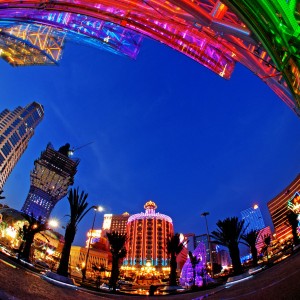 stocks of both Sands China and Galaxy Entertainment Group to be punished on Hong Kong‘s Hang Seng Index. It was, said IGamiX Managing Director Ben Lee, “just like a regular Saturday night performance, definitely not a ‘Golden Week’-type busy.” Contrarily, Sanford C. Bernstein & Co. analyst Vitaly Umansky argued that a longer-than-usual Golden Week dissipated daily business. Either way, Melco Resorts & Entertainment CEO Lawrence Ho pronounced himself “happy” with the numbers so far.
For his part, Ho is more focused on Japan at present, saying, “There is a lot of potential in the market.” At the same time, Ho acknowledged that tourism to Japan (20 million people last year) is half the volume to Hong Kong. That being said, it will behoove 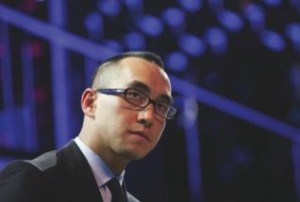 Ho and other casino aspirants to persuade Shinzo Abe‘s government not to bar Japanese citizens from casinos, let alone make them pay for the privilege of playing in them. Ho hinted that a Japanese megaresort could be his crowning achievement, saying, “In our industry, there are so many legends. Like my father, Sheldon Adelson and Steve Wynn, they all created something.” In a startling revelation, Ho said, “We had many opportunities go into Las Vegas, But every time, we shied away from that … the greatest development opportunities for years to come will be in Asia.” The latter’s gain is Vegas’ loss.
As for Abe’s loss of parliamentary clout in a July 5 snap election, Caesars Entertainment President of International Development Steven Tight said, “My understanding is they are still on track for the passage of the implementation bill by the end of this year.” Between not having an eligible site and being laser-focused on the 2020 Olympics, Tokyo is no longer seen as being in the running for one of the (probable) two integrated resorts. Also, Tokyo Gov. Yuriko Koike is only moderately interested in a casino push.
Said Tight, “Tokyo is going to have to decide whether it wants to be involved in this initiative in the first phase or not.” Also, to  win over a recalcitrant Japanese public, Caesars is working on a film of a day in the life of a megaresort, with which it will bombard Nipponese airwaves and other venues. Predicted Tight “it will be probably one of the most stringent regulatory environments in the world. And I think that’s what’s required for [the Japanese] to feel comfortable moving forward.”
As for Caesars’ South Korea project, it has only missed a step or two as the company has had to replace ex-partner Lippo Group. “They have done some initial site work and some additional soil investigation, which requires a bit of remediation. The site fencing is going up, and we are starting major site works probably in late July, early August. The current targeted
completion date is mid-2020,” Tight said of the $800 million casino. Assuming the Korean peninsula hasn’t been nuked into oblivion by then, “we are optimistic that everything will be resolved, and that tourism will continue to be growing in Korea, especially from China.”
Caesars plans a two-track marketing plan to synergize Japanese and Korean casinos. Since South Koreans won’t be able to gamble at Incheon, Caesars plans to use the allure of its non-gaming amenities to entice them to Japan, where they can wager. Also, Total Rewards will be extended overseas to “move them around from resort to resort.” Although we’d rank Caesars as a dark-horse candidate for Japan at this point, we wouldn’t say they haven’t got this thing well thought out.
