

Think Japan‘s going to have casinos open in time for the 2025 World Expo? Think again. Shinzo Abe‘s ruling Liberal Democratic Party is postponing the 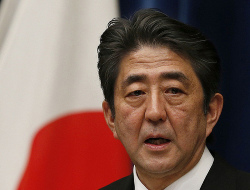 regulations governing casino bidding until after next year’s elections. That’s bad news for Osaka, in particular, which will be hosting the expo. Another body blow to the as-yet-unborn Japanese casino industry was Abe’s mooting of a five-year license period, which would put a seemingly insuperable ROI burden on casino mega resorts. Imagine you have a $10 billion super-casino and have to monetize in five years: Not easy. If investors were skeptical of the leverage involved in going into Japan they’ll be downright leery now.
Morgan Stanley raises another concern: unemployment or the lack of same. Nipponese casinos will require large numbers of skilled workers and the Land of the Rising Sun’s jobless rate stands at 2.5%. Wynn Resorts Development President Chris Gordon allows that hiring against this backdrop is a “daunting task.” (Morgan Stanley proposes hiring more women or, better yet, robots.) But the brevity of the licenses is the 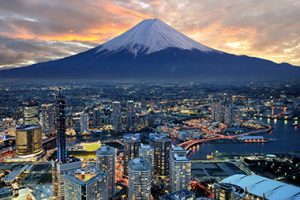 biggest concern. By contrast, Macao‘s run 20 years. MGM Resorts Japan CEO Ed Bowers asked Global Gaming Business, “do you have to increase the equity or do you have to decrease the investment and what does that mean in the context of bidding to win this license? This issue has made the financing significantly less flexible.” It also remains unresolved as to whether the five-year term begins when the license is awarded (meaning the hourglass runs for years while you’re in the construction phase) or from when the doors swing open.
Perhaps because the value of Osaka is suddenly on the decline or the field so crowded, Bloomberry Resorts is dropping out of the race and focusing on secondary targets like Yokohama, Tokyo or maybe a regional market.  Morgan Stanley speculated that sky-high bidding for Osaka (and consequently declining ROI) may have been a factor. Said a Bloomberry exec, “We have not yet decided which location is best. That is still under research.” While MGM Resorts International and Melco Resorts & Entertainment have been throwing around $10 billion figures, Bloomberry had been prepared to spend only $2 billion-$3 billion in Japan (Osaka excepted). And, unlike Las Vegas Sands, Bloomberry is willing to be a minority stakeholder in a Japanese megaresort.
Mohegan Gaming CEO Mario Kontomerkos already sounds like he’s having second thoughts. He told GGB, “When you think of the size of the projects we’re talking about, then you layer on this idea of the five-year licensing threshold, I think what that means is the banks will be there but other tranches of debt will likely be required. You will have to have investors that are willing to take that risk and I’m not sure the national banks will be there for that.” We’ll keep tabs on this story as it develops.
* No surprise here: Casino profits have narrowed dramatically—30%—since the addition of two new gambling halls to the Atlantic City market. Gross  operating profit for casinos in the city was $87 million in 1Q19. On the plus side, hotel occupancy has risen 19% (surely a reflection of newer, better inventory on the market) and sales-tax revenue 18%. The only improvement in profit was manifested at long-suffering Resorts Atlantic City, which improved on an abysmal 1Q18 to record $3 million in the kitty. The newcomers aren’t outdistancing the competition, Ocean Resort having lost $10 million and Hard Rock Atlantic City $5 million.
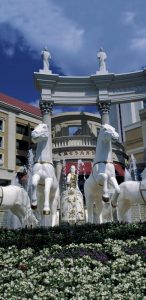 At nearly $40 million, Borgata (-12%) had the largest operating profit, followed by Tropicana at $16.5 million (-5%). For all its volatility, Caesars Atlantic City did the best of the Caesars Entertainment trio, declining only 11% to $13.5 million. Harrah’s Resort was $16.5 million in the black but tumbled 42% while Bally’s ground out $3 million, a 54% plunge. Resorts Digital closed the gap between it and Caesars Interactive, $2 million to $3 million. In the meantime, Borgata will try to firm up its supremacy—and improve its sports-book numbers—with the $12 million Moneyline Book & Bar. Not taking any chances, Borgata is incorporating slot machines into the new space.
* In this corner, Sen. Lindsey Graham (R) and Sen. Richard Burr (R). In that corner, the Eastern Band of Cherokee, owners of Harrah’s Cherokee. In the middle, the Catawba Nation, which wants a $340 million, Class III casino near 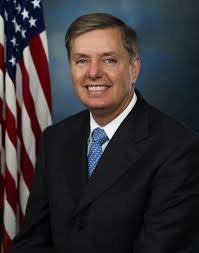 King’s Mountain. A bill presently before the U.S. Senate would permit that, which has the Cherokee—and North Carolina lawmakers—all het up. They contend, and perhaps not without reason, that it bulldozes a giant shortcut right through the heart of the Indian Gaming Regulatory Act. (The Cherokee add that the Catawba are poaching on ancestral turf.) Momentum seems to be with the Catawba, with Sen. Thom Tillis (R) having flip-flopped to their side.
The 16-acre project would leave a large footprint: 220,000 square feet of gambling, two hotel towers with 750 rooms, a shopping mall, a restaurant and more. “The Catawba Nation has been treated unfairly by the federal government, and our legislation rights that wrong,” says Graham, in support of his legislation, which is pursuant to a still-unfulfilled 1993 bill that was intended to vacate legal settlements with the Catawba in return for a 4,200-acre reservation. The feds still owe the tribe 3,200 acres. A Catawba claim to land in North Carolina, where the casino would be sited, is held up in court due to the law’s having been poorly drafted. Assuming Mitch McConnell (R) lets it come up for a Senate vote, one has to like this make-good legislation’s chances.

AC: Profits in AC may be lighter, but competition will get much worse when PA ramps up in 2-3 years with the South Philadelphia “Live” casino, five smaller PA satellite casinos, and “truck stop” slot machines. If Bart Blatstein makes good on his promise to build a new casino next to his Showboat Hotel in AC, the AC town council may have to post signs on the Boardwalk: “watch out for failing casinos”.