

Trading on his longstanding Republican Party connections, American Gaming Association President Bill Miller is leapfrogging the Small Business 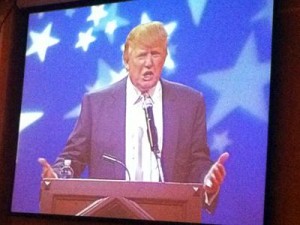 Administration and Secretary of the Treasury Steve Mnuchin, to take his case straight to Donald Trump. The problem, as we outlined yesterday, is that the SBA is excluding small gaming businesses, mainly casinos and slot routes from various forms of disaster relief, because they derive more than 33% of their revenue from—Gasp!—gambling. It’s an outdated attitude but it’s also the way the SBA rolls. As Miller writes to Trump, “these interim rules rely on antiquated, discriminatory policy that renders small gaming entities ineligible to receive critical loan assistance.” The effects on modest-sized, gaming-reliant businesses could be devastating. Or, as Rep. Dina Titus (D) puts it in a letter to the SBA, “Many of these small businesses already operate leanly, with tight profit margins and just enough people on staff to keep things running.”
After several obligatory obeisances to Trump’s leadership, Miller cuts to the chase: “Individuals who are laid off will otherwise be pushed into unemployment assistance and Medicaid. Not only are workers better off when they remain connected to their employer, this approach has long-term benefits to our economy. The  dislocation costs associated with widespread unemployment are severe. Maintaining employees on payroll avoids rehiring complications, saves on future training costs, and increases productivity, which is essential to a faster economic recovery.” Miller concludes, presumably in hopes of an executive order from Trump, “As it stands, the policy discriminates against these mainstream businesses and, more importantly, the hundreds of thousands of employees who rely on gaming for their livelihood … Thank you for your attention to this request and your continued leadership on behalf of our great nation.”
Letters from 15 additional members of Congress are attached, starting with a splendid one from Rep. Mark Amodei (R) that minces few words about the problem the SBA is perpetuating. Rep. Susie Lee (D) points to the 1,300% increase in unemployment filings in Nevada, some 92,238 in 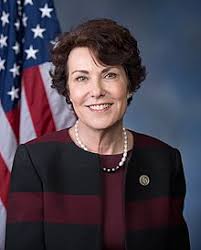 the week of March 21, adding, “Local bars and restaurants often rely on the revenue from a handful of video poker machines to make their businesses keep functioning. Indeed, gaming is an almost mandatory offering at independent bars and restaurants in my district.” Were the SBA’s decision upheld, she concludes, it “will doom countless small businesses in Nevada to bankruptcy.” Sens. Jacky Rosen (D, right) and Catherine Cortez Masto (D) echoed these themes, with some groveling to SBA Administrator Jovita Carranza and to Mnuchin thrown in for good measure. Sen. Martha McSally (R) and two colleagues took up the cudgels on behalf of Indian Country, as did Reps. Deb Haaland (D) and Tom Cole (R). Anyway, you get the general idea. It’s a persuasive argument but whether they can get The Donald to espouse it is literally a multi-billion-dollar question.
* Major League Baseball has floated the idea of playing what’s left of the season entirely in Arizona, to empty stadiums. That’ll be great for the Arizona economy, we’re sure, but have to agree with whoever called the concept “bizarre.”
* Arizona, incidentally, is a state where the Coronavirus curve has been so flat as to be almost nonexistent. Other gaming-intensive states have been less fortunate. A pull-down chart (bottom of page) shows Nevada peaking April 20 (too late for an April 30 quarantine lifting) with an eventual 916 Covid-19 deaths. New Jersey‘s far worse off, peaking April 16 with a projected 9,690 fatalities. The third state in the Big Three, Pennsylvania, is estimated to hit the apex on Tax Day, with an eventual 782 deaths. Florida hits the apogee April 21, with 6,770 estimated deaths and California gets off comparatively lightly, with 1,783 projected deaths and an April 17 high point.
At least these are the forecasts of the Institute for Health Metrics & Evaluation, which have come under criticism for being the White House‘s sole point of reference. That aside, reports National Public Radio, “The model was designed to give hospitals an idea of how quickly they need to expand capacity and by how much.” Lead researcher Chris Murray warns there could be a second Coronavirus wave if social distancing is too soon revoked (we’ve seen this in Japan, Singapore and Macao). “In places where there’s a rapidly rising epidemic—New York, New Jersey, now other places—the ability to predict that exact peak is not as accurate as we previously said,” Murray also cautioned. The model assumes that social-distancing measures will stay in place through May and that those states which have not already imposed them will do so in a week. (The first assumption seems stronger than the second.) California was a week ahead of New York in taking that action, ergo its much-less-severe Covid-19 problem.
One state where casinos can forget about reopening anytime soon is Massachusetts, reeling from an out-of-control pandemic set to peak on the 18th and incur a death toll of 8,254. The downward curve of the disease extends deep into May. Warns IHME model creator Ali Mokdad, “if they ignore recommendations and start partying and going out—then they will have more mortality.” We never thought going to a casino was a matter of life and death, but we guess it is now.

A reporter asked the President about this issue regarding small casinos at today’s reality TV show, he said he will “look at it”… Which is the exact same answer he gave to a question about giving Joe Exotic a Presidential Pardon, so I would not exactly be brimming with confidence if I owned one of those casino’s… This Miller gentleman figures the POTUS cares about workers and healthcare, he would have likely gotten more of a rise out of the self-centered leader of the free world if he mentioned showgirls or golf, and had no Democrats sign the letter…
To be fair to Miller, only he and Amodei (whose letter definitely bears reading) wrote directly to POTUS. The Dems concentrated all their pleas on Mnuchin and Carranza, although we’re not sure how much good it will do.