

It can’t get any worse. That’s the cautious mantra emerging from the Boardwalk, where Atlantic City shed four casinos last year. Trump Taj Mahal is on life support provided by  Carl Icahn and Caesars Entertainment CEO Gary Loveman has cast doubt upon the future of Bally’s Atlantic City. Revenue slippage is expected to continue, albeit at a slower rate. And, of course, having less competition has made life easier for the survivors … except the Taj. Wannabe Revel owner Glenn Straub continues to play hardball. He’s now lowered his offering price for the defunct resort to $87 million, effectively subtracting his $3 million breakup fee from his previous offer, never mind his last-ditch $95 million bid. Straub is citing what he says was an unfairly conducted auction as the rationale for his new, lowball bid.
The city itself is getting some financial relief. It has sold a $32.5 million Revel tax lien to Wells Fargo for $26 million and collected a $22 million tax lien on Trump Entertainment Resorts. Theoretically, the property owners have two years to repay the liens or face foreclosure. That’s complicated in the case of Revel because Wells Fargo is the lender propping up the megaresort as the property goes through a protracted bankruptcy auction.
Mayor Don Guardian also scored a $40 million loan at an 0.75% interest rate from the State of New Jersey. The loan buys time for the city to arrange a bond offering that will offset reduced property-tax assessments from the city’s casinos. Guardian told the Philadelphia Inquirer that the monies would “be enough to allow Atlantic City to pay its workers, continue operations, and send the county and school systems their share of the tax revenue owed for 2014.”
* Steve Wynn‘s much-reviled design for his Everett casino has been displaced by one bearing much greater resemblance to Wynn Las Vegas (the bronze glass, the slight 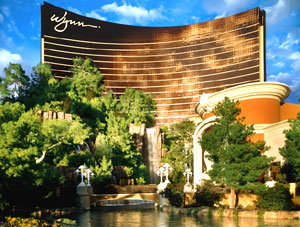 curvature, etc.), changes that will add $150 million to the $1.6 billion tab. To compensate, Wynn will bump up the room count from 500 to 630. Boston is traditionally one of the best theater towns in America (a favored site for Broadway out-of-town tryouts), so a showroom now figures in Wynn’s plans. So do many objets d’art from the Wynn personal collection, including a statue of — I kid you not — Popeye. Steve Wynn remains as unpredictable as ever.
Meanwhile, he’s under fire from the city of Revere for failure to disclose a letter from the IRS, notifying Wynn Resorts of a money-laundering investigation. The memorandum of law, drafted by a bevy of lawyers, accuses Wynn of keeping the letter under wraps during the casino-selection process. (The Massachusetts Gaming Commission now has the document.) State gaming regulations require that “the gaming licensee shall, upon receipt of 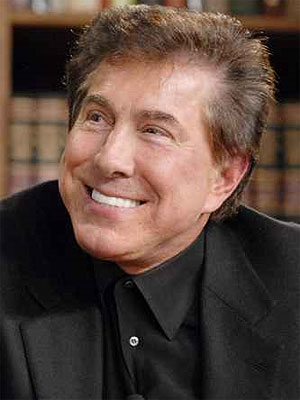 a criminal or civil process compelling testimony or production of documents in connection with a civil or criminal investigation, immediately disclose such information to the commission.”
MGC member James McHugh replied to Revere Mayor Daniel Rizzo that the letter was neither a subpoena nor a summons, so the disclosure rule did not apply. This answer inspired Suffolk Downs COO Chip Tuttle to snort that the MGC was “rolling over and playing dead … I’d like to say I’m shocked but this is a continuing pattern of the Wynn project treating the process with cynicism and contempt,” Tuttle added.
Gaming pundits had differing opinions. “It’s a little surprising they didn’t take that a little more seriously … It does behoove both [Wynn] and the commission to be above board all along the way,” said Boston College‘s Richard McGowan. However, Clyde Barrow, late of the University of Massachusetts-Dartmouth, responded, “As a matter of prudence, if you’re not legally required to disclose something, why would you? If you set the bar too low, they’ll be in touch with the Gaming Commission almost every day about something.”
* There’s a new ray of hope for the casino aspirations of the Mashpee Wampanoags, thanks to a federal court ruling involving the Cowlitz Tribe of Washington state. The court held that land could be taken into trust for tribes that were under federal jurisdiction prior to 1934, whether they were recognized or not. This may give the Mashpee Wampanoags a slim pathway around the Carcieri v. Salazar decision that has confounded them. The tribe is also far more organized in its Massachusetts casino bid (rival KG Urban‘s “plan” hardly deserves the term. Much still depends on the Bureau of Indian Affairs‘ timeline, more leisurely than that of the MGC. However, if the tribe’s land-into-trust application goes through, a deal with the Bay State may be superfluous.
* Despite having been invented three years ago, slot game Colossal Diamonds is only now coming to a casino near you.
