

No surprise, the only revenue-positive casinos were the newest: Hard Rock Atlantic City, jumping 18% to $29 million, and Ocean Casino Resort, closing in with $25 million, a 37% pole vault. Neither Golden Nugget ($10.5 million, -29%), Bally’s ($11 million, -15.5%) nor Resorts Atlantic City ($11.5 million) had stellar months, although Resorts confined its decline to 6%. Borgata took home $41 million, Caesars Atlantic City did $19 million (-12.5%), Harrah’s Resort captured the same amount but was 20% down, while Tropicana Atlantic City grossed a respectable $20 million, off 11%. If there’s a lesson in the leaps and bounds being made at Hard Rock and Ocean it’s that some capex reinvestment can’t come elsewhere any too soon. To its credit, Caesars knows this and is going to do $400 million worth of something about it.
FanDuel/Meadowlands continued to dominate sports betting, with a 51% market share, with Resorts Digital capturing 25%. It will also be branching out to Bally’s Atlantic City once that casino changes hands (but not brands). DraftKings, however, outperformed. Credit Suisse analyst Ben Chaiken had it pegged to do $40 million in handle; it did $55 million. Football betting—$279 million—rose 55%, propelling the market to $789 million in handle. Internet gambling increased over 100% for the seventh consecutive month, led by Golden Nugget’s 30% market share, with Borgata and Resorts Digital trailing at 23% each. Caesars put in a comparatively poor showing: 16.5% despite the power of the brand name. “The pandemic has crystalized the difference between Nevada and New Jersey, where online betting is paramount,” said analyst Eric Ramsey. “New Jersey was almost certain to grow into the nation’s largest market. But with 90% of bets coming through online sportsbooks in New Jersey, it was simply better prepared for the events of 2020.”
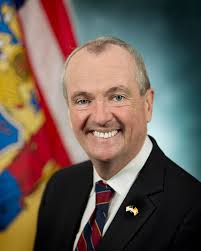 Nobody seems too happy with Gov. Phil Murphy‘s latest series of anti-Covid edicts, including one requiring restaurants and bars to close from 10 p.m. to 5 a.m. No bar-side seating either. Casino owners objected but Murphy turned a deaf ear, saying increased restrictions would be coming. Our sources report Borgata being less full than usual and Hard Rock “nearly empty.” (At least the Twin River Holdings takeover of Bally’s got initial regulatory approval.) Casino owners complain that Murphy is judging Atlantic County by the same Coronavirus-rife standards found in the northern part of the state. Of course, who goes to Atlantic City doesn’t stay in Atlantic City. Still, some feel that Murphy is flying by the seat of his pants. “Businesses need to plan and forecast. Having specific data to look for and anticipate is critical,” New Jersey Restaurant & Hospitality Association President Marilou Halvorsen told Global Gaming Business.
“The last thing I want to do … is to shut our economy back down, and thankfully, we are not at that point. No one up here wants to take the type of broad and all-encompassing actions like those we had to take in March. We are acting with more precision-based actions on what we are seeing on the ground,” rejoined Murphy. But even gubernatorial defender Jane F. Bokunewicz of Stockton University allowed that “Further restrictions could make recovery even more difficult. Requiring restaurants and other food and beverage services to close at 10 p.m. will reduce the number of staff members that can return to work and limit work hours for those employees who have already returned.” On that point there seems to be little disagreement.
About Murphy’s only fanboy is Bronson Frick, of Americans for Nonsmokers Rights. He penned a love letter to New Jersey, saying that “99 percent of gaming employees have remained COVID-free. This rate was likely made possible by mask requirements and reopening smokefree, which prevents the spread of respiratory droplets when one exhales secondhand smoke or vape. Not only is smokefree good for employees’ health–and not just during a pandemic—but it also reassures guests who want to get out of the house and enjoy the unique entertainment experience casinos offer without risking their health. As revenue numbers in these states have increased, even as we’re in the midst of a devastating economic recession, it’s becoming increasingly difficult for casinos to claim smokefree hurts their bottom line. We urge all gaming operators to make the smokefree policy permanent. After all, if it can work during COVID, then it can also work when this pandemic is finally behind us.”

Detroit casinos were down 19% in October, grossing $94 million. Despite extreme restrictions on attendance (15% of capacity) that’s almost impressive and was undoubtedly benefited by that additional weekend. MotorCity was strongest, banking $36 million and down only 8%. That put it in striking distance of MGM Grand Detroit, off 23% to $38 million, while Greektown brought up the rear with $20 million, down 20%.

Atlantic City: most of the Covid positive casino employees are reported working at the restaurants & bars: Harrah’s 36, Hard Rock 34, MGM Borgata 20, Bally’s 19, etc. Note that 2 of the top 4 are “New Caesars” properties with No Temperature checks for incoming customers.