

 As Chinese visitation grew 36% in the last year alone, accounting for $7.75 billion dollars of economic impact, Australia is plunging full speed ahead into the race to be the next big gaming thing in the Pacific Rim. Hong Kong tycoon Tony Fung is planning to spend $7.5 billion — as much as Sheldon Adelson did on Marina Bay Sands, in Singapore — on a resort complex in Cairns. It would encompass “eight hotels, an exhibition center, entertainment precincts, a championship golf course and one of the world’s biggest aquariums.” A workforce of 20,000 people would be required.
Only slightly cheaper ($7 billion) is the megaresort proposed by Sino-Aussie joint venture ASF Consortium further along the coast. Both projects come with similar environmental concerns, although James Packer was dismissive, saying “The natural attractions … are magnificent but people also want man-made attractions.”
 Packer’s busy finishing up his Crown Sydney megaresort. Of it, he predicts, it “will help attract Asian high net worth travellers to Sydney, in particular from China, creating economic growth, extra taxes and over 1,200 jobs for the people of New South Wales.” Packer, last seen brawling with rival TV executive David Gyngell, is currently tussling with two other companies for the right to build a casino in Brisbane. As is obvious, the Chinese market is not to be gainsaid. Or, as Leo Jago, chief economist for Tourism Research Australia, put it, “China is Australia’s fastest growing inbound tourism market and tourists from China are the largest spenders in Australia.” Gather ye rosebuds while ye may.
Placing a burr firmly underneath the saddle of Massachusetts Gov. Deval Patrick, a U.S. District Court judge has ruled that the casino 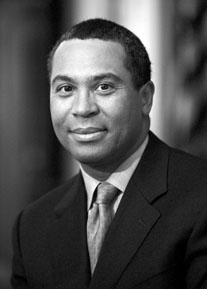 pursuit of the Wampanoag Tribe of Gay Head is a federal matter. Citing repeated precedent, Judge F. Dennis Saylor IV ruled that federal law “pre-empts state laws regulating gaming on Indian lands.” Citing IGRA, the Aquinnah band is seeking Class II gambling on Martha’s Vineyard.
“The state has long held that the tribe waived its rights to an Indian casino by entering into a land deal with the state in 1983, later codified by Congress in 1988, where it agreed to abide by state and local zoning bylaws,” reports George Brennan. However, the court was not particularly sympathetic, writing “The fact that the central issue in this case necessarily requires an interpretation of federal Indian gaming law suggests that the jurisdictional question here is not particularly close.” One expects the state to appeal — but how many more obstacles can it throw in the tribe’s path?
Arkansas has put keno on hold until March of next year, in a win for outgoing Gov. Mike Beebe (R).
