

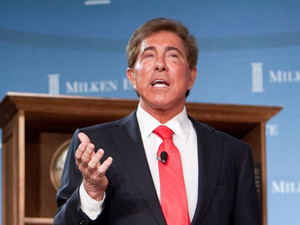
 While the City of Philadelphia is officially neutral on who should get the last gambling license for the area, it’s not above giving the Pennsylvania Gaming Control Board a not-so-gentle-nudge. At a hearing led by Deputy Mayor Alan Greenberger, two favorites emerged … and a couple of big names suffered major setbacks. City leaders are cool toward Steve Wynn‘s proposed, $900 million casino, mainly because of its close proximity to SugarHouse, which they fear could harm the latter. At the same time, casinos outside the city’s center were frowned upon.
That’s a setback for Cordish Gaming, which could take cold consolation from the fact that Hollywood Philadelphia got an even frostier reception. And, bringing up the rear was Casino Revolution, brainchild of Joseph “Tomato King” Procacci: an amusement park anchored by a casino, like a tin (tomato?) can tied to the rear bumper of a car. Officials deemed it “unlikely to draw a new audience or expand the number of people who visit the city for casino gambling.” If Tomato King was hoping for ‘favorite son’ status, he just got a rude awakening.
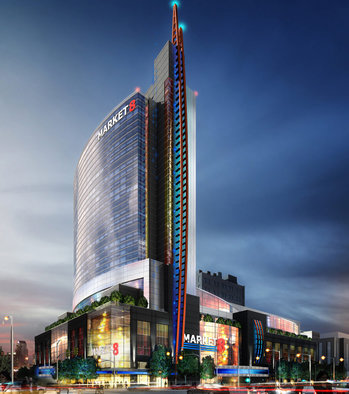 Local mogul Bart Blatstein‘s The Provence caught some flack over traffic issues but was deemed best for “longer-term revitalization.” Dark-horse-turned-favorite Market8 took the palm for proximity to mass-transit and “immediate [economic] effect.” Perhaps city fathers were wowed by the new look of Market8, unveiled just in time for the forum. The street level will emphasize dining, retail and other social activities. Gambling is banished to the second and third floors. You have to wonder if Market8 is courting the Cosmopolitan Effect, wherein people skip the gambling and go straight to the amenities. We shall see.
Would it surprise you if I said that fewer than 8% of Singaporeans have 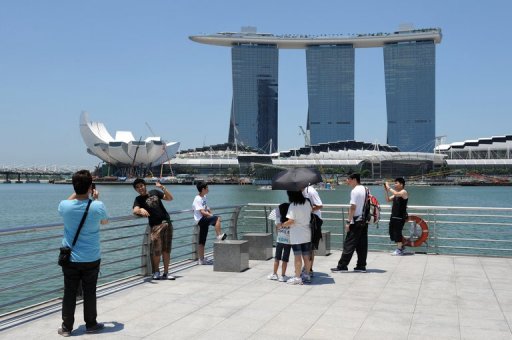 patronized the city-state’s two casinos and the number is dwindling … with a moderately untoward effect upon gaming revenues? Whether Singapore residents are largely indifferent toward gambling or (more likely) put off by the $80/visit entry fee imposed upon citizens remains to be seen. However, they must be playing pretty heavily. The casino is but a tiny part of Resorts World Sentosa and Marina Bay Sands … but the 95% of space devoted to non-gambling activity is only generating 25% of revenue. (It’s even more out of whack in Macao, where gambling is 90% of total revenue.) Resorts World had the worse of it, its gambling revenue slipping 12% vs. 4% at Marina Bay Sands.
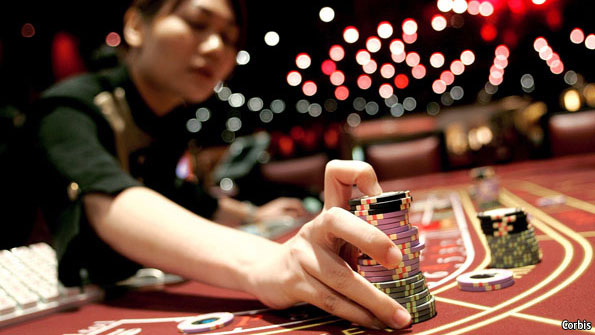 Visitors have more than made up for poor locals patronage: Tourism grew 50% in the 2009-2012 period. That’s good news for Singapore, whereas Macao is overwhelming dependent — and sometimes vulnerable to — the domestic Chinese market. Macao can boast of being the fastest-growing economy in the world … but it’s coming with some growing pains, ones that every bit of casino revenue that can be harvested from the tax base. Basically, Macao doesn’t have the infrastructure to absorb all this growth — kinda like Las Vegas when you think about it. Or, as one wonk observes, “If you get sick in Macao, everybody knows it’s better to go to Hong Kong.”
In an ominous note to U.S. casino operators, a Melco Crown Entertainment exec remarks that he “sees graduates as potential senior executives, ultimately replacing the expatriates who typically run casinos.” So, yes, Sheldon Adelson, you are dispensable when your concession runs out. Small wonder that he’s working on plans B (Japan), C (South Korea), D (Taiwan), E (Spain) and beyond.
