

We apologize for the dearth of hard news lately. Compounding a two-week vacation with the Fourth of July holiday hasn’t been good for keeping you, dear reader, in the loop. This week in particular has been so slow it’s practically comatose. For news headlines we have been forced to read the tea leaves on a fairly routine changing of the guard at Light & Wonder, for instance.
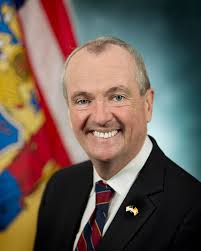
Today’s lead story hails from Trenton, where New Jersey Gov. Phil Murphy (D, above) inked a bill shortening the leash on the i-casino industry. While some lawmakers wanted licenses to sunset after two years (rather than the previous 10), that radical idea was headed off in committee. A compromise term of five years was settled upon. Given that the i-casino industry could change beyond recognition in another 10 years (ditto online sports betting) and that decade-long licenses but gaming companies in the driver’s set, we understand why the Lege and Murphy did what they did.
The state Senate was of a mind to go with an additional 10-years of licensure but the overwhelming sentiment of the Assembly was that a shorter time frame was required, and the lower house prevailed. Industry mouthpiece and Resorts Atlantic City President Mark Giannantonio is undoubtedly sulking but the Lege took a dive on smoking in casinos, so perhaps he should accept the tradeoff and call it a win.

Speaking—or rather, coughing—on the issue of smoking in casinos, Richard Schuetz weighed in yesterday with some strong sentiments on the subject. He makes the not-unfair analogy to the former segregation of Las Vegas casinos on the grounds that it was the way things were done. (Fortunately, a little organization called the NAACP put a stop to that.) As Schuetz, writes, “Apparently, nothing soothes moral cowardice as well as the potential to make money.” He equates those who deny the health dangers of secondhand smoke to believers in a flat earth … or Jewish space lasers perhaps.
Three years ago, smoke-free Park MGM was measured against seven other Sin City gambling halls, all of which (it practically goes without saying) promote smoking. Secondhand smoke was found to be inescapable—72% higher even in non-smoking areas. “They were 540% higher in the smoking areas compared to the non-smoking casino. Most importantly, the air in both the smoking and non-smoking areas of the casinos that allowed smoking presents a health risk to humans.”
Now let’s consider that less than 13% of the U.S. population smokes. Is 99% of the Las Vegas casino industry devoted to that 13%? Would those people really stop coming to Vegas if smoking were banned? We sorely doubt it. (Besides, Big Gaming’s ass is so thoroughly covered by its participation in other markets that it would make back elsewhere what might be lost in Vegas.)
Then again, there is a high correlation between disordered gambling and tobacco addiction. Does Big Gaming want to fess up that it’s sponging off a small, degenerate portion of its customer base? It kind of does, considering that smoking enablers in Rhode Island wail that casino revenue for Bally’s Corp. will drop 33% if smoking is banned. As Schuetz observes, “the American Gaming Association will not allow any discussions of smoking at its G2E conference, for the science is pretty unequivocal.” Mind you, AGA prexy Bill Miller and all the high pajandrums of the industry are almost hermetically sealed from this worrisome issue, isolated in their well-ventilated, smoke-free offices. Maybe if they were forced to work from a casino floor they might change their tune. Then again, money is involved, so maybe not.
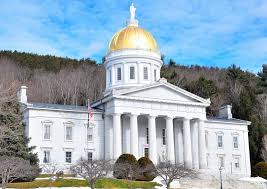
Even stately Vermont has entered the sports betting game, meaning that all of New England is now an OSB-friendly zone. The state hopes to incept sports betting by year’s end. That being said, Vermont’s proposal for sports betting business is, well, cracked. It seems to be predicated on New Hampshire‘s monopolistic setup. Operators are actually asked—that’s putting it kindly—to offer to pay higher taxes than the next guy, with one’s application being graded higher the more taxes one pays. For instance, a voluntary impost of 20% (the minimum allowed) gets you 25 points. But an offer of 51% or more gets you 100 points toward your application. How many operators are going to flush profitability down the commode to get those 100 points?
The higher the bidding, the fewer the operators who are likely to be chosen. New Hampshire started with 13 aspirants and ended with DraftKings. However, a poison-pill provision allows the Department of Liquor & Lottery to choose as few applicants as it likes (even none) if it can’t extort enough money. Talking out of both sides of her mouth, Liquor Commissioner Wendy Knight said, “The idea is to have a competitive market. We would like to have more than one. However, there is language built into the bill that if operators are not qualified, we’re not required to select two if they don’t meet the standards.” In other words, Vermont is wonderfully set up to fail.
Another state with a vast imponderable where sports wagering ought to be is Florida. The near-term consequence of the upholding of the Seminole Tribe‘s latest compact is that the Native Americans can add roulette and craps in their seven casinos. That’s the bare minimum. Should the Seminoles reinstitute sports wagering, either online or at a retail level, the 21-and-older crowd can bet on professional sports (foreign and domestic), collegiate sports and Olympic games. All wagers must be routed through Seminole-owned books. And Gov. Ron DeSantis (R) gets to bank $500 million a year in revenue-sharing in return. Frankly, we think he got the best of that 2021 deal, considering the elusiveness of OSB profits. Fortunately for the Seminoles, they have an OSB monopoly in the Sunshine State.
But the battle lines remain drawn within Florida and, having been rash once, the Seminoles are proceeding circumspectly the second time around. (This is encouraging to those of us who felt the tribe was an outlaw actor, complicating licensing in Nevada and elsewhere.) What’s next is a legal scrumdown on whether the prevailing authority within the state is constitutional Amendment 3, which places gaming expansion strictly in the hands of the voters, or whether it’s the Lege, which is empowered to approve compacts, unlike the electorate, which gets no voice. Of course, the Indian Gaming Regulatory Act implications of the latest ruling will almost surely mandate an appeal to the U.S. Supreme Court, a real wild card. With tribal online gambling seemingly on the verge of a nationwide breakout, a SCOTUS verdict is all but necessary in order to reliably proceed.
By the way, Arizona is about to let three additional sports betting licenses. Why? And why now? The market in that state has been vacuumed up by a quartet of operators. Pickings are, at best, slim. Isn’t entering Arizona now sort of like having sex wearing a used condom? Those licenses will hardly be worth the sheepskin on which they’re printed.

June gambling revenues for Maryland just crossed the transom and they’re flat with last year’s. Considering how good last year was, we’ve not crying into our beer. Of course, MGM National Harbor led, flat at $69 million. Maryland Live hopped 3.5% to $58 million while Horseshoe Baltimore, the mistake by the waterfront, fell 6.5% to $16 million. Ocean Downs was up 1.5% to $9 million, Hollywood Perryville slid 6% to $7 million and Rocky Gap Resort dipped 4% to $5 million. Penn Entertainment did everything in its power to kneecap Cordish Gaming when the latter was marching toward Maryland Live and was right to fear it. Only MGM Resorts International sleeps better at night.
