


Gambling grosses were ultra-boffo on the Las Vegas Strip last month, up 19% over the year previous and leaving 2019 in the dust, +25%. Locals casinos didn’t fare too badly, either if not as spectacularly as their Strip brethren: up 4.5%. Strip casinos went “Kaboom!” with $712.5 million in the bank. Strip slots were tight, as 11% more coin-in yielded 16% greater casino win, for $390.5 million. Table game players also played poorly, luck being with the house to the tune of $223 million, an 11% improvement on flat wagering. Baccarat was back with a vengeance, as 20% more was played and the house took whales to the cleaners, to the tune of a 59.5% improvement in win, despite looser-than-usual hold.
One other factor driving those Strip numbers was a record amount of passenger traffic at Reid International Airport, which exceeded four million souls for the first February ever. Planeloads grew 24% from last year, and if the international traffic was seemingly modest (203K people), it was a 125.5% vault from 2022. Southwest Airlines was by far the preferred carrier, doing twice the traffic of Sprint Airlines and quadruple that of anybody else.
Downtown rose 7.5% to $74 million. Nobody in the Las Vegas Valley was revenue-negative. North Las Vegas gained 9% to $25 million, the Boulder Strip hopped 3.5% to $7.5 million and miscellaneous Clark County grew 4% to $133 million. That’s not to neglect Laughlin, which did $45.5 million (+6%) or Mesquite, which inched up 2.5% to $16 million. Reno was considerably less fortunate. Dismal table winnings were to blame, as grosses tumbled 10.5% to $54.5 million. Normally volatile Lake Tahoe suffered less, down 4% to $19 million. Sparks continues to flex its newfound muscle, up 5% to $13.5 million, while all’s well in Nevada when Wendover is gaining, which it did 4% last month, to $22 million.
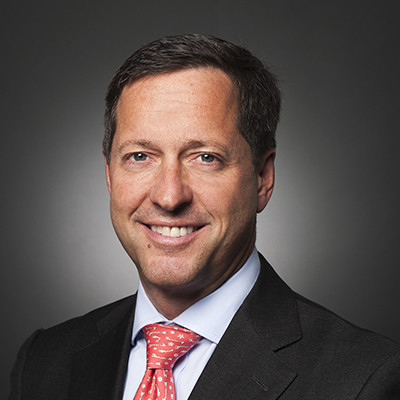
Given all the adverse focus on the marketing (read: overkill) of sports betting, the American Gaming Association is feeling the heat and rather quickly. To its credit, the AGA and its prez, Bill Miller, swung rapidly into self-policing mode. A new code of conduct, unveiled this morning, states that “college partnerships that promote, market or advertise sports wagering activity” are hereby verboten, closing down a major avenue of marketing blat. Sen. Richard Blumenthal (D) was breathing down the industry’s neck on this issue and not without reason, so we applaud Miller’s swift about-face. The one exception to college partnerships is for ties “to alumni networks or content focused on RG initiatives or problem gambling awareness.” That gives the industry a bit of wiggle room, but not much at first glance.
In a seemingly commonsensical move, no one under 21 can be featured in an ad for sports betting, and both amateur and collegiate athletes are off-limits as marketing figures. Vague “legal age of wagering” language must be replaced with “21-plus” or a similarly explicit formulation. And last—but far from least—the baneful term “risk-free” must be dropped from ads. Caesars Sportsbook is currently having a legal headache over the use of just such terminology. The new code of conduct is to reviewed and updated on a yearly basis. Whether this will call off the dogs on Capitol Hill remains to be seen (probably not) but the AGA has done the right thing. What the industry should do at this point is to stop drenching the airwaves with advertisements, behavior that is prompting much of the congressional nausea (a phenomenon not limited to politicians either). But Big Gaming seems, for the moment, content to wait until the free market dictates that ad spending should be curbed. Win some, lose some.

Across the ocean, three subsidiaries of William Hill are getting hit with a staggering fine of almost 20 million pounds for complacency in the face of problem gambling. They were lucky not to be suspended, especially after the United Kingdom‘s gambling commission found that one of them had allowed a single punter to blow through £23,000 in 20 minutes and did nothing to stop him. This is the sort of misconduct that could bring governmental wrath down on the gaming industry, especially with the long-delayed White Paper still looming. As Martin Preston, CEO of the private rehab clinic Delamere warns, “Betting online through apps, online casinos and slot machines can be extremely dangerous. Firstly, gambling online is available 24/7. There are no opening and closing hours when it comes to online bets, which means someone who has a gambling addiction can keep placing bets no matter the time of day or where they are. As a result, it becomes easy to keep spending money or lose a sense of control.” Amen.
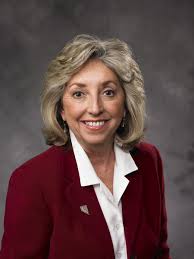
Rep. Dina Titus (D) giveth—by fighting excise taxes on gambling—and Titus taketh away, as when she advocates for odious resort fees. Blessed be the name of Titus, says Richard Schuetz, citing the congresswoman’s opposition to the federal tax on sports-betting handle. Mind you, it’s an approach fraught with peril, since whenever the federal government looks at ‘sin taxes,’ it tends to want more of them. Or, as Schuetz puts it, “Titus may just not want to open this potential can of worms with her tax measure, but then she is a politician who possibly wants to grandstand for the home team and raise a few dollars in the process.” And there are more than a few dollars to be had. After all, the California sports betting campaign last year saw $600 million wasted on a fool’s errand. When politicians see that kind of lucre been spent, they know Big Gaming is ripe for the plucking. So while we wish Titus luck in tilting against the IRS windmill, she may get more—as Schuetz points out—than that for which she bargained.

Jottings: The Horseshoe name has returned to Las Vegas, albeit on the Strip rather than in Downtown. The Bally’s brand is officially out and Horseshoe formally in, in an occasion that drew legendary poker player Doyle Brunson, appropriately enough. Let’s hope the spirit of player-friendly Jack Binion informs the management of the rechristened casino … Add Gun Lake Casino to the DEI-honoring rankings of American gaming. The Michigan tribal gambling hall has committed financial support and sponsorship to the Unified Sports & Inclusion Center, in Grand Rapids, the largest Special Olympics facility in the world. “This partnership with Special Olympics Michigan is a natural extension of Gun Lake Tribe’s commitment to building an inclusive community,” remarked tribal Chairman Bob Peters … Major League Baseball is throwing a lifeline to Bally’s Corp. by streaming all minor-league games on its struggling sports web, starting April 15. No betting will be permitted on the 120 live feeds, for which Bally’s paid an undisclosed sum … A quartet of California tribal casinos have revived their busing services to would-be players. Yaamava’ Resort & Casino‘s bus rides are free, those for Pala Casino cost $20 and Harrah’s Southern California is charter-only … Don’t look now but the proposed Nevada lottery is gaining steam in the Lege. Proceeds would go toward mental health programs for the young. We needn’t fear for Big Gaming, however. As Howard Stutz illustrates, it has a history of co-opting such things.
