

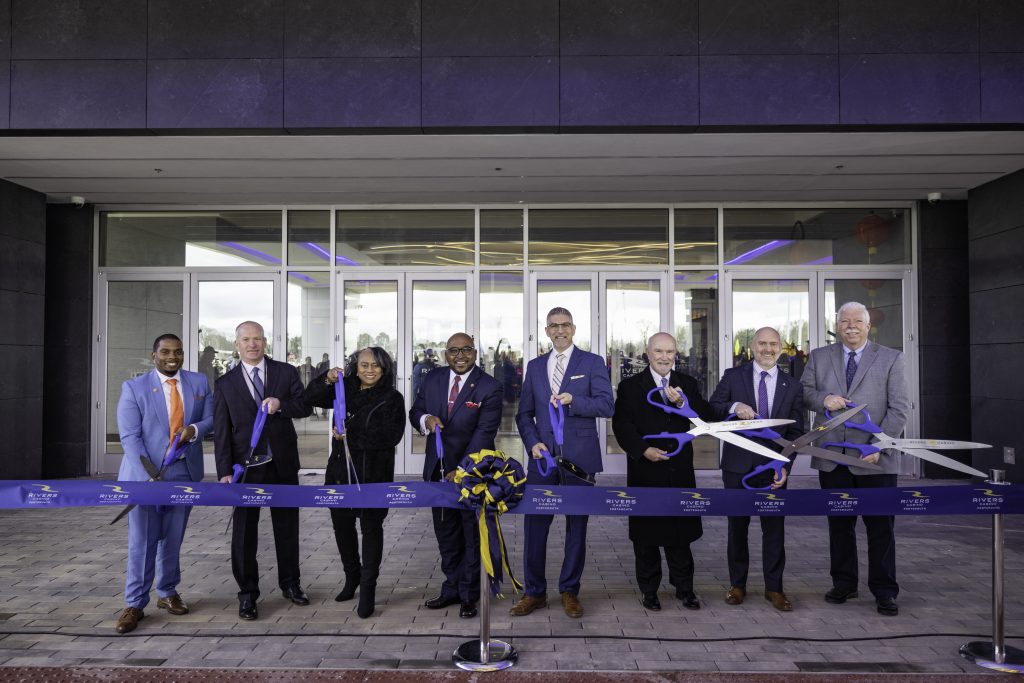
No, that isn’t a new big-box retail outlet (which its entrance rather resembles) but Rivers Portsmouth, the first permanent casino to open in Virginia. On hand were Allen Iverson, a marching band, a gaggle of local politicians … and the noxious odor of tobacco smoke. Comments harvested by Americans for Nonsmokers Rights included such gems as “This is just not OK” and “I will never come here again.” That’s not what Rush Street Gaming execs want to hear, less stil, “I think it’s backwards, archaic, disgusting and I won’t come here ever again.” Opined player Beth Grimes, “I hadn’t even sat down yet to play a game. I’m leaving. I’ve been in this building 30 minutes walking around, and all of a sudden, as more people have come in and sat down, they’re smoking, smoking, smoking.” Also irked was Norfolk resident David Spry: “I finally quit and I’m not going to be putting myself into a position where I’m going to get second-hand smoke.” Nor should he.
Rush Street’s failure to ‘read the room’ is indicative of a “backwards, archaic” mentality in the C-suite. The execs fell back on their HVAC system, asserting that it would negate the smoke through its magic “ventilation centers.” We’ve never been in a casino where air filtration banished the odor of smoke, so pardon our skepticism. The closest anyone came was the Aria slot floor—at the price of an inflexible game layout. As ANR President Cynthia Hallett says, “It’s telling that local residents are already speaking out against indoor smoking at the new casino. It’s time to end this outdated business practice. After all, research shows that casinos without indoor smoking generate more revenue than their smoking counterparts.”

Joseph Greff of J.P. Morgan didn’t bring along any 2021 comparisons when he busted out the December revenues for Detroit‘s casinos. We’ll have to make to with (outdated) 2019 measurements—and they’re not auspicious. The trio of gambling halls grossed $108 million and even MGM Grand Detroit wasn’t immune from an 8% revenue decline to $51 million. It was much worse at Hollywood Greektown, falling 19% to $24 million, leaving $33 million for MotorCity (no comparison provided).
Internet casinos nearly outperformed terrestrial ones, grossing $108 million, led by BetMGM ($54.5 million) and DraftKings at $32 million. Close behind was FanDuel ($29 million), but not BetRivers ($9.5 million) or Caesars Entertainment ($7 million), let alone WynnBet ($5 million) and Barstool Sports ($4 million). In the sports betting sector, revenue of $49 million was realized, although that dwindled to $31 million after promotions were deducted. Handle was $479 million. FanDuel dominated market share with 43% of revenue to BetMGM’s 23% and DraftKings’ 18%. Caesars Sportsbook had 7% and Barstool 3%.
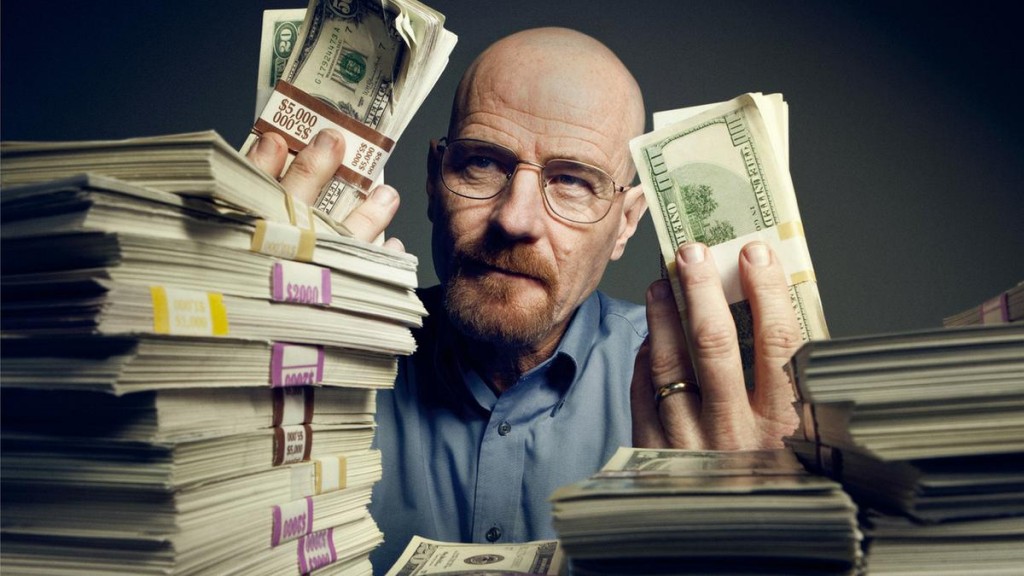
Is Fanatics CEO Michael Rubin wacko or realistic? He predicts his brand-new sports books will be in “15 to 20 states” by next NFL season. That’s mighty ambitious and puts a great deal of pressure on regulators to approve the company to meet Mr. Rubin’s frenetic timeline. As Legal Sports Report puts the matter, “its full roll-out map is a mystery.” BetFanatics has gone live in Maryland and vows to be up and running in Massachusetts by March. To get into Michigan, which is fully booked, Rubin may try to buy BetParx, which is among the low-hanging fruit of the industry. Moreover, there are eight states in which licenses have gone begging, so Rubin can get most of the way toward his goal, regulators permitting, if not necessarily by September. Rubin is banking on cheaper costs of entry as well as the evolution of markets like the District of Columbia.
Rubin’s decidedly dicey business plan is to leverage its mammoth apparel database into the number-one sports betting platform in America by 2032. (DraftKings and other first-movers might have something to say about that.) Oh, and make a profit, hopefully, something that only FanDuel has been able to achieve. “I would love to see their plan for how they’re going to make money,” Oklahoma State University business professor John Holden told Steve Friess. “And you don’t make the margins on sports betting that you make on selling the jerseys or other collectible things that Fanatics sells. It’s a highly competitive market and the market is pretty saturated.”
Fanatics, which is sitting on $2 billion in cash, mainly plans to throw money at the problem. Can Fanatics succeed where Twin Spires, Fubo Sportsbook, MaximBet and others have failed? History inclines one to say ‘no’ but Rubin is giving it considerably more than the old college try.
Bad news at Bally’s Corp. The company is pink-slipping 15% of its employees. Speculation has it that the brunt will fall on BallyBet, which has shown signs of overextension. Confessed CEO Lee Fenton, possibly laying the groundwork for his own exit, “The pandemic boosted our business and we continued to hire at full pelt. I now can see that we may have over-hired in some areas and I take full responsibility for that.” We’re completely unsurprised, especially after an incredibly depressing earnings call last November. The company remains creakily over-leveraged (9X EBITDA) with only a pittance of cash on hand. Should there be a recession, Bally’s is ill-positioned to weather it.

Jottings: If you missed our appearance yesterday on KNPR‘s State of Nevada, fret not. A print condensation, in which we play the role of Sunny Optimist, is available … Speaking of optimism, Macao is finally looking up. J.P. Morgan analyst Joseph Greff sees plenty of positive metrics, even if I. Nelson Rose thinks the new concessions are a Faustian bargain … If you’re not familiar with Women In Gaming, it’s time to remedy that. It is transoceanic in its reach, as Les Ambassadeurs Casino can attest … Remember when the Atlantis brand had its eyes on the north Las Vegas Strip? Well, it’s gone back to what it does best, namely Atlantis Bahamas … You know the cost of living is bad in Hawaii when islanders are moving to pricey Las Vegas instead. A living Hawaiian wage would be $18 an hour but the minimum wage is $12. With upside-down economic metrics like that, you have to wonder where the populace is going to find the money to spend on sports wagering, which has been proposed in the Lege.

I live in West Los Angeles, Las Vegas is not “pricey” compared to where I live, Hawaii is even higher priced than where I live…