

You could soon be able to play Internet poker in New York State — by going to a casino. That’s the compromise proposed by Senate Racing, Wagering & Gaming Committee Chairman John Bonacic (R). Only 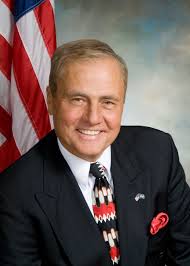 casinos and racinos would be eligible to host ‘Net poker under Bonacic’s bill, meant to palliate the objections of Gov. Andrew Cuomo (D) and the casino industry. $110 million in licensing fees are anticipated if the bill passes. Bonacic’s Assembly counterpart, Rep. Gary Pretlow (D) is shopping a similar bill around the lower house, although Bonacic concedes it’s “a tougher walk” down there.
The biggest bargaining chip that Bonacic and Pretlow hold is a bill to extend mayoral control of New York City schools, which must be passed by this time next week. Bonacic thinks that gives the gambling bill leverage. He asked reporters, “There’s illegal online gaming right now. So why don’t we monitor it, tax it and make money for education?”
Comparable — but broader — legislation is being debated in Boston. Again, while there is sentiment for online gambling, the question of giving to established casinos with one hand and taking away with the other is a vexing one. As Massachusetts Gaming Commission Chairman Stephen Crosby said, “If there is going to be a major change in the gaming world, the bricks-and-mortar people have to be attended to … their economic interests, just to be fair, should be seriously considered.”
* So heavily ballyhooed was the American Gaming Association‘s announcement of its sports-betting panel that the actual event had the feeling of anti-climax. While the group of point men assembled by AGA  President Geoff Freeman flashed some impressive credentials, particularly on the law-and-order front, the centerpiece of the event was the release of a report by Oxford Economics quantifying the effect of repealing the Bradley Act. Although the study “represents analysis conducted for all 50 states for brick-and- mortar gaming at casinos plus retail locations.” Both the methodology and its conclusions seemed awfully vague.
Minimum economic activity was pegged at $22 billion, with 125,000-150,000 jobs created, paying between $6 billion and $7.5 billion. Tax collection was estimated at somewhere between $4.8 billion and $5.3  billion. We expect that last item to be a big selling point, especially in Washington, D.C., where solons have to figure out how to pay for Mr. Trump’s wish list. Even so, “The American Gaming Association believes a perfect storm is aligning and now is the time to repeal a failing law,” Freeman said, We think that it’s overtime and hope that the rightward realignment of the last election doesn’t tip the balance against legalized sports betting. After all, Oxford Economics found that 52% of Democrats but 58% of Republicans favored legalization. Let’s hope those party lines hold true on Capitol Hill.
* How do you make casinos safer? In the Philippines, the new idea is to charge $61 admission as a deterrent. Resorts World, meanwhile, has had its license suspended for “serious security lapses.” In crass terms, an admission fee would reduce mass-market play, increasing reliance upon VIPs. As for its deterrent value, that remains to be seen. Could it have de-motivated casino gunman Jessie Javier Carlos? We hope so, though it’s late to know.
