

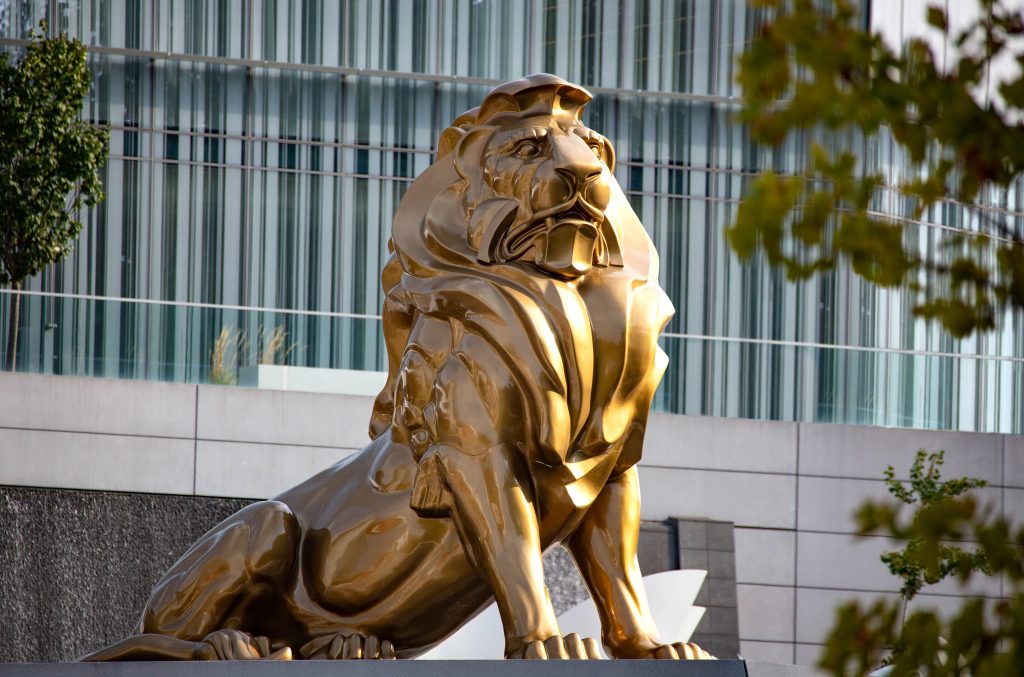
Inflation or no, there is one quantifiable, incontestable fact about the American consumer. He or she is spending more—way more—on gambling than before Covid-19 and more than last year, when they had stimulus money to burn. So if there are fewer presents under the Christmas tree, maybe the economy isn’t to blame. Big Gaming’s poster child for its current prosperity has to be Maryland, where last month’s gambling losses were 37.5% higher than 2021 and 48% over pre-pandemic 2019 for a total haul of $213 million. That may be peanuts by Las Vegas standards but it’s the biggest casino month in the history of the Free State.
As usual, the big winner was MGM National Harbor ($115 million), catapulting 106% over last year and 92% from 2019. (Table revenue at MGM was completely off the charts, up 406.5% to $73 million.) Some of that largesse came at the expense of Maryland Live, whose $60 million represented a 2% slippage (but 25% over 2019). Horseshoe Baltimore did its customary $17.5 million but that was a 1.5% hop, albeit still 9% below 2019. The results weren’t quite as good out in the sticks, with only Ocean Downs revenue-positive, up 5% to $8 million (and up 20% on 2019). Rocky Gap Resort receded 9.5% to $5 million (but 10% over 2019) and Hollywood Perryville dipped 1% to $7.5 million. Had October 2022 not had one fewer weekend day than 2021, some of those shortfalls might have been erased.
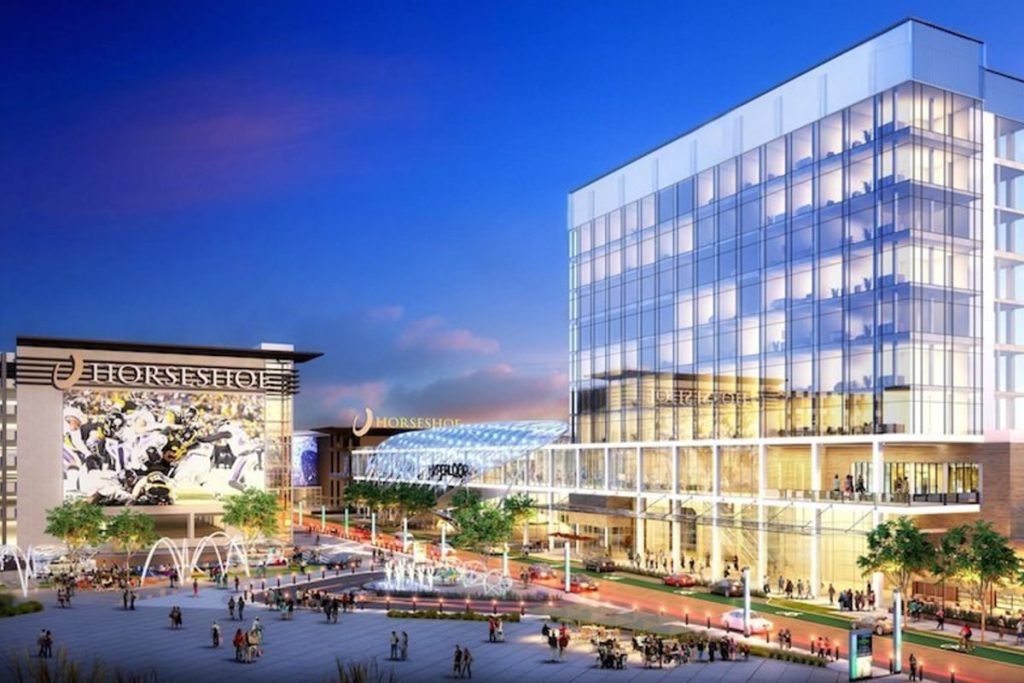
As we’ve indicated, $442 million Horseshoe Baltimore is stuck in the mud but Caesars Entertainment is, somewhat belatedly, trying to make amends. It’s adding Topgolf and a concert venue, and was going to build a hotel … but now that’s on hold. The overall goal is to make the walk from M&T Bank Stadium (where the Baltimore Ravens play) less intimidating. To that end, two derelict warehouses have been demolished. Unfortunately, hotel construction is contingent on how Topgolf and The Paramount perform, so don’t plan an overnight stay at Horseshoe anytime soon. Rather than taking the bit between its teeth, Caesars is dithering over several different hotel concepts, including a joint-venture development. “We are meeting with folks now conceptually,” General Manager Randy Conroy told Casino.org. “It will be great to get something under construction in the next couple of years.” It sure will.

Despite the continuing dilution of gambling revenue in Illinois, thanks mainly to the spread of slot routes like kudzu, casino revenues were not just 6% over last year but 8.5% higher than 2019. The haul was $116 million, as players spent less (2.5%) on average but visited 9% more than last year. They didn’t visit as often as in 2019 (-6%) but spent a whale of a lot more (+15.5%) than before the Great Pandemic. Rivers Des Plaines vaulted 34% over 2019 and 5.5% from last year to tally $46.5 million. However, not everybody did as well. 2019 comparisons are in parentheses in the following tally: Par-A-Dice, $5 million -4% (-8%); Bally’s Quad Cities, $5 million, +13.5% (-8%); Hard Rock Rockford, $5 million, N/A; Grand Victoria, $13 million flat (+5%); Harrah’s Joliet (above), $11.5 million, -3.5% (-10.5%); Harrah’s Metropolis, $5.5 million, flat (-8%); Argosy Alton, $3 million, +11% (-20.5%); Hollywood Joliet, $7.5 million, -3% (-16%); Hollywood Aurora, $8 million, -7% (-11%); DraftKings Casino Queen, $6.5 million, +2.5% (-26%). Take Rivers and Hard Rock out of the picture, and Illinois revenues are actually 3.5% down from 2019, so the importance of those two gambling houses cannot be undervalued.
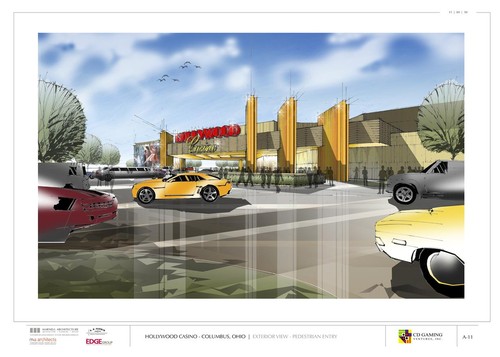
Bucking the trend somewhat, Ohio was flat with last year, just missing a record haul but bringing in $192 million, 21% than just prior to Covid-19. MGM Northfield Park‘s $23 million was a 1.5% gain over last year and 9% more than October of 2019. Facing new competition from HHR machines at Turfway Park in Kentucky, Belterra Park tumbled 18% to $6.5 million (-3.5%). Hollywood Columbus (above) finally snuck by Northfield Park into first place with $24 million, a 10.5% leap (+29%), whilst Hollywood Toledo slipped 3.5% to $18 million (+13%). The only other dramatic movement was at Jack Thistledown, which stumbled 11.5% to $14.5 million (+23%). Scioto Downs was absolutely flat at $19 million (+27.5%) and Jack Cleveland dipped 1% to $21 million (+23%). Hard Rock Cincinnati was up 4% to $20 million (+19%) and Miami Valley Gaming gained 2% to $19 million (+32%). Finally, Hollywood Dayton was flat at $12.5 million (+25%) and Hollywood Mahoning Valley jumped 4% to $14 million (+28.5%). Most of the slippages were so minor that the missing weekend day would surely have evened the year-over-year ledger. Even so, almost everyone is doing a lot better than before Covid … casinos, anyway.
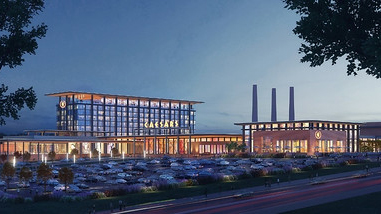
Jottings: Election Day at least means that we won’t have to watch campaign ads after today. Except in California, gaming is a bystander to the big votes, unless you count the bank-shot effect of various gubernatorial and legislative jousts. If you haven’t read a nauseating amount about Propositions 26 and 27 already, there’s more to come … Bally’s Corp.’s company story is a great deal more compelling when told by Chairman Soo Kim rather than his Debbie Downer executive team. But if Kim thinks people throw shade at Bally’s because it’s a string of castoff casinos with a castoff brand—well, it’s true … The temporary iteration of eventual Caesars Virginia (above) should be open by June or July of next year, according CEO Tom Reeg. The six-month delay is occasioned by scarce labor and by supply chain issues. The project is a partnership of the Roman Empire and the Eastern Band of Cherokee Indians … Also kicking the can into next year is Parx Casino‘s Schippensburg satellite facility in Pennsylvania. Whenever it opens it will have 500 slots and 48 electronic table games … There will be a new loyalty program at The Mirage once Hard Rock International takes the keys. Otherwise, expect business as usual, perhaps for as long as three years.
Quote of the Day: “When [players] realize that the new place is a dark airplane hangar that sells hot dogs off a cart, they’ll come back.”—Full House Resorts CEO Dan Lee, dissing a new historical horse race facility at Turfway Park in yesterday’s earnings call.

[…] Source link […]
The card rooms vs Native American casino war in California will have no survivors, and the ugliness of it will prevent any legislative action… It’s a case study in greed, something that could benefit all instead became an all out race to the bottom… The tribes trashed the card rooms for wanting 90% of the revenue, when their own proposal says they would get 90% of the revenue… Some voters unfortunately fall for easily refutable con games, so every election cycle the vast majority of us get our intelligence insulted by the gaslighting and lies…