

 Caesars Entertainment CEO Gary Loveman has as much as said bankruptcy would happen over his dead body. Funeral services may be held in January. Caesars, y’see, has filed for an amendment on its debt that would give senior bondholders first dibs on the company’s cash. (Of which Caesars has quite a bit, believe it or not.) According to Bloomberg News, since a move like this would have to be done three months out from a Chapter 11 filing, “it “may raise the odds that the Las Vegas-based company files for a bankruptcy as soon as mid-January.” Added Alex Bumazhny of Fitch Ratings, “We think the bankruptcy is highly likely at this point.”
Caesars fairly conceded the inevitability of Chapter 11 on — aptly enough — Aug. 11, when it wrote “do not expect that our cash flow from operations will be sufficient to repay our indebtedness in the long-term and we will ultimately seek a refinancing, amendment, or restructuring of our debt,” in an SEC filing. “The first-lien lenders want to protect themselves in bankruptcy … the company is saying it needs to grant the liens on this cash in order to move [negotiations],” CreditSights analyst Chris Snow told Bloomberg. (Caesars elected not to comment.) None of this, mind you, stopped Caesars from paying Loveman $7,622,000 last year. Sweet.
 But don’t put all the blame on Caesars. A consortium of bondholders may be pressuring the company to default on a Dec. 15 interest payment of $225 million, cash they presumably covet for themselves. In the meantime, Caesars Entertainment Operating Co. has been described as “an ailing corporate dumping ground that will likely go bankrupt within the next few years.” Among the assets gathering dust in it are Caesars Atlantic City and Bally’s Atlantic City (above) — just the kind of news the Boardwalk needs these days, especially as it could mean the seizure of both properties and the closing of weak sister Bally’s. That’s one of the foibles of Loveman’s strategy to try and own the most casino capacity in any given market.
* Shedding another non-core asset, MGM Resorts International has sold the low-end Gold Strike to JETT Gaming, the latter owned by the same folks who 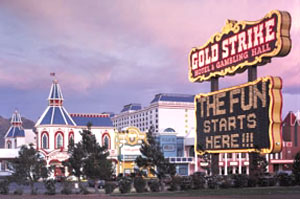 drove Herbst Gaming into the ground. As with its sale of the Railroad Pass Hotel & Casino, this transaction marks another step in MGM’s attempt to rid itself of some of its mass-market vestiges. As CFO Dan D’Arrigo put it, “we continue to review and refine our portfolio of properties, and focus on new developments in international and regional markets.” (Key word “international.”) The Gold Strike’s sole claim to fame is that it employed future U.S. senator John Ensign back when he was just another pretty face.
* When Illinois‘ gambling laws were being written, a chink was left through which have slithered gray-market “sweepstakes” machines. According to The Associated Press, the devices, which can average $167/day, “accept cash but 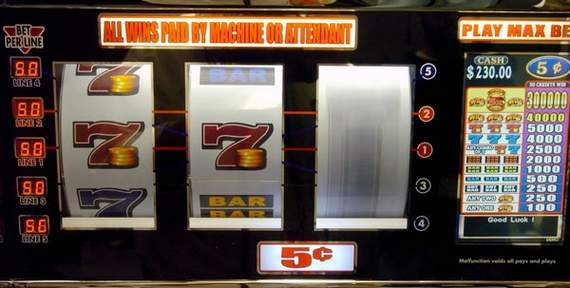 typically pay out coupons or credits that can be used for online purchases.” Since only 100 of an estimated 700 machines have been installed, the Chicago Crime Commission is trying to smother this afterbirth in its crib, not least because they generate no taxes for the state.
CCC Executive Vice President Art Bilek is warning of potential organized-crime influence behind the sweepstakes machines. Of one ‘distributor’ he said, “The guy’s a runner — a goon for the Outfit.” Bilek and undercover cops have gone into the field to play the machines and found that they function pretty much like slots — reliant on chance rather than skill. However, precisely because of the devices’ gray-market status, no arrests could be made. Once they take root, these sorts of machines are notoriously resistant to eradication or oversight, so the CCC is commended for its proactivity.
