

“Extend and pretend.” Those are the words of gaming analyst Alan Woinski, describing the debt-management practices of Caesars Entertainment and CEO Gary Loveman: “they extended out the maturities and just put new debt on top of old debt, and the pretend part is pretending that someday they’d be able to pay it off.” The company has lost $853 million so far this year, yet continues to pursue an aggressive expansive strategy that would have you thinking its worst days were behind it. (Though they already caught up with it in Massachusetts and might do so in New York State.)
One of the ways this has been done is to segregate the new projects and better-performing assets into subsidiaries like Caesars Growth Partners (aka Little  Caesars), although some doubt that if debt takes down Big Caesars — Caesars Entertainment Operating Co. — Little Caesars will be able to escape the tsunami. Loveman is pretty blunt about it, too. “We two years ago created a subsidiary known as Caesars Growth Partners, created with the purpose of funding our growth for new projects like the Baltimore project that opened just a few weeks ago, and this one,” he told New York regulators. “This entity has in excess of a billion dollars of cash today on its balance sheet, it is very lightly levered and therefore has very sound financial circumstances. And this project, Caesars New York, would exist within the Caesars Growth Partners category.”
However, Loveman may have outsmarted himself by riling up debtholders who find themselves lumbered with lower-tier assets and see the company shifting 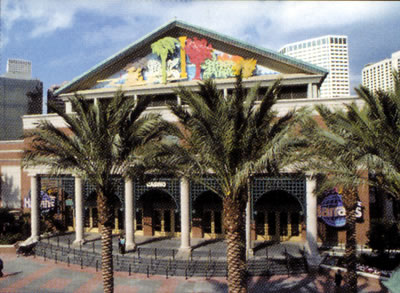 more debt into Big Caesars. It’s also stripped guarantees from the repayment of near-term debt after offering key investors a cozy, just-for-you deal in which their debts were made whole. “The bond market needs to know whether or not we have gone back to the 1930s, when valuable rights could be stripped away from individual and smaller investors through backroom deals between issuers and a favored few,” reacted MeehanCombs President Eli Combs, one of those who didn’t benefit from Caesars’ stealthy largesse.
A $135 million stock float released Caesars from its guarantees on another $11.6 billion in debt (on the grounds that the company is no longer wholly owned). “We have worked collaboratively and constructively with debt holders in an effort to improve the operating company’s financial condition while investing in the business and taking steps to enhance operating performance,” was how Caesars spokesman Stephen Cohen explained the moves.
Meanwhile Harrah’s New Orleans, Bally’s Las Vegas, the Cromwell and the Quad were also sequestered in Little Caesars, the place where prime assets  go to hide. Woinski described the company’s strategy as follows: ” ‘All right, we’re going to leave all of our crappy properties in Caesars Entertainment, and they’re not going to generate enough cash flow—we’re going to bankrupt them and emerge without all your debt.’ ” (Although Woinski adds the caveat that bondholders should have known the risk they were running.) At this point, Caesars Entertainment is rated Caa3, which at least means it’s almost hit bottom.
For Fitch Ratings analyst Alex Bumazhny it all comes down to how much of a haircut is going to be taken. “[At] this point all that’s left is really negotiating with the creditors of the weak entity to see if they could come to some kind of out-of-court agreement. They’re in that process right now.”
* Time is running out (again) to legalize casinos in Japan. If this is “a headache” for Prime Minister Shinzo Abe (right), it’s a migraine for casino developers hoping to  have megaresorts open in time for the 2020 Olympics. The Diet has to enact the enabling legislation by Nov. 30 and, at this point, Abe doesn’t even have Buddhist coalition party Komeito on board. The latter is riven between supporters and those who worry about an upsurge in problem gambling. Also, an Abe cabinet member had to resign over charges of corruption, creating an ethical smudge that rubs off on the casino question. Said Tomoaki Iwai, of Nihon University, “Abe’s support will fall, and things will not go as planned, for example enacting the casino law could become difficult.”
Added a casino supporter, “We’re still hoping for parliamentary discussions of the bill to start early next month, perhaps around November 5th or 7th … The  resignations don’t really directly affect the bill, but they don’t help either.” Counters an opponent, “I think the bill will be crushed.”
It’s certainly losing in the court of public opinion, with one poll showing 62% opposition. Leaving aside the question of potentially forcing casinos on a society that doesn’t want them, the next session of the Diet after this will be preoccupied with budgetary issues, so getting something as contentious as casinos through looks improbable.
* With a $5 billion acquisition of PokerStars on its hands, Canadian firm Amaya Gaming is streamlining its focus. It’s selling Cadillac Jack, a slot machine manufacturer, better known as a vendor of Class II machines to the tribal market. The sharpened attention to Internet gambling comes as we learn that online play in New Jersey may be significantly better than we thought, even without PokerStars.

Loveman should be arrested and charged with creating a Ponzi scheme. no better than what Madoff did. This Co hasn’t made money in yrs and no one is held ACCOUNTABLE! It sounds like the GOV.