

 As Caesars Entertainment skulks away from Massachusetts, tail between legs, a campaign of manufactured outrage continues to be mounted on its behalf. At its baseline is an attempt to minimize the reasons why the Massachusetts Gaming Commission was poised to drop-kick Caesars. Ken Adams parrots the agreed-upon narrative in a new column. To hear people from Gary Loveman to Adams tell it, it was a capricious decision made on the basis of a gossip column item about the suddenly infamous Arik Kislin, nothing more.
It’s quite a bit more, as John L. Smith explains, than a boldfaced item amidst society chatter. Kislin was a problem waiting to happen and Caesars was too arrogant to see otherwise. But then there’s 1) the company’s precarious financial health, 2) its association with Mitch Garber, and on- and off-problem for Caesars since 2009, 3) cash cow Terrance K. Watanabe and the manner in which Caesars milked him dry and 4) a Treasury Department investigation in the offing. Does this sound like a company with whom Massachusetts would like do business? At the risk of belaboring the obvious, one reiterates these points lest the official, Loveman-voiced myth calcify into what is known as history.
Across the state, the Springfield City Council was galvanized into action, asking for guidance on what to do if its chosen partner, MGM Resorts International, also flunks. The timing is more newsworthy than the question because Springfield should have covered its butt by asking sooner. It was, after all, no secret that MGM’s approval would be touch-and-go, although it recently was baptized to operate in Maryland. MGM has fewer flies buzzing around it than does Caesars but it’s going to take an extra-large swatter to smack down the specter of Stanley Ho and all he symbolizes.
Penn National Gaming made a powerful showing for the Maryland Video Lottery Terminal Location Commission earlier this week. To a packed house of supporters, Penn positioned itself as the savior of the Free State’s horseracing industry. According to COO Tim Wilmott, Penn has the financing in hand, and can be up and running by mid-2o16. He promised to improve the track, and to add a hotel and event center.
Otherwise, “You are going to lose a major industry,” said one resident. Some 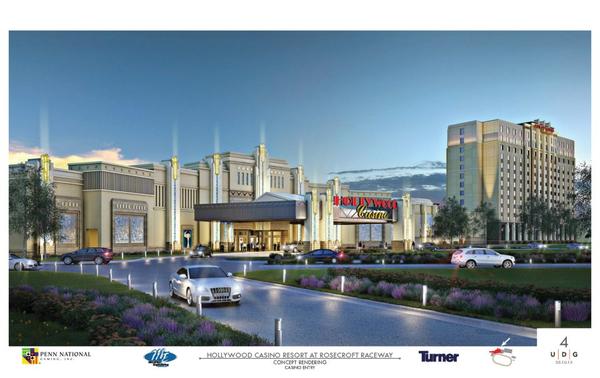 of his supporters were motivated as much by the traffic being generated by National Harbor, where MGM would build, as much as by pro-Penn sentiments, but the enemy of Penn’s enemy is Wilmott’s friend. “We think this market is very strong and very deep,” he said, presumably referring to the horsey set. (Penn has rolled snake eyes in Maryland’s casino market.) He also assured all concerned that Penn would continue to operate the track as a track, regardless of the outcome. It might be more profitable that way: Penn’s planned, $700 million racino has to generate almost $25 million/year in charitable donations — in one of the most punitively taxed casino jurisdictions in America.
