

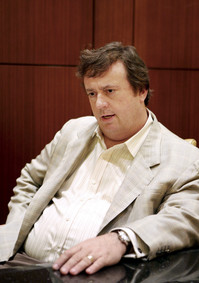
 Caesars Entertainment ” hasn’t posted a profit since late 2009″ and it kept that perfect streak alive today, more than doubling its 2Q13 loss of $212 million. The company lost $466 million — and I don’t think we can blame it all on the discontinuance of Iowa dog racing. Overall revenues rose 3% but casino revenue was 2%. Caesars Interactive was way up, enough to nudge Caesars Growth Partners into modest profitability. Interest payments on debt were a staggering $654 million. The Linq and Vegas High Roller were not only draws unto themselves but drove collateral traffic to nearby Caesars casinos. This compensated for ‘meh’ business elsewhere in the Caesars empire.
CEO Gary Loveman‘s staking a lot on the opening of Horseshoe Baltimore and on unspecified “capital structure initiatives aimed at reducing leverage.” The company is still bent upon closing Showboat in Atlantic City, although it’s unclear whether Loveman is fart-assing around with bidding on Revel — a far greater capital commitment. “We are hopeful that rationalization of capacity in Atlantic City combined with concerted effort to attract mid-week traffic and hospitality guests will help stabilize the market,” Loveman rationalized.
* Having left it to Pennsylvania authorities to nab accused casino cheat Jubreal Chahine, the Nevada Gaming Control Board now wants him. It also has six outstanding fugitives it would like to throw in the calaboose. Rachel Crosby‘s Las Vegas Review-Journal feature makes fascinating reading in the way it details how this or that casino got scammed. Most of the schemes involved at least some degree of subtlety. However, for brazenness it is impossible to top the Reno sports-book employee who simply dumped the evening’s “bank” in a backpack, left his rented room without checking out and evidently caught a bus out of town. That took some cheek.
* It hardly seems fair that one tribe in New Mexico should enjoy the competitive advantage of no revenue-sharing with the state, a gambling age of 18 and drinking on the gaming floor. But when Gov. 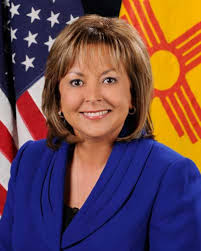 Susana Martinez (R) could reach terms with the Pojoaque Pueblo, it was only logical (and enterprising) that the tribe would take the inevitable step of compacting with the federal government directly. So Martinez has herself somewhat to blame for having to sue the Interior Department to prevent the new compact from going into effect. For all I know, the Pojoaque were intransigent, but they’re following the law and Martinez’s hopes are resting on a 2007 Texas decision that might apply to the Land of Enchantment. Had the state not shielded itself, claiming sovereign immunity, from tribal litigation, it may well have won that round, rendering this discussion academic.
