

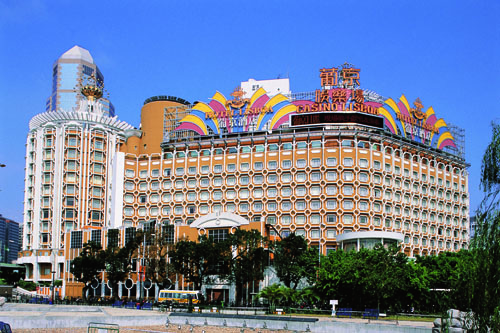
Compared to the acrimony currently flowing on the Strip, a stunning new policy directive from across the Pacific practically qualifies as “happy-talk news” …
With casino revenues increasing at a jet-propelled pace, China has yet again applied the brakes to Macao‘s casino industry. However, instead of limiting access to the protectorate, it’s putting a lid on casino development per se. Basically, if the government of Fernando Chui hasn’t signed off on your project already (a process that moves at glacial pace), you’re stuck with what you’ve got. As reported by Reuters, the immediate ramifications of Chui’s proclamations aren’t evident but Macquarie Securities analyst Gary Pinge cut to the chase: “We believe that the underlying message is no further casinos will be built on Macau in the foreseeable future.”
The Las Vegas Review-Journal‘s Howard Stutz shines a light through some of the opacity surrounding Chui’s speech, which puts a damper on the Cotai Strip™ in general and Wynn Cotai in particular. The Macao chief executive’s decree could be a blessing in disguise for Sheldon Adelson, not only limiting his competition in Cotai but forestalling Las Vegas Sands‘ precipitous rush to build two additional casinos — on top of those already begun — in “Asia’s Las Vegas™.” (That Adelsonian coinage says a lot about where U.S. companies have gone astray in Macao but that’s a subject for another occasion.) Sands, you might say, has been saved from itself.
Score: Adelson 1, Wynn 0. Steve Wynn, in particular, may have cause to eat some bullish sentiments he recently uttered in re Macao: “We can’t think of a better place to build it, all things considered, namely the workforce and government policy.” [emphasis added] Although Encore Macau gives Wynn a very good shot at equaling Sands’ Macanese market share or nudging Adelson into third place, the present ranking of the market as Stanley Ho, Adelson, Wynn and Everybody Else has been all but frozen into place by Chui’s edict.
With land and housing at a premium — to say nothing of the domestic tsuris occasioned by the use of labor imported from the mainland — Chui’s determination to repatriate land for low-cost housing also marks a significant new policy direction. In a seemingly unrelated development, talks between Macao and Guangdong Province bear watching, especially if their upshot is round-the-clock overland access between the two … lessening demand for Macao’s bumper crop of new hotel rooms.
Casino executives and analysts who scoff at Chui’s threat to reclaim undeveloped casino land and call it “political posturing” do so at their own peril. Maintenance of domestic and economic equilibrium in Macao have long been priority issues for Peking. There’s also the small matter of historical Chinese resentment (not ill-founded) toward Western nations and corporate interests carving out “spheres of influence.” If Macao looks like it’s becoming a distant outpost of Las Vegas, there’s certain to be backlash — if we’re not seeing it already.

It’s even but for Sheldon as all his hotels/casinos will be built as he got proposals ages ago
Interesting. One of the R-J stories states otherwise, but there’s been a dearth of in-depth reportage emerging from Macao proper. It sounds as though even the affected companies aren’t completely certain of the ramifications of the new edict, for which I don’t blame them.
… er, blame them for the apparent uncertainty, not the edict. Sorry for the confusion.
[…] more: Capping Macao « Stiffs and Georges Share and […]
The companies currently having one or more feet stuck in Macao are learning to their sorrow what it’s like to try to do business in a country that has no rule of law.
China has a history of allowing minimal freedoms for a short period of time, just to see who comes out of the woodwork, and then brutally crushing those who take advantage of the bootheel having been lifted a fraction of an inch. No doubt, China encouraged the building of massive casinos because they intend to throw out the foreign companies that built them, and then use the buildings as giant prisons, turning Macao into a huge penal colony.
Just as well. Since the chips used in the casinos are made in China, they’re probably poisonous to handle anyway. Cancel your Macao travel plans, folks. After all, New Jersey is just as crowded, smells just as bad, has casinos, too, and Southwest flies there.
When the casino concessions expire the Chinese government *does* retain the prerogative to nationalize them. In the meantime, the six concessionaires are learning what it’s like to deal with a regime that micromanages the economy like the burners on a gas oven.