

Could Chinese players go for gambling if the winnings aren’t monetary? That’s the wager resort owners on the island of Hainan  plan to make if the central government gives them a much-hoped-for exception. Just as players wager for trinkets in Japan‘s pachinko and pachislo parlors, Chinese vacationers would theoretically gamble not for money but for points that could be redeemed on rooms, dining and other resort amenities. (Has somebody been reading the Total Rewards playbook?) According to the South China Morning Post, “it would mark another big shift in the country’s approach to gaming after officials unveiled landmark measures to promote horse racing and sports lotteries in Hainan two months ago.”
IGamiX consultant Ben Lee told the paper, “From our conversations with people on the ground, they are positively excited about the changes that appear to be coming through soon.” Since VIP players are hardly likely to be lured by play-for-points, this could potentially free Beijing of the headache of monitoring cash outflow and guarding against money laundering. Also, since a visa wouldn’t be needed to visit Hainan, it could draw from a much larger constituency than Macao. The appeal to low-rollers, aka “mass market” players seems obvious.
Already sports betting is legal on Hainan and a 2014 court case has finally been resolved in the favor of a resort that was allowing baccarat play in return for non-cash prizes. While government approval of “entertainment bars” in Hainan is as difficult to predict as anything in China, it would redirect capital flow to Chinese companies, the dominant presence on “China’s Hawaii” and away from the pockets of Western capitalists in Macao. That’s a substantial incentive for Beijing to say “yes.”
Back in Macao, labor unions are balking at a potential law that would bar them from casino floors except when they are working. (One is reminded of an Atlantic City law that prohibits casino executives from gambling at rival properties.) We’re not just talking about dealers and croupiers, but about the eye in the sky, cage staff, food-and-beverage-outlet workers, and cleaners. To call the proposed law “draconian” seems almost an understatement. Violations would be punished with fines ranging from $125 to $1,250. Apparently the spur for the bill was the statistic that 30% of requests for help by disordered gamblers came from casino workers.
Protested Power of the Macao Gaming Association President Stephen Lao, “The range of the fine is not that much of a deterrent, especially to people that really have gaming addiction problems.” Mr. Lao’s union is not against the bill but questions whether its enforcement provisions are sufficient. Professional for Gaming of New Macau Deputy Director Lei Man Chao lauded the bill’s good intentions” but also questioned the efficacy of its would-be deterrents. Lei counterproposes an entry fee for locals, much like Singapore, but the government has already rejected that idea. It wouldn’t shut out casino workers entirely: They would enjoy a three-day holiday from the ban during Chinese New Year. Even so, this is the harshest restriction on casino workers we’ve ever seen come down the pike.
* Louisiana‘s Legislature is touted as giving a new look to the Bayou State’s casino industry — and high time, we say. In case you 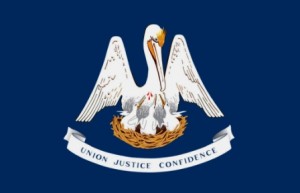 haven’t been keeping score, seven new laws are on the books, including the potential legalization of mobile wagering. Riverboat casinos can now move ashore, something that should have been done after the catastrophic hurricanes of 2005. But better 13 years late than never. Daily fantasy sports is now legal, provided it is approved on a parish-by-parish basis. (What a nightmare for DraftKings and FanDuel.) The question of taxing and regulating DFS was begged for the time being. Real-world sports betting was rejected by the Lege so DFS is the only game in town.
Harrah’s New Orleans was also rebuffed in its effort to expand, meaning all those handsome renderings will go into CEO Mark Frissora‘s circular file. Caesars Entertainment will, however, be among the beneficiaries of a new law that allows larger slot machines at racinos, superseding the old, 15,000-square-foot limitation on gambling space. Boyd Gaming will benefit from a provision that allows slot money from one racino to fatten racing purses at another one.
Riverboats have to demonstrate “an economic development justification” for coming onshore, a silly mandate. However, if they succeed, they will be allowed to go from having a maximum amount of gaming square footage to a 2,365-gaming-position cap, larger than any Louisiana riverboat in existence. They’ll also be able to exceed that cap four times a year for tournament play.
Flashier versions of video poker have been approved, part of a multifaceted liberalization of the laws governing gambling at the state’s truck stops. Employees no longer have to be present when the machines are being serviced and truck stops only have to sell a maximum of 30,000 gallons of fuel a month to have 40 VLTs, down from 75,000. (The truck-stop industry, in addition to being a financial powerhouse, is a “george” campaign donor to Gov. John Bel Edwards [D].)
Perhaps the most popular law will be one that forbids casino from 86-ing advantage players. No more of that “Your play’s too strong for us” crap. Said House Speaker Pro Tempore Walt Leger (D), “I just don’t want them to have such wide latitude to exclude people based on their winnings.” Throw in a new law liberalizing the application process for casino-supplier permits and you have a very productive legislative session. As we’ve said before, there’s nothing like a budget crisis to focus the Lege’s attention on gaming reform. We guess that’s what it will take for Florida to buy a clue.
