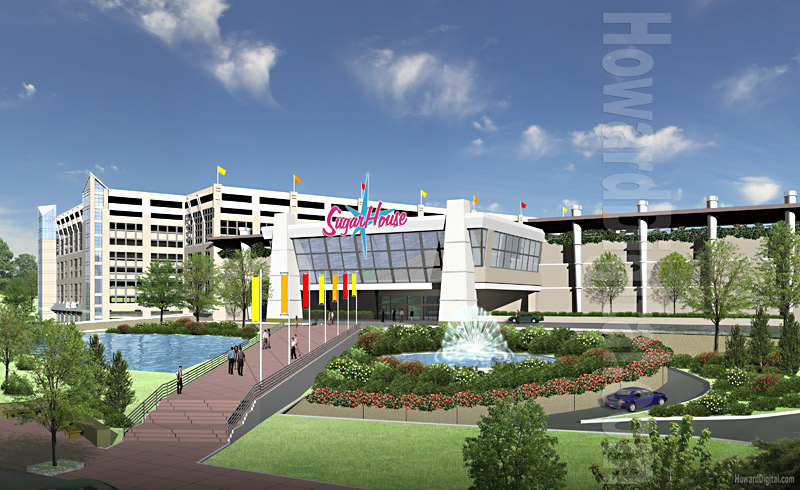
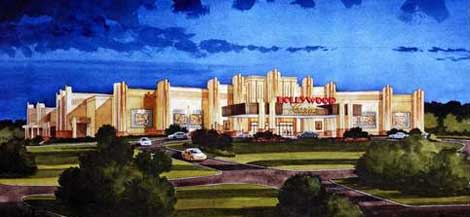
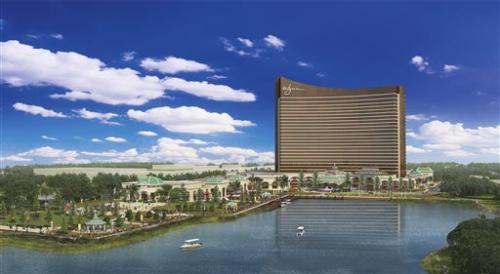
An extra weekend notwithstanding, Pennsylvania casinos were down 16% last month. They grossed $218 million, with $155 million of that coming from the slots (-17%). Table games held their ground better, off 13% for $63 million. Sports betting chipped in $37 million worth of revenue, a sixfold improvement from the month previous. Add $11 million of promotions back and one has an implied net revenue of $48 million at the betting windows, virtual and otherwise. September’s $463 million handle improved to $526 million. Internet gambling generated another $59 million in lucre. The road ahead got a bit rockier when Covid-19 lockdowns in Philadelphia forced next Friday’s closure of Rivers Philadelphia (pictured), unlikely to reopen until New Year’s Day “at the earliest” says JP Morgan analyst Joseph Greff, hardly a prophet of doom and gloom.
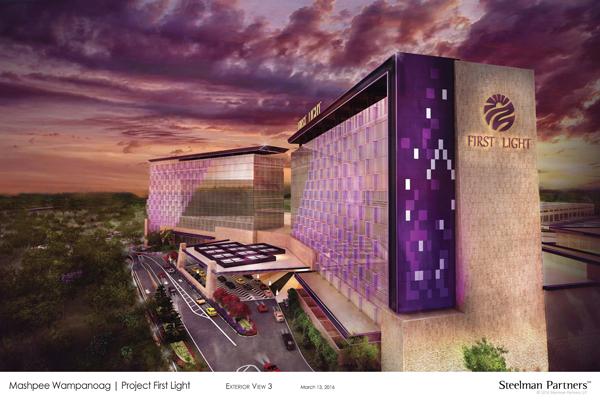
If you held out any hope that Project First Light in Taunton would every see day, you can forget about it. The disenrolled Mashpee Wampanoags got slammed with some bad news yesterday as tribal Chairman Cedric Cromwell and Rhode Island architect David DeQuattro were arrested by the FBI. The charges include bribery solicitation and extortion, and Cromwell faces the brunt of them. Although Sen. Elizabeth Warren (D) and other Massachusetts politicians have carried water for the Mashpee Wamps in the past, nobody’s going to want to touch them with a barge pole now. Both men are free on $25K bond. The tribe is already seriously in hock to Genting Group, which may also want to give its former partners a wide berth.
Reports the Boston Globe, “Prosecutors allege that through his role as a member of the Mashpee Wampanoag Tribe’s Gaming Authority, Cromwell contracted with DeQuattro’s architecture and design company, RGB Architects or Robinson Green Beretta Corp., in connection with the tribe’s plans to build a $1 billion casino on reservation land in Taunton.” Per the federal indictment, Cromwell shook down DeQuattro for ten grand, money he parked in his and Mrs. Cromwell’s bank account. He also created a shell company, One Nation Development, to cover his alleged misdeeds. DeQuattro was reimbursed for the bribe by the president of his company, an unindicted co-conspirator, it would appear. Over time, Cromwell supposedly extorted $44,000 from DeQuattro and “ spent all of the money on personal expenses, including payments to his mistress,” according to U.S. Attorney Andrew Lelling.
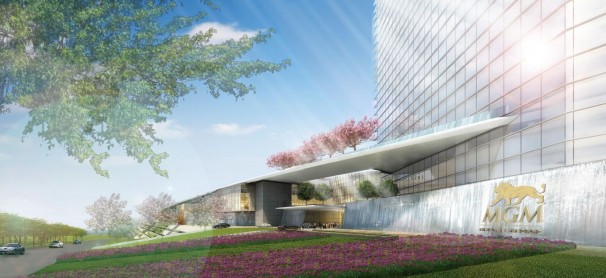
No, it’s got nothing to do with the smoking ban. Well, maybe. MGM Resorts International, as we mentioned yesterday, has decided it has too much hotel-room inventory going to waste on the Las Vegas Strip. As part of an austerity move, Park MGM is the first casualty, going dark (except for restaurants) from noon Mondays to noon Thursdays. Why Park MGM? It’s the only MGM Strip property to be operating in the red, making it a natural and inviting target for cutbacks. “While we do not currently expect the mid-week closures to remain in effect past December, we will continue evaluating business levels to determine how long Park MGM’s mid-week hotel closures remain in effect,” said marketing viceroy Anton Nikodemus. Interesting that MGM is, in effect, writing off New Year’s Eve, traditionally a booming period for business. But these are not traditional times in which we live.
Now that gaming has run the table of every single referendum in yesterday’s election, the question becomes: Who benefits? Well, consumers obviously. But what’s Wall Street‘s take? JP Morgan analyst Joseph Greff burnt some midnight oil and came to the following conclusions …
An anonymous British financier will have to wait another 24 hours to find out if his $5 million bet on Donald Trump comes up a winner. He’ll pocket $15 million from Curaçao bookies if it does. The flutter, made after consultation with Trump insiders (who had better crystal balls than Biden ones) is said to be the largest political bet ever made. What’s more, there was heavy movement toward Trump (75% of bets at Ladbrokes) in the waning days of the presidential campaign. Paddy Power did even more: 93% pro-Trump bets. Ladbrokes’ Jessica O’Reilly said, prior to the vote, “[Joe] Biden looks home and hosed according to the bookies and pollsters, but even at the eleventh-hour punters are continuing to back Trump at the odds on offer.” Bets on Biden wouldn’t yield much if he won: $1,986,903 on a $1.3 million wager, so the ‘red wave’ makes sense. GVC‘s supremo of political betting, Matthew Shaddick said, “It is twice as big as 2016, easily making it the biggest political event ever.”
We spoke recently with BetMGM Vice President of Trading Jason Scott and he thinks the U.S. gaming industry is missing out on something huge: “I’d love to see the first [state] to allow betting on elections. The 2016 U.S. presidential election was the largest betting event in the world, ever, and it will get doubled next week by the 2020 election … Those like us that are doing the right thing, betting in a regulated market, in a way we’re disadvantaged, so I’d love to see elections get regulated.”
“Encouraging” isn’t what you usually say about a 75% plunge in revenue. But in Macao, where casino win has been virtually nonexistent this year it’s cause for dancing in the streets. To be pedantic, revenues were down 72.5% but an improvement on the -90% metrics of recent months. It is, said JP Morgan analyst Joseph Greff, “an encouraging sign that China’s easing of prior travel curbs and visa pause is starting to generate improving visitation and revenue recovery.” Premium-mass play is said to have been strong, “meaningfully” better than VIP action, good news for Sands China and Melco Resorts & Entertainment, not so much for VIP-centric Wynn Resorts. “We’d note that this performance is consistent with recent positive earnings conference call comments from LVS and MGM,” Greff wrote, adding that casinos are reaching the cash flow break-even point. While the market is down 81.5% year to date, the consensus estimate for October was slightly worse than the final result.
Analysts at JP Morgan were blasé about MGM Resorts International‘s 3Q20 report, setting their price target at $22/share. Wrote Joseph Greff, “We remain Neutral rated as we continue to see a slow recovery on the LV Strip, a market that is dependent on both airlift (still down significantly y/y) as well as convention and group-related travel, which will likely be weak for the next several quarters and whose recovery is dependent—like everything else in our coverage universe—on COVID-19 therapeutics.” That’s no small problem, as MGM relies on the Las Vegas Strip for 55% of its cash flow. As Greff elaborated, “the pandemic has had an outsized impact on its fundamentals, particularly on 2020 and 1H21 conventions and tradeshows that have recently been cancelled and/or delayed, resulting in upper-30% mid-week occupancies.” That’s a lot of empty rooms and goes toward supporting our too-much/too-soon hypothesis.
Pandemic? What pandemic? Maryland casino revenues were 1% above last September’s, indicating a resumption of normality, at least where gambling is concerned. The statewide gross was $149.5 million. That’s despite restrictions that include keeping the casino floor at 50% of capacity. MGM National Harbor was flat at $57.5 million, with its VLTs down 3% but tables up 3%. Since table revenues are taxed at a much lower rate in the Free State, that’s a shift that MGM execs will be happy to take. MGM’s market share was 40%, compared to Maryland Live‘s 34%. The latter was up 3% to $49 million. Horseshoe Baltimore continues to slide into irrelevance (even with both baseball and football in season in its vicinity), down 5% to $17.5 million. Hollywood Perryville vaulted 12.5% to $7 million and Ocean Downs was up 3% to $8 million. Out west, Rocky Gap Resort rose 5% to $5 million.
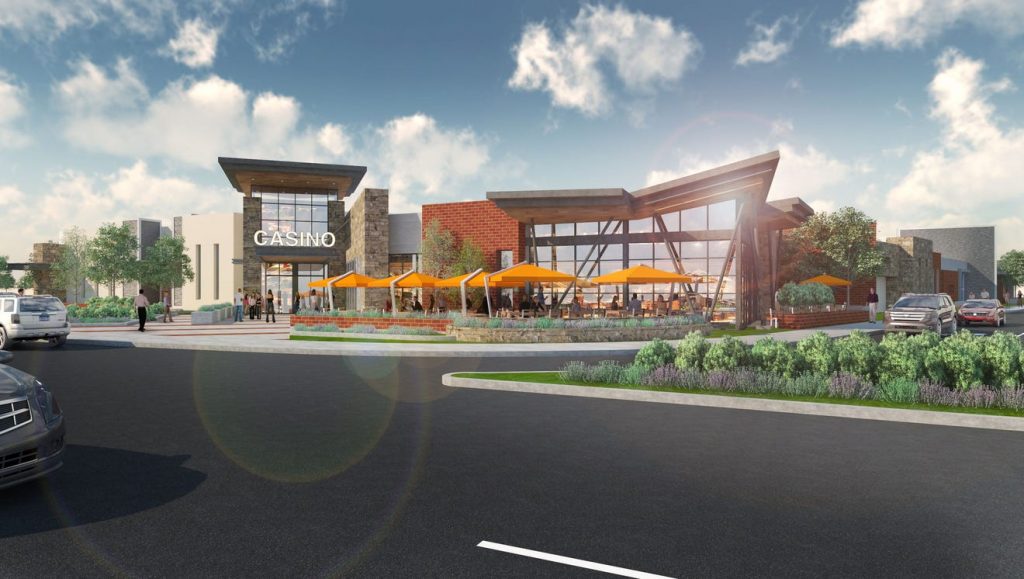
West Virginia, by contrast, had a terrible month. Casino revenues fell 21%, with tables plummeting 40% and slot win falling 2o%. Charles Town Races fared worse, thanks to a -49% disaster in table win. Slots slipped 17% for an overall decline of 24%. Up north, in Pennsylvania, while Cordish Cos. still hasn’t opened Stadium Casino, its satellite is almost ready to go. Live Casino Pittsburgh, a $150 million project is set to debut late next month. Cordish execs are trying to remain optimistic in the face of Covid-19 restrictions that have sent other area casinos reeling.
Since its IPO, DraftKings stock has rocketed 264% upward. That has prompted some profit-taking on the part of both DraftKings itself and New England Patriots owner Robert Kraft. (Maybe Kraft’s windfall will soften the pain of last night’s drubbing at the hands of the Kansas City Chiefs.) DraftKings is unloading 16 million shares while Kraft is among a group of investors selling another 16 million. (The stock currently trades at $60/share.) While the selloff depressed share prices by three dollars, it will be a nice pay packet for DraftKings, which only said the money would go to “general corporate purposes.”
As for the individual sellers, Kraft isn’t even the biggest one. That’d be Israeli billionaire Shalom Meckenzie, who’s putting a whopping 8.5 million shares on the market. He stands to make a half-billion dollars but will still retain a strong position within DKNG. Reports Bloomberg, “The company’s offerings have prompted sell-side analysts to leapfrog one another, slapping on fresh price targets that are each higher than the one before.” Meanwhile, rival FanDuel is fighting back with heavy ad buys, including the only good sports-betting commercial we’ve seen:
There’s stiff competition for Troglodyte of the Year but Alabama Attorney General Steve Marshall has staked a prohibitive claim. He’s on a crusade to shut down the state’s three private-sector casinos and he won an important victory last week. The state Supreme Court ruled that Marshall could prosecute Victoryland, White Hall Entertainment and Southern Star Entertainment as “public nuisances.” This renewed prosecution of a 2017 case, blocked by the lower courts, exposes Gov. Kay Ivey‘s alleged openness to gambling expansion as the sham we suspected it to be. Marshall is going to proceed forthwith to try and shut down Victoryland and its brethren (again), howling, “For too long, these individuals, businesses, and even elected officials have flagrantly violated Alabama’s laws.”
No surprise, the Culinary Union has endorsed the Joe Biden/Kamala Harris ticket. Now we’ll see what shape the Culinary political machine is in after being depleted by Coronavirus. The union is boasting that it “drove turnout” during the 2020 Nevada primary—and never mind that it got totally skunked by the forces of Bernie Sanders. No U.S. Senate seats are up for grabs for this year but the Culinary is backing an all-incumbent ticket in the House, save for rural District 2, where it’s asking voters to depose Rep. Mark Amodei (R) in favor of Patricia Ackerman. Not gonna happen. Meanwhile, Reps. Dina Titus (D), Susie Lee (D) and Steven Horsford (D) continue to enjoy the Culinary’s fealty. The union is also backing all Silver State ballot questions this year, along with an extensive litany of legislative and judicial candidates. Whether you take the Culinary’s advice is, of course, your decision—but get out and vote. As the late John Lewis said, it’s the most powerful nonviolent weapon in democracy.
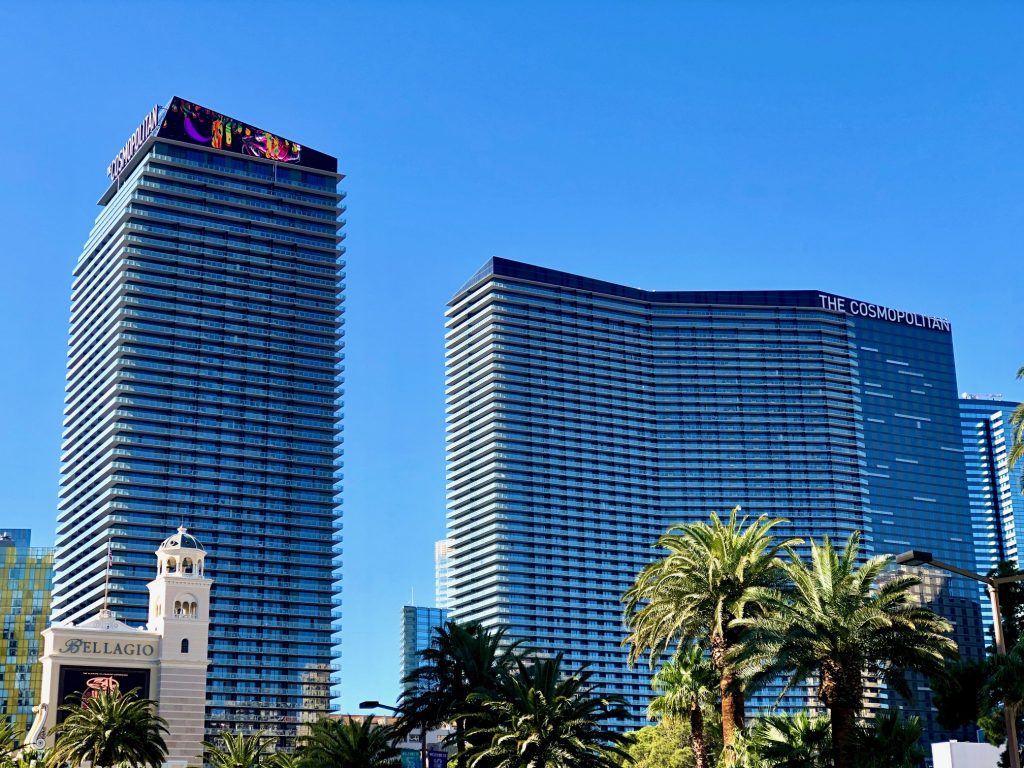
Wanna catch Covid-19? Head for the Cosmo. “The Cosmopolitan of Las Vegas topped reported locations of possible COVID-19 exposures in June, July and August in Southern Nevada, according to state disease investigation analyses,” reported the Las Vegas Review-Journal. The renegade resort ranked #1 in five discrete studies. Said Northeastern University‘s Samuel Scarpino, “Clearly the data paint a picture of hotels and casinos being high risk for transmission.” Perhaps fearful for tourism, the Nevada Department of Health & Human Services‘ Shannon Litz rushed to spray the fire. “This is more a reflection of general community spread than a specific issue with the employer or business,” she told the R-J. The resort itself sent out a cloud of PR blather, displaying no contrition for its poor showing. Basically, if you’ve caught Coronavirus, there’s a 1-in-4 chance in Las Vegas you got it at a casino. How do you like those odds?
Slammed by a double-whammy of hurricanes, Louisiana was accordingly unfortunate in gambling revenue, which plunged 32% to $148.5 million. The only market spared was Baton Rouge (-12%). Lake Charles bore the brunt of Hurricane Laura and the numbers reflected it. Golden Nugget and L’Auberge Lake Charles both grossed $18.5 million, down 37.5% and 34% respectively. Delta Downs‘ $11 million was a 23% and Isle Grand Palais, which was ripped from its moorings by the storm, sank 44% to $4.5 million. New Orleans casinos took it pretty hard, too, with Harrah’s New Orleans clinging to its top spot with $12 million, plummeting 49.5%. Boomtown New Orleans was 21% off the pace with $8 million and Treasure Chest grossed $7 million for a 26% slippage. Amelia Belle was down 29.5% to $2.5 million but Fair Grounds racino was only 17% lower, albeit at $3 million.
In a speedy flip-flop, Station Casinos has recommitted to the Reno market. Its two parcels in that city (one opposite the convention center) popped up on a real estate-listing site Sept. 5. Less than a week later, Station had yanked them back down, saying through back channels that it was still planning on building in the Biggest Little City in the World. (But when? This soap opera has been running a long time.) The smaller of the two sites is eight acres near the aforementioned convention center. That’s destined for a “portable” license—the only one in Nevada—whereby Station could build a casino without hotel rooms. The idea was once mooted for the Castaways site and Station went so far as to commission a design but it literally never got off the drawing board. Then there’s an 88-acre site on Mount Rose Highway that was dibbed for a $500 million casino-resort.
Station’s recantation of its real estate play was not without caveats. It wrote the Reno Gazette-Journal, “The 88-acre Mt. Rose site has been on the market since late last year. In regards to the attractive and strategically located convention center site, Station Casinos is currently weighing all options, including developing the property ourselves.” Even when the economy was good Station had a weak trigger finger on new development, so we’ll believe this when the shovels go into the ground. If the Mount Rose site happens, Station plans 20,908 square feet of casino, “a sportsbook, sports bar and mobile wagering kiosks … a five-screen cinema, 12-lane bowling alley and four restaurants.”
Here it comes. Again. The government of Macao is taking a zero-tolerance policy toward Covid-19. Although there hasn’t been a case in four months (good for them), the enclave is floating the idea of shutting down any casino where a positive test occurs. According to GGR Asia, “From July 15, ‘all people who intend to enter’ the city’s casinos are required not only to have their body temperature measured and to display a health-declaration statement, but also to present a certificate of a ‘valid nucleic acid test’ proving freedom from Covid-19.” That’s a high bar to clear. While a comeback of Macanese gaming revenues is inevitable, IGamiX Management & Consulting Managing Partner Ben Lee cautioned not to expect miracles. “The mainland authorities will likely be careful in managing the number of [tourist] permits issued, in order to not swamp the city,” he reasoned.
Strip gaming revenue, ‘meh’ though it was, actually looks good in the context of Las Vegas visitation in July, which plummeted 61%. There hasn’t been a convention since April, which certainly hurts. Air travel was horrible, down 64%, while drive-in traffic wasn’t quite so bad, off 10% overall (thanks, Utah) but 17% down at the California border. (Not so good for Primm.) Strip room rates were an average of $116/night, so the news wasn’t all bad for the resort industry but revenue per available room was a paltry $48/night. Hotel occupancy was 42.5%, down 48.5% on a 17% lower room base. The Las Vegas Convention & Visitors Authority will have to crawl pretty far up the ass of these numbers to find a positive spin. Maybe they can derive it from the news that Downtown Project mogul Tony Hsieh has bought three restaurants, a vote of confidence in Sin City. We wish we knew what Hsieh intends to do with his Tamares Group legacy, the ex-Western Hotel but nothing has been heard from Hsiehville on that front for a long, long time. There was some loose talk of making it an e-sports stadium but, thanks to the Downtown Grand and Luxor, that ship may have already sailed.
It’s too soon to know what the handle on NBA playoff games is but, in terms of viewer interest, the player walkouts initiated by the Milwaukee Bucks may be a moot point. Viewership for the first week was down 20% overall and 28% lower in the prized 18-49 demographic. Then again, the games are competing for viewership with One Life to Live: Sports Illustrated reports that the games, in addition to being played out of season are often shoehorned into daytime viewing slots, ones more closely associated with game shows and soaps. Bettors who have money on canceled games are more wont to be irked than people who can’t watch because they’re working nine to five. This not only puts activist players on a semi-vacant platform, it weakens the NBA’s bargaining position going into the next TV contract, which could have been worth more than $2.6 billion—but probably won’t be. No wonder some players are saying they should placate The Man and let the games continue. (The Las Vegas Aces did not play yesterday, although it’s unclear whether the postponement was initiated by the team or the WNBA.)
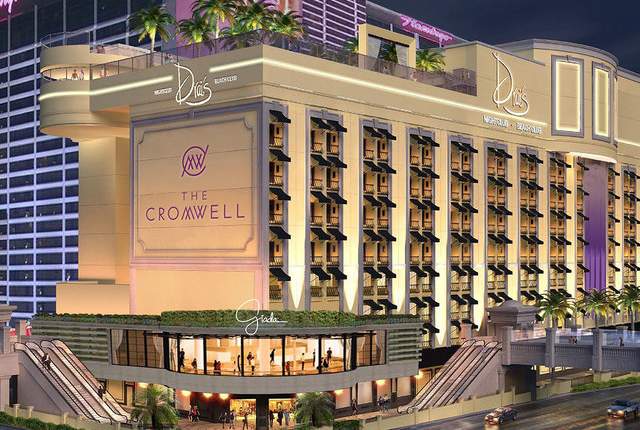
Churchill Downs got its second-worst-case scenario for the Kentucky Derby: The September 5 race will have to be held without spectators, a major economic blow to the Louisville area. At least the race will be run and undoubtedly garner much online handle for CHDN … What was commonly known is now official: Virgin Hotel Las Vegaswill postpone its November opening. President Richard Bosworth still expects “to receive the keys to the property in early November.” Blame it on Hilton Curio Collection for leaking the delayed opening on its booking site. Virgin “expects to have a date identified by mid-September, at which time we will provide full details,” says Bosworth … Another Coronavirus-motivated slowdown is at the Tropicana Las Vegas. Owner Penn National Gaming has pushed reopening back to September 17 … Meanwhile, Caesars Entertainment‘s The Cromwellmight reopen October 4, depending on whether they can get all the Love Island cooties out of the property (OK, we made that last part up) … The Mirage reopens later this week and photos exfiltrated from the property show the poker room being converted to a no-smoking slot parlor …
Ohio casinos didn’t just outperform the Midwest during July, they had their best month ever. What gives? Well, Detroit was still off-limits (redounding to the considerable benefit of Hollywood Toledo) and discretionary capital was clearly plentiful. The four non-racinos hadn’t even come close to this number since March 2013. “What’s remarkable about these figures is that they were reached when all four casino resorts were dealing with the effects of Covid-19, returning from state-mandated lockdowns with fewer customers, fewer machines and almost no amenities,” reports David Ross. Hollywood Toledo’s $33 million obliterated the previous apogee, a $26 million month for Jack Cleveland. Said Ohio Casino Control Commission spokeswoman Jessica Franks, “July was a weird case scenario and Toledo was very much an outlier.” And a very profitable one, Franks speculates.
Given that Plainridge Park didn’t reopen until July 8, and Encore Boston Harbor and MGM Springfield not for two more days after that, it’s wholly understandable that Massachusetts gambling revenue was down 44% last month. JP Morgan analyst Joseph Greff also blamed capacity restrictions. The gross was $45.5 million, most of that from Encore. Plainridge Park banked $8 million, down 38% (but with state-leading win/slot/day of $280), while MGM Springfield eked out $11 million, falling 48%. That left Encore and its $27 million (!) gross, a 45% drop. Wynn Resorts slots won $16 million and tables $11 million.
The action was better in Pennsylvania, where Internet gambling surged 9% to $54 million, despite casinos being open. Sports-betting handle was $165 million, which boiled down to $13.5 million in revenue. Leaders in the Internet-bet sphere were Rivers Philadelphia (28% of overall revenue) and Valley Forge Casino Resort (15%). While online sports-bet handle was two-thirds of the total last year at this time, it has surged to 94%. FanDuel at Valley Forge dominated market share with 34%, followed by Meadows/DraftKings‘ 22% share.
One Caesars Entertainment casino of many on the Las Vegas Strip remains theoretically for sale … but put your checkbooks away for the time being. While new CEO Tom Reeg has to make good on his promise to realize hundreds of millions of dollars in savings, he has decided now’s not the time to go to market with a Strip casino. What’s more, he’s right. The fizzled Tropicana Las Vegas sale and Skyvue auctions are clear indicators that this is a terrible juncture to be hawking Strip real estate, especially when you’re looking for at least a $500 million payday.
“As soon as we get to the other side of the virus and to more normal business levels, you should expect we’ll be thinking about that,” Reeg told investors, pushing the timeline of the sale out as much as 18 months. This must have greatly disappointed companies like Twin River Holdings that were all in a lather about having a Las Vegas Boulevard address. While hinting at further job cuts, Reeg said hotel occupancies were around 50% midweek and 70% on weekends (which are going to become even more important in the Las Vegas economic picture). Perhaps the best news of all for Caesars was that it only lost $100 million in the second quarter, an achievement bordering on the miraculous.
Anthony Rodio‘s multi-million-dollar revamp of Bacchanal Buffet may well have been for naught. On yesterday’s earnings call the Tom Reeg administration floated the idea of closing all buffets at Caesars Entertainment properties. Expect comps to be sweated until they bleed and to get fewer promotions. Reeg promised that, too. Reported 8 News Now, “Caesars says it has learned lessons that some of its competitors seem to want to ignore. Some things may never return, because in an uncertain future, resorts cannot afford any part of a business that doesn’t turn a profit.” Increases in convention business were described as strong (six months out), including a number of new customers. Caesars is still operating at semi-skeletal levels, with 42% of the workforce idled and three Strip resorts dark. $14.7 billion in debt is offset by $7 billion in liquidity, so Caesars can eke out this pandemic a good while longer.