The wrath of Icahn
Investment bankers BidaskClub aren’t buying Caesars Entertainment. Literally. In an almost-unheard-of development in gaming, Bidask put a “sell” recommendation on low-priced CZR shares. Perhaps this reflects caution over Caesars’ still-massive debt overhang or of the additional debt that would be 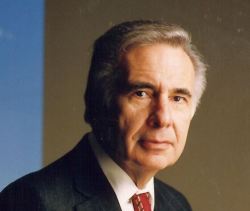 undertaken in an Eldorado Resorts takeover. Either way, we’re glad to see somebody on Wall Street telling it like it is with the Roman empire, whose best years appear to be behind it. Meanwhile, having subjugated Caesars, Carl Icahn is poised to do the same to Occidental Petroleum, threatening to depose the board and sell off assets. (Sound familiar?) Icahn’s umbrage is motivated by a “fundamentally misguided and hugely overpriced” purchase of Andarko for $38 billion. In addition to faulting the Occidental executive team for being excessively compensated, Uncle Carl says the board
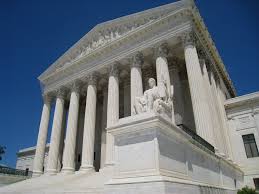 Hampshire and other states whose
 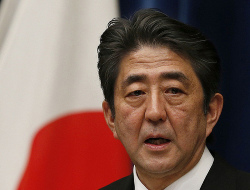 regulations governing casino bidding until after next year’s elections. That’s bad news for Osaka, in particular, which will be hosting the expo. Another body blow to the as-yet-unborn Japanese casino industry was Abe’s mooting of
 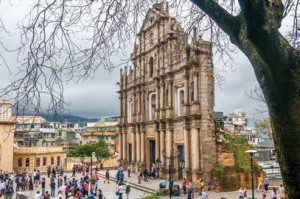 poll data on how the money should be spent, even before it’s collected. Wouldn’t the Macanese city fathers being wanting to incentivize tourism? Apparently not. They’d rather bite the hand that feeds them.
 Wampanoags
  uninterested party. Rep. Tom Cole (R) seconded Keating’s emotions, saying, “The real conflict here is between private gaming interests that don’t want Native American competition.” The Mashpee Wampanoag’s cause still must pass through the Senate, where Massachusetts Sens. Ed Markey (D) and Elizabeth Warren (D) have introduced supportive legislation. If the tribe prevails in that currently listless body and manages to get past the White House (a pretty tall order), then there’s a ghost of a chance for its Project First Light, whose future has been in much doubt since Genting Group bailed on it.
 understandably balking at Gov. J.B. Pritzker‘s proposal to raise the current 30% tax rate to a 50/50 split with the state. Video gambling interests counterpropose doubling the bet limit from $2 to $4, raising the amount of potential winnings per bet from $500 to $1,199, and increasing the number of VLTs allowed per route by 20%. These measures, Ivan Hernandez of the Illinois Gaming Machine Operators Association promised, would bring the Land of Lincoln $210 million more revenue in two years.
 kind of sell-down to deleverage an Eldorado Resorts or Tilman Fertitta acquisition of the Roman Empire. However, Ruffin is clearly looking for fire-sale prices: He’s only willing to pay 6X cash flow and that just doesn’t cut it for a Strip asset. (Fun fact: Ruffin himself paid 7X for Treasure Island.) He told the Las Vegas Review-Journal he’s looking for casinos that generate $200 million-$300 million in annual cash flow. We don’t know which Caesars properties do that, as the company doesn’t bust out individual-property numbers, but can say, sorry Cromwell. No Ruffin for you.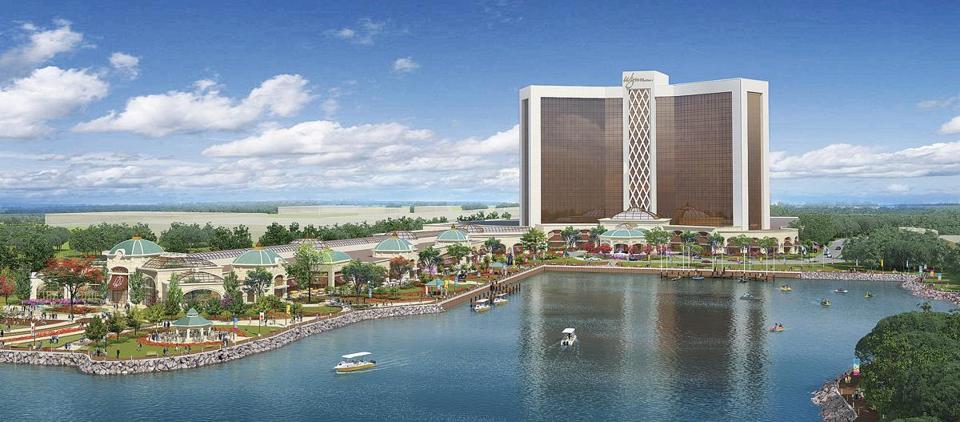
 be open in time for the 2025 World Expo. Among the entrants, Las Vegas Sands, MGM Resorts International, Galaxy Entertainment Group, Melco Resorts & Entertainment, Wynn Resorts and Genting Group. But the first two companies are
  on WYNN, given macro uncertainty and policy risk in Macau and China. Our forward macro indicators are suggesting Macau revenue growth could decelerate further over the next 9-12 months, but could rebound early next year. The Las Vegas [first-half] outlook is strong, with our forward room rate, convention attendance and air capacity all positive.”
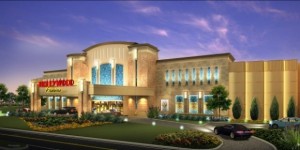 surprise, was second with 33% and $48 million (+2%). Horseshoe Baltimore grossed $20 million (-9.5%), Hollywood Perryville was off 10% to $6 million, Ocean Downs gained 7% to $6 million and Rocky Gap Resort was flat at $5 million. West Virginia casinos and racinos were flat, despite a 3% bump in table winnings. A 9% surge in table games at Hollywood Casino in Charles Town made up for a 2% decline in slot win.
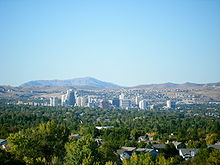 come up $5 million short. For instance, Reno (pictured) had snow in 24 of February’s 28 days and construction in Black Hawk provided another overhang. In Illinois, Eldorado expects to hit its $55 million cost-savings target at Grand Victoria by the end of this month. Wrote JP Morgan analyst Daniel Politzer, “we believe ERI has positioned itself for multiple years of meaningful EBITDA growth.” How? Operating and marketing efficiencies at its legacy properties, and a Pompano Park joint venture with Cordish Gaming, for starters. Oh, and there’s the little matter of “M&A optionality” read: Caesars Entertainment.
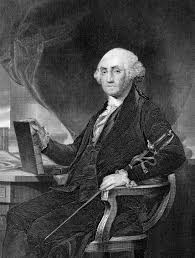 “[There] is a deeply wrongheaded habit to project today’s norms, values, ideals backwards in time to find our ancestors inevitably falling short. It betrays a very troubling intolerance of art and the ambiguity of art and the aspirations of art.” — historian Fergus M. Bordewich on the effort to
 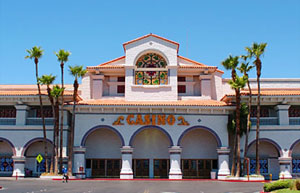 acquisitions. Downtown continues to be Boyd’s bastion of strength, 8% above expectations, while corporate expenses were 2% less than modeled. “Management highlighted that performance at Gold Coast has been solid and share gains made last year during construction of competing properties (i.e., Palms and Palace [Station]), have largely maintained,” wrote JP Morgan analyst Joseph Greff. Continued dominance of the Hawaii trade and a long-term comeback in Downtown also aided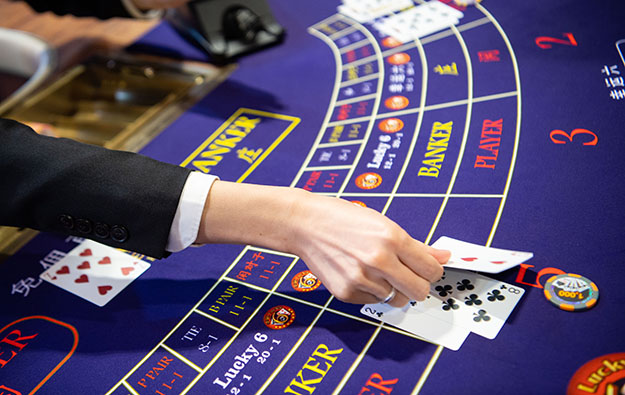
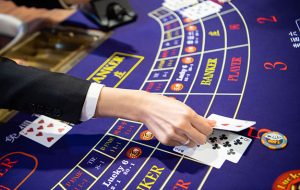 comparison. In March 2018, baccarat win was up 118%. Last month it was down 56% on 43% less wagering. Non-baccarat table games won 16% more on 3.5% higher wagering. Slot coin-in was 5% and the one-armed bandits kept 5.5% more than in 2018. The real strength was in the locals market, up 6.5%. Downtown ($59 million) was up 9%, North Las Vegas did $26 million (+8.5%) and the Boulder Strip raked in $70.5 million (+9%). Laughlin lost ground, down 4% to $49.5 million but uncategorized Clark County gained 5% to $112 million.
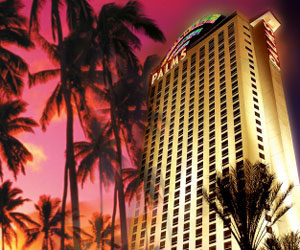 hotel will need to generate cash flow of $130 million to hit 13% ROI. However, Unite-Here Gaming Research puts the annual EBITDA at $117 million, which is hardly a disgraceful shortfall, although the Culinary estimates it take Wynncore-sized room rates to get that far. True, Station management has ratcheted expectations down from “mid-teens” ROI to “double-digit.” But how would the Palms perform had Station left it in its previous state?
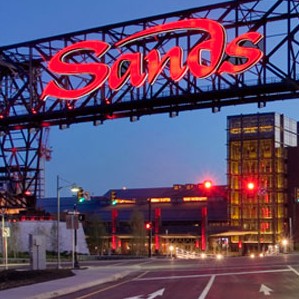 Las Vegas Sands is on its way out of Pennsylvania but not before receiving
  casinos in the rural Mississippi area. Resorts was never the same after bumbling Tom Barrack and Colony Capital bought it and crushed it with debt. Penn picked it and one other Tunica casino up for a $44 million song. However, the economy was against it and 200 workers (a remarkably small casino workforce) will soon find themselves unemployed. Penn’s neighboring Hollywood Casino Tunica will remain open, as will a third Penn-owned casino and the company will try to find jobs for displaced Resorts workers there.
 revenue. “Nebraskans’ money is funding other states’ priorities,” Morgan said. Mind you, a similar effort three years ago failed due to public indifference: Not enough signatures could be gathered. Morgan has a point—all but one of the states surrounding Nebraska offers casino gambling. Still, it’s very much an open question of whether voters will harken to a “Keep the Money in Nebraska” pitch, having failed to do so before.
 driven by high-tax slots (up 11%), not low-tax table games (down 4%). National Harbor was dominant in market share, with 38.5%, compared to Maryland Live‘s 34% and Horseshoe Baltimore‘s 16%. Maryland Live gambling win vaulted 19%, to $56 million, while the ‘Shoe did $25.5 million (+3%). Ocean Downs jumped 12.5% to $6.5 million, while Hollywood Perryville was flat at $7 million. Out in the boonies, Rocky Gap Resort gained 9% to $5 million. Next door, West Virginia had