


You could say that getting into bed with Red China was a devil’s bargain and Satan has come to collect. Or that Beijing has finally decided to show everyone who’s boss. Either way, the central government played Big Gaming for fools yesterday, rolling out a series of new measures that sent casino stocks reeling. Six gaming stocks tracked on the Hong Kong bourse and New York Stock Exchange plunged 23% (for a 45% declivity this year), with Sands China leading the dive with 33%. And to think that Sands execs were just blowing sunshine up Wall Street‘s ass about how great their relationship with Macao was. Las Vegas Sands CEO Rob Goldstein ought to be facing some hard questions about why he cashed out of Las Vegas at a time it was keeping the company solvent and put almost all his chips on Macao, where the company already had the largest exposure in the market—and to the whims of the ChiComms. JP Morgan Chase, so sanguine 24 hours ago, put “hold” or—worst of all—”sell” ratings on the impacted gaming stocks, which should tell you how bad the news was.
The damage was hardly limited to Sands. Wynn Macau, MGM China and Galaxy Entertainment all lost at least 20% of their value in the stampede. Domestically, it wasn’t much better: Las Vegas Sands -14%, Wynn Resorts -14%, Melco Resorts & Entertainment -9%. Even MGM Resorts International, with very limited Chinese exposure, was punished by 5.5%. It was an $18.4 billion wipeout of equity, damage on the scale we’re rarely if ever seen in 25 years of covering casinos.
Casinos in Macao will have to answer to The Man more than ever, as the Macanese government prepares to hold a series of listening sessions in which citizens will be allowed to voice how they think the gaming industry should be overseen. A higher proportion of local directors in casinos has been proposed, along with the presence in each one of a government-appointed overseer. This was an entirely predictable development. As with Native American gaming, the citizenry is going to get up to speed and render the foreigners superfluous. It’s theirs and someday they’re going to come and take it.
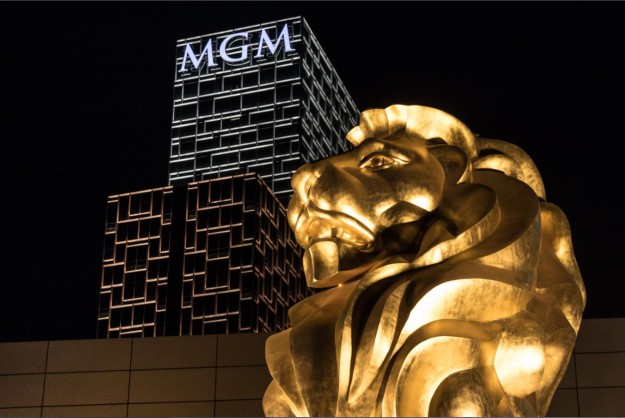
What’s more, “Chinese President Xi Jinping had made Macau’s casinos a target of his anti-corruption campaign since 2012, banning party cadres and government officials from gambling,” according to the South China Morning Post. He’s also tightened the vise on the flow of VIP play (and money) out of the Mainland and into Macao. Locally, caps on table games and curbs of dividend payments are being mulled by the guvmint. It’s all a capitalist’s worst nightmare. If all that weren’t enough, Covid-19 erupted in Fujian province, which could see a further tightening of the screws in terms of tourist access to Macao. Scariest of all (for gaming execs), the ChiComms are floating the idea of cutting the gaming concessions for six to two, or just eliminating the three sub concessionaires (bye, bye, MGM China, for one).
As The Motley Fool‘s Travis Hoium put it, “Not only is there uncertainty about concessions, we also don’t know what potential regulations might be put in place that might limit revenue in Macao or how future expansion might be impacted.” “The casino issues are a continuation of what’s been a pretty big crackdown,” added longtime stock picker Jason Ader. “There’s a debate over whether China is even investable right now. You never like to see increased regulation, increased taxes, restrained movement. That all seems to be the status quo.” As a final (?) kick in the teeth, Macanese gambling revenue was 82% lower in August than in the same period two years ago. Bloomberg analysts Angela Hanlee and Kai Lin Choo suggested that operators might have to placate The Boss by investing more in non-gaming attraction, as well as focusing more on the mass-market player. Only Sanford C. Bernstein analyst Vitaly Umansky seemed to be taking a ‘nothing to see here, keep moving’ outlook.
“It’s sort of all going in the wrong direction in China,” Ader countered. “To the extent investors are nervous about China, Macau doesn’t feel like the place it was five years ago for a lot of reasons.” Indeed, the coils of big government are tightening are player deposits, as well as casinos’ responsibility for the activities of the junketeers with whom they partner. Remember, you can’t own a casino in China. Beijing ultimately holds the keys and they have just been rattled—loudly. If Sheldon Adelson weren’t already deceased, yesterday’s events would probably have killed him outright.

Don’t you just love it when gaming executives agree, nay, fight to play by one set of government rules, then bitch and moan about that to which they’ve agreed? Penn National Gaming is making noises again about the slots-only casino it vied to build at Plainridge Park. Now it wants 250 more slots and 30 table games. It’s no longer using other Massachusetts casinos as an excuse but pointing across the border to Rhode Island. There, Bally’s Corp. is planning to upgrade its casino in Tiverton. Penn has found water-carrying legislators who include Rep. Jeff Roy. Making Penn’s case, he said “Last session, we were concerned about the opening of the casino in Tiverton, Rhode Island, which happened two years ago. In this session, we also know that Rhode Island is planning a major expansion at Twin River. And that will put Plainridge and my communities at a further competitive disadvantage. We’re here to push for a modest expansion of Plainridge so that the commonwealth can best compete with our neighbors to the south, and we can protect the jobs, our local businesses, and the tax revenues that have been generated from Plainridge Park.”
Never mind that Penn got a racino for cheap ($250 million, by far the least invested in a Bay State casino). It also paid $60 million less for its license than Wynn Resorts and MGM paid for theirs. Every legislative session, it seems, it wants to move the goal posts. Maybe the slots-only rule needs to be revisited. But Penn should be careful for what it wishes because Plainridge Park expansion is currently tethered to allowing slot routes in veterans’ halls, creating a potential cannibalization of revenue in a state that doesn’t have much elasticity. One thing that should be relaxed is the confiscatory 49% tax rate Penn pays, versus the 25% enjoyed by Encore Boston Harbor and MGM Springfield. That would be only fair.
Jottings: Congratulations to Gaming Laboratories International CEO James Maida, attorney Jeffrey Silver, former Shuffle Master CEO Mark Yoseloff, Delaware North Chairman Jeremy Jacobs, Seminole Tribe general counsel Jim Shore and to IGT Global Business Development & Tribal Ambassador Knute Knudson Jr. All will be inducted into the Gaming Hall of Fame at Global Gaming Expo. Said American Gaming Association President Bill Miller, “Under their leadership, tribal gaming has boomed, professional sports leagues have embraced sports betting, and the gaming industry is thriving despite the challenges we’ve faced over the past year and a half.” … Hexed Jumer’s Casino Rock Island is getting a new name and none too soon. It’s now Bally’s Quad Cities Casino & Hotel, part of an overall rebrand that will include adding 40 slots. We don’t know if that’s going far enough … Crown Resorts is doing at least one thing right. It’s making Covid-19 vaccination mandatory for all employees—and guests. The “no jab, no entry” policy is strict but it’s what we’re going to have to adopt if we’re ever going to stop this virus.
Quote of the Day: “How, in 2021, do we have a loophole in [Pennsylvania] law that allows a tiny fraction of the workforce to be exposed to smoke? Do the people making these decisions (politicians, lobby groups, Gaming Control Board, etc.) allow smoking in their offices? Of course not. Even the upper management of the properties don’t have to deal with it like most employees do. It’s honestly an absolute disgrace. The greed of the casino industry is unlike any other industry. Willing to put the health of their employees and customers at risk so those slot machines keep rolling nonstop.“—anonymous Harrah’s Philadelphia employee on the health risks of secondhand smoke on casino floors.
