
Macao is expected to set a record for visitation this, no doubt to the delight of casino executives in the enclave. If 32.5 million tourists came in 2017, they will be topped by 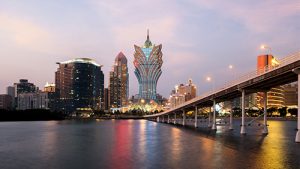 the 35 million who came this year — and that number is expected to improve to 40 million by 2020. Seventy-one percent of arrivals were from mainland China. The Hong Kong-Zhuhai-Macau Bridge was an additional — pardon the pun — driver of visitation. But that doesn’t necessarily translate to the casino’s bottom line, as many of those drivers were lookie-lous who just wanted to try the new span out. As for gaming revenue, so far it’s up nearly 14% from 2017.
“We see a positive long term secular story balanced by near-term caution, and macro, policy and geopolitical risks,” observed Credit Suisse analyst Cameron McKnight. He forwarded a warning from the Financial Times that “according to a selection of analysts … if Beijing does not launch an economic stimulus package, things could get a lot worse.” However, other leading economic indicators of 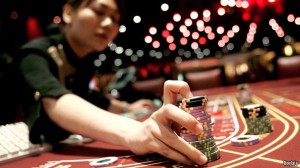 the Macao gambling economy continued to trend positively. Housing prices rose 10% in December, while electricity consummating was 6% higher. A more piquant indicator, Swiss watch exports were up 4%. “Swiss Watch Exports are a coincident indicator with Macau revenues, with a strengthening relationship in recent years,” McKnight writes. By the way, if you’re a Macanese casino worker and have a little mad money you can forget about gambling it: The local government voted last week to bar casino workers from gambling houses during non-working hours.
* Skating in just under the wire, Michigan lawmakers passed Internet gambling with veto-proof majorities. Now the measure awaits Gov. Rick Snyder‘s signature. Congratulations to Rep. Brandt Iden and state Sen. Mike Kowall for not giving up during the long march toward legalization. It will cost participating casinos $100,000 to apply, $200,000 for their first year of operations and $100,000 each successive year. The base tax rate will be 8% with casinos in Detroit paying 9.25%.
* Despite stronger-than-usual rumors that Caesars Entertainment will sell the fraying-at-the-edges Rio, it will be business as usual for the World Series of Poker next spring. The Caesars speculation has been fueled by a spike in real estate prices. 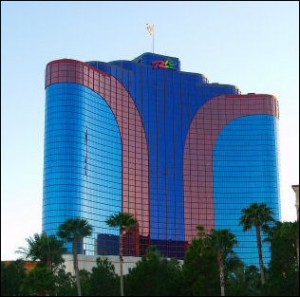 Rumor has it that someone is amassing acreage in hopes of building a major-league baseball stadium to do it. And what a shame it would be to sacrifice Las Vegas‘ most beautiful casino (at least by night) in order to do so? You know who already has the land to build and MLB park? The Feritta Brothers. They amassed a huge tranche of industrial real estate adjacent to Days Inn at Wild Wild West, in hopes of building an $11 billion meta resort called Viva. Something called economic reality put paid to that. So the Fertittas have the land and Las Vegas is rumored to be short-listed for an expansion team. Can someone please make the introductions?
* Speaking of good news and bad news, there’s a bit of both over at the Hard Rock Hotel & Casino. In order to convert it to a Virgin Hotel, there will be four month of renovations while the casino remains open (good news, if you don’t mind picking your way through the debris). For the four-month balance of the makeover, the property will be closed. We don’t know who finished the plans are, but Richard Branson has a chance to redo the property’s generic lobby into something remarkable.
* As hard as the Trump administration is trying to smother the spread of tribal gambling into Virginia, the Pamunkey Indian Tribe has a step on its adversaries. It aims to build the state’s first casino in Norfolk and it’s dickering for eight acres next to the city’s minor-league baseball stadium, Descendants of Chief Powhatan, the 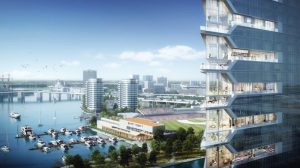 Pamunkey have budgeted $700 million for the project. However, there are big hurdles ahead and they’re both called the Bureau of Indian Affairs. The Pamunkey have to establish an ancestral link to the land in question and they have to get it taken into trust for gambling. The latter alone will be a formidable vault, given the Trump administration’s aversion toward tribal casinos. But not only is sports betting gaining traction in Richmond, a private developer wants to open a casino in the southwest part of the state. And if that happens, the Pamunkey Tribe — if it meets the federal criteria — is entitled to the same gaming offerings, under the Indian Gaming Regulatory Act and there’s not much Trump officials could do about it. Call it John McCain‘s revenge from beyond the grave.
