

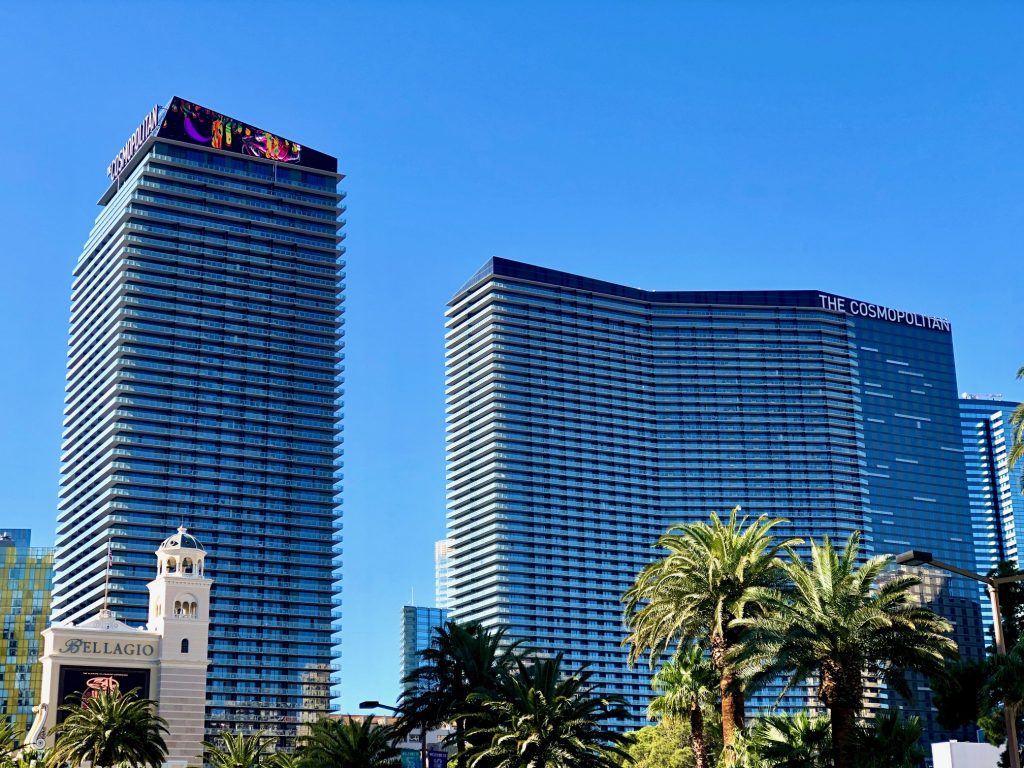
Reflecting the irrational exuberance surrounding the Las Vegas Strip, it’s a done deal at The Cosmopolitan of Las Vegas. The $3.9 billion resort’s physical assets sold for $4 billion, albeit to a cloudy “group of buyers that includes a Blackstone real estate investment trust.” So there may be some jiggery-pokery at work here. The big news was that MGM Resorts International was unable to resist the dangled bait that was the Cosmo’s operating company, paying a hefty $1.6 billion and change, plus $200 million in annual rent for the plum. Our sources say Cosmo cash flow is about two-thirds of pre-pandemic levels so either MGM CEO Bill Hornbuckle is taking a big gamble or an infusion of M Life is just what the doctor ordered. Regardless, Blackstone is making out like a bandit on a property it bought for $1.7 billion back in 2014, as in $4.1 billion in windfall profits. It also reduces its exposure in its #1 market, Sin City.
Among those paying Blackstone far more than the Cosmo is worth is investment firm Stonepeak, as well as Panda Express founders Andrew and Peggy Cherng. The real winner in all this may Caesars Entertainment CEO Tom Reeg, who can ask several kings’ ransom for whichever Strip asset he chooses to put on the sell block next year (right now it’s looking like Bally’s Las Vegas). Hornbuckle and CFO Jonathan Halkyard claimed the Cosmo would expand MGM’s customer base but it’s hard to believe it isn’t the other way around. Regardless, they had to justify the megabucks they poured into a non-core asset. University of Nevada-Las Vegas boffin Amanda Bellarmino defended the splurge, saying, “The acquisition could help MGM to target younger travelers by acquiring this successful and attractive property.” (Wasn’t that what Park MGM was supposed to do?) Unlike predecessor Deutsche Bank, Blackstone knew how to run the Cosmo and the $500 million capex it put into the old gal clearly paid dividends.
Truist Securities analyst Barry Jonas also applauded the deal, writing, “While one could argue MGM has enough Las Vegas exposure and management has discussed potential regional expansion, we think the deal makes sense from a strategic perspective (strong brand/property adjacent to MGM properties) while offering modest financial accretion.” Scarily, he predicted that MGM—indulging in retail therapy—might try to outbid DraftKings‘ $22 billion offer for Entain rather than simply trying to buy back the latter’s half of BetMGM. If Hornbuckle’s not careful, he’s going to be up to his eyeteeth in leverage in a still-unsettled casino market. Even Jonas thinks going for all of Entain is a bit much. (And he agrees that Caesars may be the real victor.)
The silver lining for MGM is that it got its share of the Cosmo for cheap by Strip standards: 8X cash flow. Superfluous staff at the Cosmo will surely be on their way out (ditto marketing operations), as MGM has targeted the property for anywhere from $35 million to $87 million in “synergies.” Jonas adds that he expects “meaningful revenue synergies around the Cosmo brand, incorporating MGM’s MLife database and cross marketing. We assume Cosmopolitan’s Marriott relationship may remain in place for the time being.”

In a less-heralded deal, Scientific Games unloaded its sports-betting unit to Endeavor Group for $1.2 billion—12X 2021 revenue. This was a long-sought strategic goal of SGMS, which still is looking to offload its lottery business (and we’re surprised it hasn’t found a taker yet). Jonas was surprised at the sale price wasn’t higher, although he noted that Scientific’s sports-betting revenues had been below par … possibly a reason the company looked to exit the sports sphere. “Lottery could still get a valuation north of $5B+, per Reuters,” he added. In Jonas’ view, the reinvented Scientific will be less leveraged, and equally focused on gaming and digital operations. Endeavor is paying $1 billion in cash and $200 million in stock, so it’s even less of a SGMS windfall than it initially looked, although the deal will allay Wall Street concerns about Scientific’s leverage. One novel stratagem to unlock the value of the lottery segment may be to list it on the Australian Stock Exchange of all unlikely venues. As for Endeavor Group, it’s better known by its products, which include the UFC, Professional Bull Riding and Euroleague Basketball. Adding sports betting to its portfolio sounds like a good fit.
Litigants continue to pile on Florida‘s gaming compact with the Seminole Tribe. The newest ones are local moguls Armando Codina and Norman Braman. They draw a bead on what Bloomberg describes as an “odd choice of an 18-mile boundary” of exclusivity around Seminole South Florida casinos, not quite expansive enough to prevent a casino from being opened at Trump Doral. (For those of you who don’t believe in coincidences.) Codina and Braman are targeting neither the Seminoles nor Gov. Ron DeSantis (R) but Interior Secretary Deb Haaland, whose minions improperly approved the compact, they allege. They also argue that the provision for three new Seminole casinos in Hollywood would constitute a “Casino Strip” and that the profusion of new gaming (including sports betting) would bring “increasing neighborhood traffic, increasing neighborhood congestion, increasing criminal activity, reducing open spaces, and reducing their property values.” Say what you like about Braman and Codina, they are longtime casino opponents, not opportunists. As for the merits of their arguments, we leave that for you to decide.
Tennessee was no different from the rest of the country in terms of experiencing a pre-football doldrum in August. Handle was $144.5 million, of which books kept $13 million before promotional allowances ($3 million). Three Tennessee Titans preseason games couldn’t rouse bettors, nor could a smattering of college football contests none of which featured the University of Tennessee, Memphis, Middle Tennessee or Vanderbilt. August did mark the Volunteer State debut of Barstool Sports but no numbers are available on how it did.
Colorado, however, saw some pre-football stirrings last month. Bettors wagered $212 million, of which books won $15 million but gave away the store in the form of $8 million in promotional credits. (Good for you, bad for them.) “Colorado is remarkably consistent, and continues to outperform the size of its population base,” remarked PlayUSA analyst Eric Ramsey. “With even a decent football season, sportsbooks will reach $3 billion in wagers and $200 million in revenue for the year. Those would be impressive annual totals for a state that is still maturing as a sports betting market.” Baseball was tops with $69.5 million in action, while football ($13.5 million) just barely edged out tennis. Also making their mark were soccer ($11.5 million), basketball ($10.5 million) and table tennis ($8 million). Colorodans do love their table tennis.
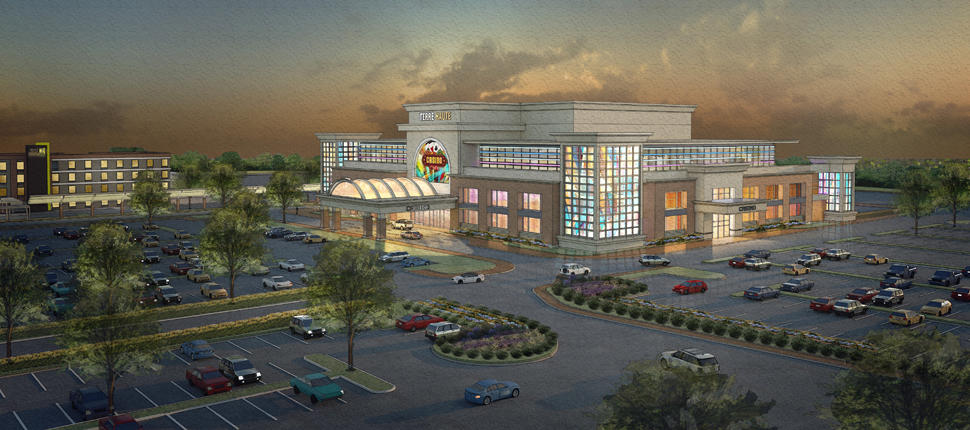
Jottings: It’s a veritable donnybrook for the Terre Haute casino license. Back in the fray is Full House Resorts, which passed the first time around, competing against Hard Rock International, Churchill Downs and dark horse Premier Gaming Group, which owns a casino in Natchez. As we’ve seen, nothing in the Terre Haute race is predictable … Wynn Resorts is going green. The company has pledged a variety of reductions and offsets in carbon dioxide emissions by 2050 … Rivers Casino Pittsburgh is upgrading its HVAC system, including the installation of AirPHX, described as “a patented technology that continuously disinfects indoor air and eliminates COVID-19 on surfaces.” Unfortunately, smoking has returned, so it’s two steps forward, one back … Macao goes from bad to worse, with 48% fewer visitors in August. Only 20% of tourists from China came under the all-important Individual Visit Scheme … Football fans in Louisiana will have to suffer a while longer. Retail sports betting won’t be available until next month and online wagering will take longer still, as much as two months. Hurricane Ida is being blamed for the retail delay but we wonder if the September inception was a realistic goal, given all the moving parts.
Quote of the Day:” Truth is proper and beautiful in all times and in all places.”—Frederick Douglass
