

Blackstone Group‘s tenure at The Cosmopolitan of Las Vegas will be remarkably brief (although nothing in the gaming industry will ever 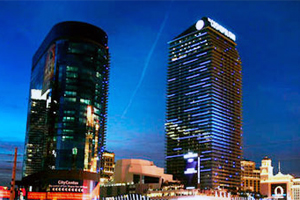 match the extreme brevity of the abortive Wynn Resorts/Crown Resorts merger). Bloomberg reports that Blackstone is exploring “strategic options” for the megaresort that include—what else?—selling the property, often the most strategic option of all. Deutsche Bank has been hired to trawl for potential investors, with a $4 billion sales tag slapped on the casino-resort. That’s quite a markup when you consider that Blackstone bought it for $1.7 billion five years ago and put $500 million of capex into the place. True, it is now a profitable enterprise but that is in part a function of Blackstone’s thrifty deal.
Would it still be a bargain at $4 billion? We think not. However, one is getting an upgraded, Cosmo having received 3,000 room renovations, completion of the top four hotel floors and a redo of parts of the casino floor. Blackstone has picked a devil of a time to shop the Cosmo around, considering that all of Caesars Entertainment is in play at the moment. Perhaps the losing bidder will settle upon the Cosmo as a consolation prize. Also, while MGM Resorts International has stated it is focused on “organic” growth, Cosmo is frequently conflated with neighbor CityCenter, so MGM could theoretically own both the confusion and Cosmo into the bargain.
* Federal regulation of sports betting could turn out to be the phantom menace of 2019. As in vaporware. American Gaming Association President Bill Miller tells us that in all his conversations with members of Congress he has found “very little interest” in the subject. Besides, for the federal guvmint to duplicate what the states already do would require creating an entirely new bureaucracy, something unlikely to be popular in a time of budgetary stringency.
* Las Vegas Sands pleased stock pickers by exceeding revenue and cash-flow projections for 1Q19. “Our forward macro indicators are suggesting Macau revenue growth could decelerate further over the next 9-12 months, but could rebound early next year … Macau is 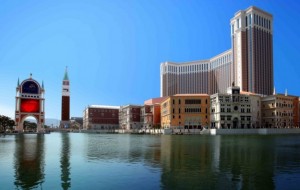 volatile and sensitive to the Chinese economy and policy,” writes Credit Suisse analyst Ben Combes. Las Vegas cash flow ($138 million) was 4% ahead of Wall Street consensus but still down 2%. In Macao, where Sands makes its bread and butter, cash flow ($861 million) beat The Street by 9%. Mass market revenues were 13% above last year—Sheldon Adelson deserves great credit for seeding this customer stratum—VIP play was “above expectations” and the premium mass market was up 16%. Combes doesn’t expect Sands to enter the merger-and-acquisition fray due to the high-ROI opportunities available in the Pacific Rim. The cost of expanding Marina Bay Sands is pegged at $3.3 billion but, history being any guide, it will be money well spent. (If you’re wondering what happened to Cameron McKnight, late of Credit Suisse, he’s happily ensconced at Capitol One now.)
Staying with Macao, “Standing out to us was the Parisian result, with its newer suite product driving a higher spend per guest, with mass  GGR up 17% y/y,” wrote JP Morgan analyst Joseph Greff. “Our views on Macau remain the same—there are reasons to be optimistic that the market will rebound later in 2Q/3Q, but at current levels, we think there is more value and better risk-reward” in Melco Resorts & Entertainment and Wynn Macau. Greff pegs the Marina Bay Sands completion to occur in December 2023, giving Adelson plenty of time to construct a quality product.
* CEO Jonathan Jossel is trying a new trick at the Plaza Hotel. 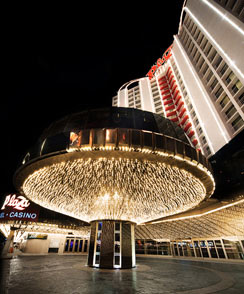 Marketed as TLC Resorts at the Plaza Resort & Casino, suites at the venerable property are being marketed as timeshares. According to Vegas Message Board, sample condos are shown as having full living rooms and kitchens. Perfect for living in the heart of Downtown, providing you don’t mind having to cross a casino floor to get to your pied a terre. We will follow this story as it develops.
* The missus and I are onto Season Two of HBO‘s Rome and I begin to discern why there was not a Season Three. The death of Julius Caesar (the mighty Ciarin Hinds) leaves a massive vacuum in the drama and the supporting cast members tasked to fill it are neither compelling as characters or actors. HBO got it right when it revisited the antiquarian genre with Game of Thrones (also featuring Hinds and several Rome cast members. Small TV world.) According to Rome historical advisor Jonathan Stamp, gambling was the paramount obsession of ancient Romans, in which case I say it’s a pity we’ve seen so little of it, aside from sundry dice-throwing.
