


Former casino overlord Donald Trump is monopolizing the headlines today but let’s not let him have all the fun. There’s plenty of other gaming-related news today. First and foremost, in the same week that Nashville has seen the latest in an endless series of mass shootings, our attention is drawn back to the Mandalay Bay Massacre, one of the worst. Seemingly every news outlet in the country has gotten ahold of the FBI report on shooter Stephen Paddock. Even though Paddock cased possible shooting sites from San Francisco to Boston, the G-men put down his Las Vegas outburst to a fit of pique. (Kudos to the Wall Street Journal for getting the feds to give up the goods.) A witness told G-Men that “was not treating Paddock well because a player of his status should have been in a higher floor in a penthouse suite.” Yup, that’ll really cause people to go postal. Happens every day.
Yes, Paddock trundled (with the assistance of Mandalay Bay staff) an army’s worth of guns and ammunition to an assassin’s perch overlooking the Las Vegas Strip for the ostensibly simple reason that he wasn’t getting the high-roller perks he deserved. Mind you, Paddock’s game of choice was video poker, not the sort of play that gets you VIP treatment, especially when the house edge is so low. Paddock seems to have been stupid as well as murderous, as he “relied on gambling as his main source of income.” Indeed, he blew $1.5 million at casinos, supposedly working up a mass-homicidal rage in the process and nearly wiping out his personal fortune. ‘Professional gambler,’ our ass. Professional loser would be more like it.
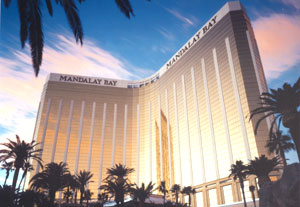
Las Vegas Metro, then under the command of Nevada Gov. Joe Lombardo (R) and which was paralyzed with cowardice while Paddock sprayed fire on music-festival attendees, predictably and defensively lashed out at the WSJ and FBI: “Speculating on a motive causes more harm to the hundreds of people who were victims that night,” Metro wailed nonsensically. (Not as much harm as bullets and lawsuits.) Getting back to Paddock, acquaintances found him to be an extreme introvert, whose only subjects of conversation were gambling and whining about the lack of red-carpet treatment he got. Evidently it was not always so, to hear Paddock tell it. He alleged that he’d been the recipient of casino-funded “free cruises, flights, penthouse suites, rides in ‘nice cars’ and wine country tours.” If casinos were indeed in such cahoots with Paddock, why haven’t they been made to come clean, we wonder.
If that changed it was because Paddock’s play was too strong for some executives’ taste. According to the Bureau, he’d been trespassed from three casinos in Reno. Still, the notion—as phrased by USA Today—that “roughly three years earlier [2014] casinos had started banning high rollers from certain events, hotels and even casinos,” sounds faintly ludicrous. It’s common knowledge how far casinos will bend over to accommodate VIPs. Maybe the feds should assign themselves Whale Hunt in the Desert (by our own Deke Castleman) as remedial reading. We’re glad to have the FBI’s intelligence report in re Paddock but consider the Mandalay Mystery far from solved. The FBI Behavioral Analysis Unit agrees, for what that’s worth.
Online casino cheats are in the crosshairs of Nevada state Assembly Speaker Steve Yeager (D) and lobbyist Sara Cholhagian Ralston, who is pushing a bill to out miscreants in a new version of the Black Book. At least that’s the effect of AB 380, which was evidently so clumsily written that now Yeager has to fix it. Explained Ralston to a journalist, “A lot of these online players hide behind a screen name. We have no idea who they are. The idea is to provide more information to the player.” Well, if they can be proven to be cheats, we’re all in favor of blowing the whistle on who they are and 86-ing them from gaming sites. Of course, the Silver State’s cyber-poker industry (one site, total) is so pitifully puny that Ralston may be offering a solution in search of a problem.
Even she is waffling, saying to the Nevada Independent, “This was never intended to be an overburden on the operator, because cheating is so hard to define, especially in the online space. How do you prove it and how do you not interfere with a criminal investigation? That’s not the intent.” Lady, maybe you should have thought of that before you tossed this bill draft into the hopper (in Nevada, legislative items often enjoy an immaculate conception, free of sponsors). Now Ralston says of her progeny, “it should be more narrow and limited.” Perhaps the plug on AB 380 ought to be pulled altogether, at least until Ralston can figure out what the heck she wants. Granted, Nevada lawmakers aren’t the sharpest tools in the shed but Ralston makes them look like geniuses.
The numbers are finally in for January sports betting in Arizona, where $590 million of handle yielded $46 million in revenue, minus $17 million in promotions. 89% of that revenue was concentrated amongst FanDuel, DraftKings, BetMGM and Caesars Sportsbook. FanDuel grossed $21 million, DraftKings did $8 million, BetMGM $9.5 million and Caesars $2.5 million. Also-rans included Barstool Sports ($1 million), the only other operator to crack the $1 million threshold. WynnBet and BetRivers were both well below it. How long can they keep up this war of attrition?
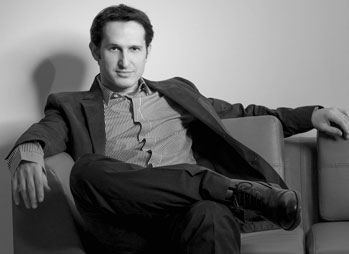
Speaking of DraftKings, CEO Jason Robins got caught with his hand in the cookie jar. The same day that he hyped his company in a series of tweets, Robins liquidated 300,000 DKNG shares at $17.72 apiece. “I’ve never been more confident about DraftKings’ future,” huh? Crony Matt Kalish, who is also known for saying stupid things on Twitter, dumped 269,420 DKNG shares, helping drive a feeding frenzy on the stock, which rose to $18.76. Too bad DraftKings’ business practices can’t have the same galvanic effect on share prices. Not only did Robins and Kalish become $10 million richer, they feathered an already lavish nest, since they receive $120 million a year in “equity-based compensation,” even as DraftKings loses money hand over fist. Rest assured, Robins still enjoys 90% control of the voting shares, which Casino.org argues is “also potentially risky for investors,” since Robins need only act in his best interest. Don’t invest in DraftKings unless you’ve got some ‘mad money’ you don’t care about speculating.
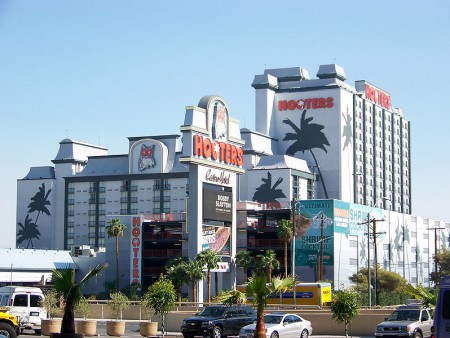
Jottings: With its impending exit from Lake Tahoe, it looks like Paragon Gaming is falling upon evil days. Its only remaining assets are The Den Las Vegas and Oyo Hotel, aka Hooters Casino. (Can’t get away from the double-O thing, can it?) It’s not exactly a portfolio to make CEO Diana Bennett proud … We’re not sure that the fact that Durango Resort is “on track” for a 4Q23 opening is news but the Las Vegas Review-Journal sure thinks so. We’d be more surprised if it weren’t … Deutsche Bank analyst Carlo Santarelli contends that Wynn Resorts is seriously undervalued, mostly with regard to its forthcoming United Arab Emirates resort, a $4 billion project which will only set Wynn back $800 million. He’s even waxing moderately optimistic about WynnBet, so things really must be looking up … In an inside job, a casino cashier robbed Monarch Casino in Black Hawk to the tune of $500,000. This is believed to be the biggest casino heist in Colorado history. Monarch spokeswoman Erica Ferris maintained a straight face while understating, “As a business, sometimes unfortunate things happen” … Just when you thought Crown Resorts couldn’t sink any lower, its security was breached by ransomware pirates, who claimed to have purloined sensitive company data. Fortunately no customer information was spilled—or so Crown says. One has learned to take Crown’s assertions with a grain of salt … Bring an appetite to Foxwoods Casino Resort, where Gordon Ramsay will be opening yet another Hell’s Kitchen come “this summer.” It’s the fifth in the U.S. for the chef, who is said to be unassuming in private life and a George tipper.

I can’t help but wonder if Paddock was trespassed from three Reno casinos not for winning too much but rather for his aberrant behavior.