
Labor contracts with the Culinary Union have long since expired but three casinos continue to hold out. Phil Ruffin‘s Treasure Island is one but there’s been no animus from the Culinary on 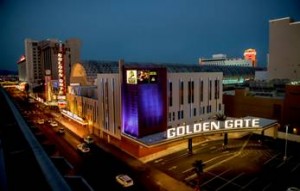 that front. Where Derek Stevens is concerned it’s quite a different story. At 5 p.m. today, Culinary members will take to the downtown streets (just in time for live video on the local TV newscasts), marching from Fremont to The D, where they will rally until 7 p.m. This is not the first time the Culinary has taken to the streets against Stevens, who seems to be the most deeply entrenched of the casino owners. The Union’s demands are as follows: “new contract language to provide greater measure of security for members including workplace safety, sexual harassment, subcontracting, automation/technology, and immigration. In addition, the Union’s economic proposal seeks to provide workers a fair share of the employers’ enormous anticipated cash flows and Trump tax windfalls.”
As we’ve seen with MGM Resorts International, those tax windfalls can be enormous, swinging an entire year’s financial results. We don’t know which issues are the sticking point with Stevens but he’s flirting pretty seriously with having picket lines at The D and Golden Gate, which isn’t just an unsightly optic. It’s bad for business.
* In an undercard to today’s Senate Judiciary Committee hearings on Brett Kavanaugh‘s alleged sexual misdeeds, a kangaroo court is being held in the House Subcommittee on Crime, Terrorism, Homeland Security, & Investigations. Just what form of terrorism is Chairman James Sensenbrenner (R) worried about? Sports betting. Gasp! 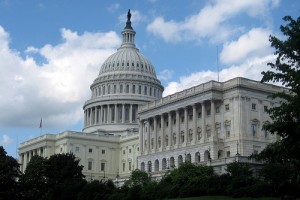 Fortunately, the American Gaming Association‘s Sara Slane will be there to speak for the casino industry. The AGA has provided a preview of her testimony, in which makes the obvious — to anyone but a congressman — point that a legalized, open, sports-betting universe is preferable to the covert, illegal, $150 billion one. “This vast illegal market has fueled criminal activity and left American consumers outside of Nevada with no safe alternative to bet,” writes Slane.
“Some – such as the governors and attorneys general from 20 states who signed an amicus brief in support of New Jersey – believe this is fundamentally a states’ rights issue,” Slane adds pointedly. “Others – particularly law enforcement – view the Court’s decision as an opportunity to take a significant bite out of the illegal market. Still others are primarily motivated by the obvious opportunities to increase tax revenue and jobs.” After pointing out that the profit in sports books is less than five cents  on the dollar, Slane moves onto the Schumer Gang‘s proposal that casinos be required to purchase their betting data from the major leagues: “A healthy market of accurate, consistent sports betting data providers already exists, and sportsbooks already avail themselves of such services in the commercial market. Mandating every sportsbook contract with only one official data company will allow individual, preferred data providers to set inflated, non-competitive monopoly prices for their services. Furthermore, treating data or facts as if they are a property right is without precedent. The Judiciary Committee has jurisdiction of intellectual property matters and understands that facts, such as the score of a baseball or football game, are not
 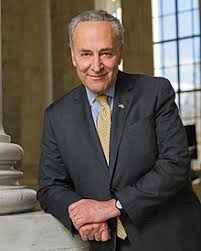 subject to copyright. This proposal is a backdoor attempt to treat such facts as a property right which would give the leagues a monopoly over that which today one finds in the sports page of every newspaper.” You tell ’em, Sara.
As for the Schumer proposal that leagues be able to dictate what bets can and can’t be placed on games, Slane says, “Sports book operators already have significant economic incentive to avoid offering bets that pose a significant risk. Moreover, attempts to restrict bets that have broad customer demand would further empower illegal operators that don’t abide by the same set of rules.” After noting the long and costly history of state and tribal regulation, and the overturned Bradley Act‘s failure as consumer protection, Slane moves to her peroration. “The reality is that sports betting has  been occurring nationally on a massive scale in this country for decades in an illegal market that provides zero protections for consumers or sports integrity … States and tribes have proven to be effective gaming regulators in the 26 years since Congress enacted [the Bradley Act]. As Congress has refrained from regulating lotteries, slot machines, table games and other gambling products, it should similarly refrain from engaging on sports wagering barring an identifiable problem that warrants federal attention.” Amen.
* In the continuing Southern California arms race, Casino Morongo — which towers in splendid isolation near Palm Springs — is the next one to widen its arsenal. It will revise its restaurant repertory and add an all-valet, 750-space parking garage. The projected completion date is sometime in the spring of 2020. The changes will mean taking some games out of position, and they’ll be shunted over to the original casino, now a bowling alley. Competitor Soboba Casino is adding a six-story hotel with 200 rooms, a 15,000-square foot conference center and a pool complex, just for starters and will be ready early next year. Agua Caliente Casino Resort Spa has a big makeover drawn up — since 2017, in fact — but can’t seem to get out of the starting blocks. Then again, let’s remember the fable of the tortoise and the hare.
* In a bit of gustatory news, Las Vegas-based Nacho Daddy has opened its first Atlanta location. Good work, boys. Now could you bring some casinos with you?

If look at the history of his other company Cold Heading in Detroit you would see that he isn’t particularly in my opinion union friendly as there was a lawsuit over the union which is public record. See Cold Heading Company and International Union, United Automobile, Aerospace and Agricultural Implement Workers of America (UAW), AFL- CIO. Cases 7-CA-38768 and 7-CA-38768(2) from October 31, 2000.