
 “Prior to the official opening, a 60-minute opening ceremony was held outside of the main entrance to the casino, where local and state politicians patted each other on the back for finally getting the casino opened, a mere 10 years – exactly 3,650 days – after legislation was signed by then-Gov. George Pataki to allow casinos at racetracks.” That’s David Grening‘s acidic take on the glacial pace of racino development in New York State, prompted by the opening of Resorts World New York. To no one’s surprise, customers turned out in abundance — which means that November’s revenue report from Atlantic City will now be awaited with bated breath.
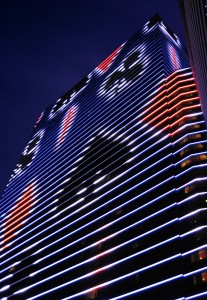 Coincidentally or not, Caesars Entertainment and Unite-Here reached a four-casino/three-year pact in A.C., which will be put to a vote tomorrow. It seems to be a given that the union made concessions, but exactly what it rendered unto Caesars won’t be known until after the balloting. If the Caesars workforce is amenable to the new deal, those Boardwalk properties whose employees are in a far weaker bargaining position (like those at Colony Capital‘s penniless, ludicrously re-named ACH), will be the next ones polled. Once the Caesars-workforce domino topples, everyone else will capitulate right quick. Interestingly, this is the opposite of the approach taken in Detroit, where employees at the lower-echelon casinos were polled first, setting up union bosses to be humiliated by their MGM Grand Detroit rank and file, who said the new arrangement was spinach and to hell with it.
 Gambling expansion in Florida is running into a predictable but formidable opponent: Mickey Mouse. The mighty rodent and his puppet ally, the Florida Chamber of Commerce, are getting to rumble with the Lege. Ignore the mouthwash about protecting the kiddies. What’s at stake are convention revenues the Orlando area (aka Mouse Central) could lose to Dade and Broward counties. Miami Beach, whose convention facilities are antiquated, is going into a defensive crouch, opposing casino expansion instead of courting it. The Seminole Tribe seems to be playing a cagey game, simultaneously threatening to take its $200 million annual tax contribution off the table but signaling that it would be tractable to inclusion in the three-casino Miami-area expansion that’s under debate. Massachusetts has handed the Seminoles a useful precedent. Like their Bay State counterparts, Florida lawmakers could set aside one megaresort for a tribal applicant. Geez, can’t imagine who’d land that concession.
 Affected South Florida officials like the idea of the bill but are having a devil of a time with the details. Their principal demands are greater local regulatory oversight and (surprise) a bigger slice of the anticipated tax revenue, in order to offset infrastructure costs. Protection of an endangered species — parimutuels with slot machines — is also a sore point, since megaresorts would be given a preferential tax rate (10% vs. the racinos’ 35%). Interestingly, Isle of Capri Casinos, which owns a racino at Pompano Park, is keeping its powder dry so far.
Whether or not Florida lawmakers falter, they’re forcing the hands of nearby states. Kentucky-based track operators with Sunshine State parimutuels are understandably apprehensive about developments to the south. Stronach Group could be a dark-horse contender for one of the megaresort licenses and even Churchill Downs may get into the running. Both would also have strengthened cases to press for racinos in the Bluegrass State, where the demise of previous legalization efforts has become a campaign issue.It’s been a pet project of Gov. Steve Beshear (D) but would surely be vetoed by his election adversary, state Sen. David Williams (R), who doesn’t cotton to local governments getting hooked on casino revenues, although he does like to gamble, personally. If the Legislature votes it out as a constitutional question, a Gov. Williams wouldn’t have to do anything except pray that it can’t get 60% support at the ballot box. But this is moot: Beshear enjoys a 69% approval rating and Williams will have to throw an awful long Hail Mary to become the next occupant of the governor’s mansion.
 The heat is rising slightly in the nearby state of Georgia, too, whose Lottery Board has commissioned an economic-impact study of casino legalization. It recommends Singapore-like regulation. In addition to the much-coveted Atlanta market, vacation spots like Jekyll Island are favored as prospective gambling locations. The “gray market” for illegal slot machine gambling in the Peachtree State would be curbed, if not eradicated, and over $900 billion in revenue generated, the report predicts. But genteel Georgia lawmakers have practically had fainting spells over the idea of VLTs in convenience stores and the high-ranking members of the state’s political establishment are firmly against establishing gambling in the state. Since Florida megaresorts are several years away, at best, Georgia is a good two or three election cycles from having to seriously confront the issue.
 Up in New England legalization of racinos in New Hampshire marches steadily forward in the Lege. Unlike their derelict counterparts in Nevada, N.H. lawmakers are already setting aside tax monies for the treatment of gambling addiction. However, Gov. John Lynch (D, left) is one of his anti-gambling moods and an eccentricity in the enabling legislation is a provision to auction casino licenses, in lieu of having a set entry fee. And while Granite State solons spar, casino expansion in Maine progresses in disorganized but inexorable fashion. If Lynch hesitates while Gov. Deval Patrick (D-MA) acts, voters in Maine are unlikely to make the same mistake.

Aqueduct has the least used station on the New York City Subway, as it is only open for race days. I wonder if this will change with the opening of the casino, as it would make the casino that much easier to go to on a whim…