

And now the biggie: Question 7. The quickest way to summarize this is to paraphrase what C.S. Lewis said of Christianity — that slot parlors in Maryland hadn’t been tried and found wanting but were an idea that had been found difficult and not been tried, more or less. Feckless legislators were ready to wave the white flag even before the model they put before voters four years ago had been fully implemented. Now it’s be rejiggered with lower taxes, 1,500 more slots, table games and — just for Prince George’s County — a sixth casino license.
Support for a theoretical version of Question 7 was strong in the early going. Spending by expansion proponents and opponents has been fairly evenly split. But once the question actually made the ballot, poll numbers tightened significantly. Gonzales Research found voters evenly split, with 9% undecided, while a Baltimore Sun poll showed Question 7 trailing badly, with 38% support — in which case Penn National Gaming‘s $35 million campaign war chest will have been money well spent. Like a certain other 2012 race, it’s too close to call, with the electorate carpet-bombed beneath TV ads and robocalls.
It’s a ballot question that enjoys bipartisan support but has split the industry in a high-cost 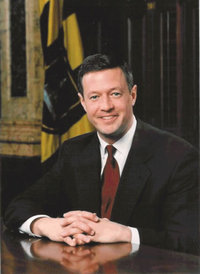 battle, with MGM Resorts International and Caesars Entertainment foremost among that aye-sayers,* while bitter foes of yore like Penn and Cordish Gaming — whose Arundel Mills casino has been crushing the competition and represents a $550 million investment — find themselves allied in common cause and voicing public opposition. Gov. Martin O’Malley (D, right) has long since thrown in his lot with MGM against Cordish (as have labor unions), making casino expansion his top summer priority, to the extent of calling a special session to get it done. Unlike Cordish, Penn’s hurting plenty, trying to drastically downsize its slot floor at Hollywood Casino Perryville. It’s also been trying to leverage a second casino license for itself at Rosecroft Raceway, so MGM’s presence is particularly unwelcome.
Of five planned slot parlors, only three have opened to date and License #5 is still going begging. Already, one racino (Ocean Downs) has threatened to close on account of the state’s usurious 67% tax rate on slot machines. Harrah’s Baltimore is in a holding pattern until 2014 or taxes are reduced — preferably to 14% on table games — whichever comes first. The project has also been afflicted by budget creep, as last summer’s $324 million pricetag has already risen to $375 million.
(* — Warning: Link leads to hilariously clueless Gary Loveman mumbo-jumbo.)
What O’Malley pitched was a something-for-everybody bill, intended to render to Caesars and Cordish alike. In return, they’d have to accept being politically muzzled and that sixth casino. (Mind you, Maryland operators haven’t been paragons of transparency.) Cordish Cos. responded that it was spinach and to Hell with it. Penn could hardly have been thrilled, as O’Malley’s bill preserved the 67% impost on Hollywood Perryville, while locking in Rocky Gap‘s 50% rate and cutting Ocean Downs’ levy to 57%, and everyone else to 62%. Pretty soon the bill became a crazy quilt of tax rates, complicated by additional rate-reductions for casinos that purchase their own slot machines — an expense currently borne by taxpayers. The special arrangement for Rocky Gap stays put and — much to the chagrin of Caesars, no doubt — table games will be taxed at 20%.
A Prince George’s-only loophole was crafted whereby county voters could approve Casino #6, regardless of the fate of Question 7. (However, if Question 7 fails, MGM is calling it quits.) Once the numbers were crunched, $200 million in “new” tax revenue suddenly looked a lot more like $39 million. O’Malley signed off on this Christmas tree and it’s now up to the voters. In the meantime, new regulations are being fast-tracked. It’s hardly the ‘saturation,’ though, against which some casino opponents railed in the op-eds.
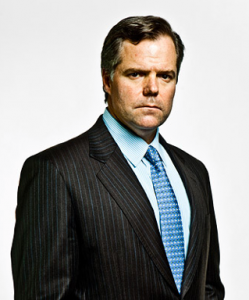 One argument deployed against Question 7 is that, by carving out a new gambling district in Prince George’s County, it essentially gift-wraps an MGM-run casino for National Harbor, near Washington, D.C. It even inspired University of Baltimore boffin Richard Clinch to dust off the much-disproven saw that this is “a license to print money.” Hardly a clinching argument, I’d say. Bill Eadington‘s enumeration of the potential economic benefits carries more clout with us. Murren’s also talking a good game with regard to the aesthetics of the casino he would build. He’s certainly right that table games should have been part of the enabling legislation in ’08, a half-baked effort whose 2012 revision was inevitable.
Also, MGM’s $800 million commitment was initially contingent on dropping the slots tax rates to 67% to 52%, a demand subsequently rescinded. However, Lakes Entertainment‘s planned Rocky Gap casino already enjoys a sweetheart 50% rate, among other concessions, so badly did lawmakers want a 2007 state-funded failure offloaded into private industry.
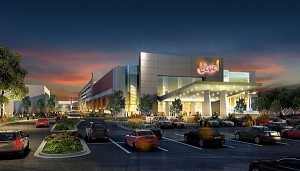 Opposition, naturally, runs strong among existing operators. Massive, 4,750-slot Maryland Live warned lawmakers it could lose 40% of its revenue to a Prince George’s casino. “These facilities are not Starbucks that can be put on every street corner and be sustainable,” warned Cordish Cos. exec Joe Weinberg, contravening a favorite Loveman cliché. (Not as funny, though, as the Lovemaniacal assertion that a Suffolk Downs racino near Boston would draw 45 million customers.)
However, a state-commissioned survey showed any deleterious effects being more than counterbalanced by new revenue from table games, perhaps to the tune of an extra $538 million a year. Yes, Maryland Live would be down 26% in slot revenues and Harrah’s Baltimore -17% ($125 million and $65 million, respectively). The study showed Harrah’s recouping most ($59 million) of that, but sketched a bleaker scenario ($65 million) for table games at Maryland Live.
David Cordish counter-counterargues that expanded operating hours and table games at existing casinos would have produced the desired financial benefit, sans Prince George’s County. It’s an argument with considerable merit, since financial projections of Question 7’s benefits are predicated on an extremely young casino industry in Maryland.
 As Cordish says, “If Maryland were to change the playing rules before three of the five original designees are even open, it sends a terrible message to the business and lending communities, both in and outside of Maryland, that Maryland is an unreliable partner.” And, as even Murren acknowledges, it’s a heckuva message to send to voters that billionaire casino owners are getting tax breaks when Marylanders in the $100K+ income bracket are facing a higher personal levy next year. And whatever Maryland does, Delaware will always be at least one step ahead.
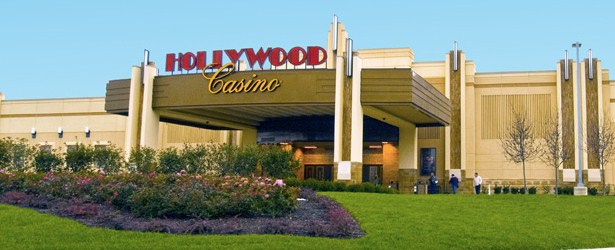 Then again, Cordish’s arguments would carry more conviction if he hadn’t tried to cut a side deal with the Lege. This seedy offer included an only-for-Arundel Mills 55% tax rate (12.5% for table games), Internet gambling and a plethora of restrictions on MGM, including a 2017 opening date. By the same token, for Penn to complain of a “sleazy process” after it attempted to ratfuck Cordish in the last election cycle is the pot calling the kettle the deepest shade of black. Not only would Penn have abandoned a then-unopened Hollywood Perryville (above) to get a racino at Laurel Park, it would just as quickly have thrown over Laurel Park if could have gotten Rosecroft Raceway in return. As Howard Stutz puts it, Penn is “the playground bully” in Maryland politics, always hellbent on getting its way.
Maryland punditocracy at its finest [sic].
In conclusion, shame on legislators and O’Malley for having put a seemingly foredoomed slot-parlor plan before the electorate back in ’08. Question 7 is something of a farce, basically  creating a discrete tax rate and set of financial incentives for every casino in Maryland. But that’s the beauty of it, too: Every new entrant gets to negotiate their own sweetheart provision, since there will no longer be any goal poasts to move. And taxes could fall as “low” as 49%, which is still punitive but a big improvement upon the prevalent 67%. Existing operators get ’round the clock hours and table games in return for swallowing new competition in Prince George’s County. Question 7 is ludicrous and — as you’ve seen — defies easy summary, but it would improve the business climate for the casino industry.
S&G holds its nose — especially since MGM partner, hypocritical Peterson Cos., is also bankrolling opposition to marriage equality — and urges an “aye” vote.

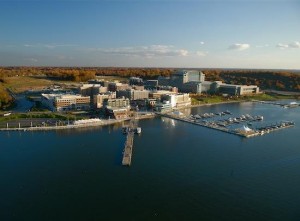
Ummm, that hotel picture is of the Gaylord National, not what MGM has proposed.
Thanks for the correction. Fixed! If you need a good laugh today, check out the video that has replaced it.
I read a column in The New York Times from September entitled “Washington Versus America” by Ross Douthat and it explains why Washington, D.C. is booming. Seven of the 10 richest American counties in 2011 were in the Washington, D.C. suburbs of Maryland and Virginia.
Where comes this wealth? Mostly from Washington’s one major industry: the federal government. Not from direct federal employment, which has risen only modestly of late, but from the growing armies of lobbyists and lawyers, contractors and consultants, who make their living advising and influencing and facilitating the public sector’s work.
This legal corruption is a bipartisan affair, driven by both Republicans’ fierce protection of the defense establishment and corporate tax goodies, and Democrats adding billions of dollars into inefficient health, energy, and safety-net programs.
Umm, not really. Some of the contractors have indeed done very well, but a lot of it is actually related to biotech to some degree and Infotech to a major degree.